Get consult
Unlock the secrets of the world’s most breathtaking locales with our expert insights — guiding you toward the truly remarkable destinations that define a lifetime of travel.



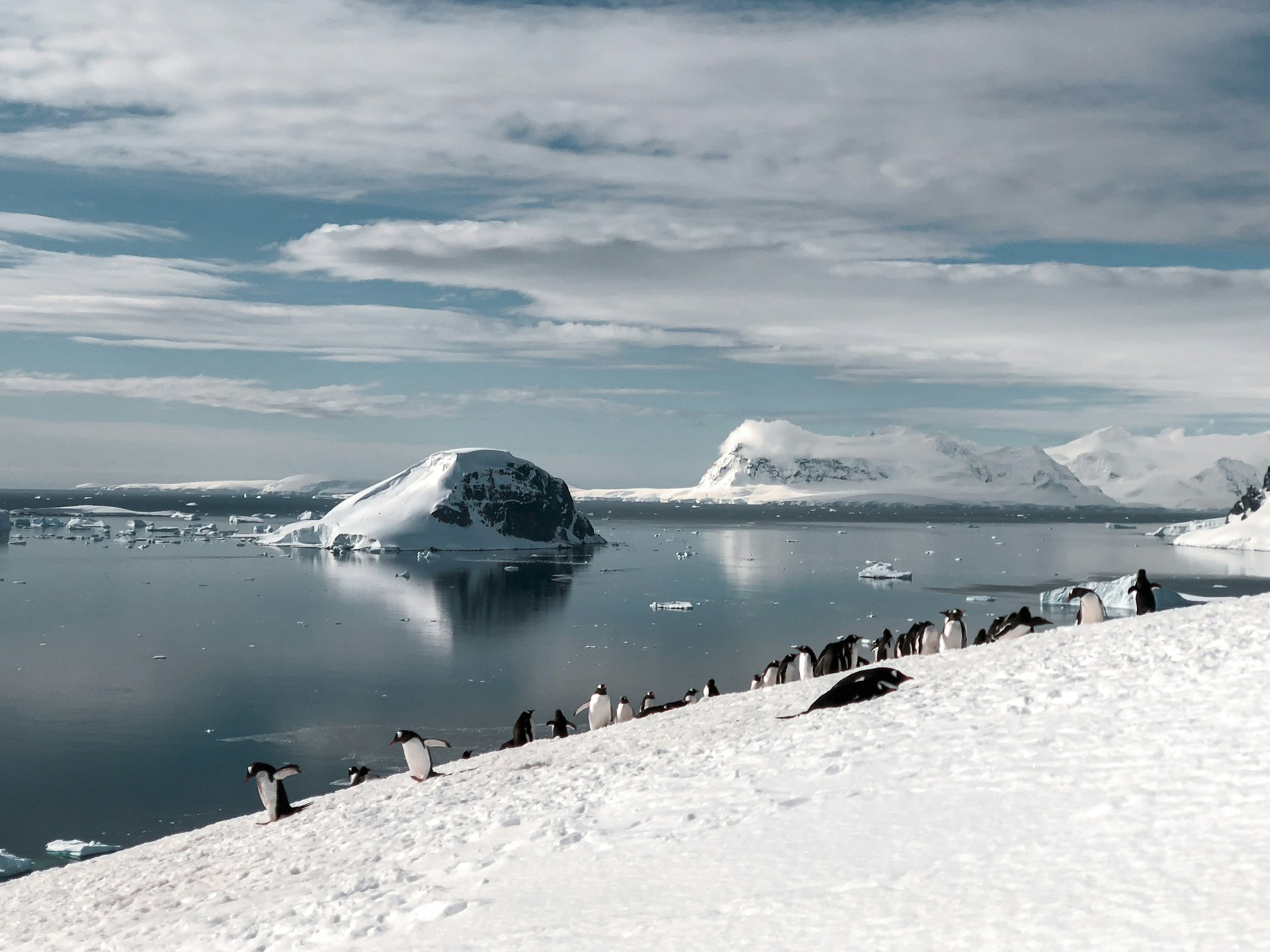
Photo by Deanna Wong on Unsplash
There is a particular moment that every Antarctic Peninsula traveler describes in some version of the same words: the morning of the third or fourth day at sea, before dawn, when you climb to the deck in the cold and there they are. The first icebergs. Not the postcard kind, not something from a screen, but real ice the color of compressed sky, the size of buildings and city blocks and, occasionally, entire neighborhoods, drifting in absolute silence through 800 kilometers of open Southern Ocean. The Drake Passage is behind you. The continent is ahead. And nothing you have experienced in any other destination on earth has prepared you for what comes next.
The 2025 to 2026 Antarctic season broke records across the board. Total IAATO-reported visitation to Antarctica reached 118,491 in the 2024 to 2025 season, following a record 122,072 in 2023 to 2024, meaning Antarctic tourism has remained above 100,000 visitors for two consecutive seasons, as confirmed by IAATO's official reporting and MercoPress citing the Antarctic Treaty Secretariat's annual tourism data. IAATO confirms that 98 percent of all Antarctic tourism voyages operate in the Antarctic Peninsula region during the austral summer from October through April, as confirmed by IAATO's official data pages and Travel and Tour World citing Antarctic Treaty System documentation. The 2025 to 2026 season saw operator records fall across the board: HX Expeditions (formerly Hurtigruten Expeditions) completed 34 sailings to Antarctica between October 2025 and March 2026, the highest number in the company's history, as confirmed by Travel and Tour World and The Traveler. Aurora Expeditions navigated a double-digit percentage increase in guest numbers across three simultaneously deployed polar class ships, as confirmed by Nomad Lawyer citing the operator's season summary. Atlas Ocean Voyages grew its Antarctic passenger numbers by 24.6 percent in 2024 to 2025, as confirmed by Unsold Antarctica citing IAATO data. Hapag-Lloyd showed the most dramatic single-season expansion of any major operator at 65.5 percent growth, adding the HANSEATIC nature to its Antarctic operations, as confirmed by Unsold Antarctica.
The trend driving the Antarctic Peninsula in 2026 is Expedition Cruise Tourism and the Last Frontier of Human Wilderness: a deepening global traveler recognition that Antarctica is not merely a bucket list destination but the final genuinely wild place on the planet, the only continent with no indigenous human population, no permanent residents, no commercial infrastructure, and no authority other than the 54-nation Antarctic Treaty System that has governed it since 1959. The people arriving on the Antarctic Peninsula in 2026 are not simply sightseers. They are, in the most literal sense, going to the end of the world. And an increasing number of them are going alone: solo travel to Antarctica is booming, with industry data suggesting 10 to 20 percent of passengers on any given Antarctic expedition are traveling alone, a proportion that would have been unthinkable a decade ago, as confirmed by Unsold Antarctica citing IAATO expedition data.
The Antarctic Peninsula's human history begins with the most consequential period of polar exploration in modern history. The continent's existence was first confirmed in 1820, when three separate expeditions, Russian, British, and American, sighted the Antarctic ice within days of each other, as documented by the history of Antarctic exploration. The Peninsula's specific geography began to be charted through the Heroic Age of Antarctic Exploration that ran from roughly 1895 to 1922, producing names that are still on every landing site today: the Gerlache Strait, named for Belgian explorer Adrien de Gerlache whose 1897 to 1899 Belgian Antarctic Expedition was the first to winter on the continent; Wilhelmina Bay, named after the Dutch queen during de Gerlache's voyage; and the Nordenskjold expedition stone hut at Paulet Island, built in 1903 when Otto Nordenskjold's Swedish Antarctic Expedition was stranded after their ship Antarctica was crushed by ice, as confirmed by Swoop Antarctica's Peninsula history documentation and Chimu Adventures' expedition itinerary guides. The Peninsula's most famous names are its most charged ones: Paradise Bay, named for what it actually looks like; the Lemaire Channel, nicknamed Kodak Gap for the volume of photographs it generates, an 1,600-meter-wide passage between sheer mountain walls that has no equivalent visual experience in temperate geography; and Neko Harbor, named for the Scottish whaling vessel that worked these waters between 1911 and 1924.
The whaling industry that followed the explorers was, by any measure, catastrophic. Between 1906 and 1986, when the international moratorium finally halted commercial whaling, an estimated 1.3 million whales were killed in Antarctic waters, as confirmed by Swoop Antarctica's Peninsula history documentation. The shore stations established in the sheltered waters of Deception Island in 1906, and the factory ship innovation of 1925 that allowed whaling fleets to roam the open ocean without returning to shore, enabled an industrial scale of slaughter that brought multiple whale species to the edge of extinction. The haunting ruins of the Deception Island shore station, and the 100-plus-year-old wreck of the whaling factory ship Governoren accessible by Zodiac in Foyn Harbour, are among the most historically weighted sites on any Peninsula itinerary today.
The Antarctic Treaty, signed on December 1, 1959, at Washington D.C. and entering into force on June 23, 1961, designated the entire continent as a natural reserve devoted to peace and science, as confirmed by IAATO's official Treaty documentation. The International Association of Antarctica Tour Operators was founded in 1991 by seven expedition operators committed to environmentally responsible private-sector travel, as confirmed by Antarctica Guide's tourism history documentation. Today IAATO has more than 100 member organizations and represents the primary self-regulatory framework governing all commercial Antarctic tourism. The modern expedition vessel, purpose-built for polar conditions with ice-strengthened Polar Class hulls, Zodiac landing craft, hybrid propulsion systems, and expedition teams of marine biologists, ornithologists, glaciologists, and polar historians, is the direct descendant of Lindblad's first purpose-built expedition ship of 1969, which effectively launched the commercial expedition cruise industry, as confirmed by Antarctica Guide's tourism history.
Three developments reshaped the Antarctic Peninsula tourism landscape in the 2025 to 2026 season specifically. The first was the dramatic expansion of immersive activity options beyond traditional shore landings. HX Expeditions recorded a 188 percent increase in kayaking capacity and doubled the number of camping spots on its 2025 to 2026 program, all within IAATO's strictly enforced environmental framework, as confirmed by Travel and Tour World's HX season report. Aurora Expeditions' Douglas Mawson pushed past 78 degrees south into the Ross Sea, setting an industry record for a commercial passenger ship, as confirmed by Nomad Lawyer's season report. The second was the integration of citizen science: HX dedicated 1,801 guest scientist cruise nights to global research initiatives, with guests submitting Happywhale whale sighting reports and eBird checklists providing real-world data for ongoing wildlife studies, as confirmed by Travel and Tour World. The third was the solo traveler boom. Aurora Expeditions announced it will offer 10 dedicated solo cabins on every sailing during its 2026 to 2027 season with no single supplement, a structural response to the demand pattern that is reshaping the market's demographics, as confirmed by Unsold Antarctica citing the operator's announcement.
Almost all Antarctic Peninsula expeditions begin in Ushuaia, Argentina, the southernmost city in the world, located at the southern tip of Tierra del Fuego on the Beagle Channel. The Drake Passage, the 800-kilometer-wide body of open ocean separating Cape Horn from the South Shetland Islands, takes approximately 36 hours to cross in each direction, as confirmed by Britannica's Drake Passage entry and Explorer's Passage cruise guide. Fly into Ushuaia's Malvinas Argentinas International Airport (USH) from Buenos Aires (Aerolineas Argentinas, LATAM) or from Santiago via Punta Arenas. Plan to arrive in Ushuaia at least one full day before embarkation: weather-related departure delays are possible and the city itself, with its Tierra del Fuego National Park, Beagle Channel wildlife, and Antarctic heritage, is worth exploring. A standard classic Antarctic Peninsula expedition runs 10 to 11 days ship-to-ship, with approximately 6 to 7 days on and around the Peninsula itself. Fly-cruise options that eliminate one Drake crossing by flying to or from King George Island significantly reduce sea time and are well suited for travelers with seasickness concerns or limited time, as confirmed by Secret Atlas and Antarpply Expeditions' cruise offerings. The alternative gateway for non-Peninsula itineraries is Punta Arenas in southern Chile, used for some fly-cruise options and for itineraries incorporating the Falkland Islands and South Georgia.
The Drake Passage has a deserved reputation as some of the most demanding open ocean in the world. The Roaring Forties and Furious Fifties, the wind bands that encircle Antarctica at these latitudes with no land to slow them, produce swells that can reach 6 to 8 meters in heavy conditions. A Drake Lake, the informal term for a calm crossing, is possible but not guaranteed. Modern expedition vessels are equipped with stabilizers that significantly reduce motion, and an onboard physician is standard on all IAATO member expeditions. Take seasickness precautions seriously: consult your doctor before departure about prescription options including scopolamine patches, and bring a reliable backup OTC medication, as consistently recommended across expedition operator pre-departure guides. The standard IAATO ship-to-shore transfer method is the Zodiac inflatable boat: passengers board Zodiacs via a ship's gangway or deck-level platform in all sea conditions encountered during landing operations. You will get wet. Your expedition kit should include waterproof trousers, rubber boots to knee height, and quality waterproof outer layers. Most operators provide rubber boots and a parka; check your specific operator's kit list before packing, as confirmed by multiple IAATO operator pre-departure guides.
The Antarctic Peninsula contains more than 200 documented landing sites, of which fewer than 35 are visited with significant frequency, as confirmed by Antarctica Guide's tourism history documentation. IAATO protocols limit each site to one ship at a time and a maximum of 100 visitors ashore from any single vessel simultaneously, with a mandatory 1:20 guide-to-passenger ratio, updated from 1:20 to a stricter standard in the 2025 ATCM guidelines, as confirmed by Travel and Tour World and IAATO's official site management documentation. The most frequently visited sites in 2024 to 2025 were Neko Harbor (220 landing calls), Whalers Bay at Deception Island (194 landing calls), Portal Point (184 landing calls), and Danco Island (173 landing calls), as confirmed by MercoPress citing IAATO data. Understanding what makes each site distinct before arrival significantly deepens the experience. Neko Harbor is the most popular continental landing, set against glacier fronts and steep rock cliffs with a resident Gentoo penguin colony and frequent Minke whale sightings in the adjacent Andvord Bay, as confirmed by Explorer's Passage and Swoop Antarctica's landing site guide. The Lemaire Channel, 1,600 meters wide between the Booth Island cliffs and the Peninsula, is the most photographed passage in Antarctica: the combination of sheer scale, mirrored water conditions when calm, and the requirement that the ship navigate slowly to avoid contact with ice creates a sense of theater that no other passage delivers. Paradise Bay is considered by many expedition leaders to be the most dramatically beautiful continental landing available on the Peninsula, combining glaciers, icebergs, and the Argentine Brown Station with a landscape that justifies the name entirely, as confirmed by Chimu Adventures and Antarpply Expeditions' itinerary guides. Port Lockroy on Wiencke Island, the historic 1944 British research station converted into a museum and post office, is the most visited single site in Antarctica with nearly 6,000 visitors per season, as confirmed by Adventure Life's Peninsula guide. Send a postcard: the Penguin Post Office is the most remote postal service on earth.
The Antarctic Peninsula's wildlife is the primary reason most people make the journey. The penguin species accessible on a standard Peninsula itinerary include Gentoo, Chinstrap, and Adelie, with Petermann Island at the southern end of the main itinerary zone offering the rare opportunity to see all three species nesting side by side, as confirmed by Swoop Antarctica's landing site wildlife guide. Approximately 20 million breeding pairs of penguins exist in Antarctica overall, and a genuine colony encounter, with hundreds of thousands of birds going about the daily business of nesting, feeding chicks, and traveling to and from the water in well-worn highways called penguin highways, is unlike any wildlife experience available anywhere else on earth, as confirmed by Secret Atlas's Antarctic wildlife guide. Whale watching in the Gerlache Strait and Wilhelmina Bay is among the most productive in the Southern Ocean: humpback, fin, and orca are all regularly encountered on Zodiac excursions, and late-season sailings (February through March) offer the highest whale sighting frequency as feeding activity peaks before the winter migration, as confirmed by Swoop Antarctica's seasonal wildlife guide. Leopard seals are present at most landing sites and are among the most visually arresting predators observable from a Zodiac at close range. Weddell seals and Crabeater seals haul out on ice floes throughout the Peninsula. The Antarctic Convergence, crossed during the Drake Passage transit, marks the boundary where cold polar water meets the warmer sub-Antarctic ocean, creating a nutrient upwelling that sustains the krill population underpinning the entire food chain, as confirmed by Britannica's Drake Passage entry.

The Antarctic Peninsula expedition cruise market operates at price points that reflect the extraordinary logistics, specialized vessels, and strict regulatory compliance involved. Budget travelers on a classic Peninsula voyage from Ushuaia can expect to pay from approximately 5,000 to 8,000 USD for a standard cabin on a well-regarded IAATO-member operator, with mid-range offerings running 8,000 to 15,000 USD and luxury small-ship options reaching 20,000 to 30,000 USD or more, as confirmed by Antarctica Guide's budget planning documentation and multiple operator pricing guides. The season runs from October through April, with November being peak for penguin courtship and nest-building, December and January being peak for chicks and whale activity, and February through March being optimal for whale watching and whale watching as adults and juveniles feed heavily before the austral autumn. Book 6 to 12 months in advance for preferred operators and cabin categories in peak season: the most well-regarded small-ship operators with 100 to 130 passenger capacity regularly sell out 12 months ahead, as confirmed by Unsold Antarctica's booking guidance. All passengers on IAATO member expeditions are required to comply with IAATO's Visitor Site Guidelines, which are updated annually by the Antarctic Treaty Consultative Meeting. The 20-point General Guidelines for Visitors updated in 2025 govern all conduct at landing sites, as confirmed by MercoPress citing the ATCM's 2025 guideline update. Vessels carrying more than 500 passengers are prohibited from landing passengers in Antarctica, as confirmed by IAATO's official operating regulations.
Antarctica is the only continent on earth with no indigenous human population and no sovereign government. It belongs to no country and to all of humanity simultaneously under the terms of the Antarctic Treaty. The Protocol on Environmental Protection to the Antarctic Treaty, known as the Madrid Protocol, designates Antarctica as a natural reserve devoted to peace and science and prohibits all commercial mineral resource activity, regulates waste disposal, protects native flora and fauna, and governs all human activity on the continent. Visiting Antarctica under these terms is not simply a tourism transaction. It is an act of participation in a global framework whose purpose is the preservation of the last genuinely pristine continental ecosystem on earth.
The specific obligations this creates for every visitor are not bureaucratic inconveniences. They are the minimum conditions under which the Antarctic ecosystem can absorb human presence without lasting damage. Biosecurity is the most critical: every item of clothing and equipment used on shore must be thoroughly decontaminated before any landing and between landings at different sites, to prevent the transfer of non-native seeds, insects, or pathogens between sites and from other continents. IAATO's 2024 to 2025 protocol updates tightened biosecurity requirements and required operators to assess wildlife colonies before landings and immediately close sites if signs of disease or contamination are detected, as confirmed by Travel and Tour World citing the ATCM protocol update. Do not approach wildlife closer than the distances specified by your expedition guide. Do not touch or feed any animal. Do not deviate from marked landing areas. Do not remove anything from Antarctica: no rocks, no feathers, no ice. Do not deposit anything: no waste of any kind, including food.
The elephant in every Zodiac is climate change. The Antarctic Peninsula is one of the fastest-warming regions on earth: average winter temperatures have risen by approximately 6 degrees Celsius since the 1950s, as documented by polar climate research. Ice shelves that stood for millennia are retreating visibly season by season. The wildlife you are encountering on a Peninsula expedition is wildlife whose habitat is actively contracting. The correct response to this fact is not to avoid going to Antarctica: IAATO's own position is that tourism, conducted responsibly, is and should continue to be a driving force in Antarctic conservation, as first-hand travel experiences foster a better understanding of a destination where no indigenous population exists to speak for itself, as confirmed by IAATO's official mission statement. The correct response is to go with the full weight of that understanding, to participate in the citizen science programs your expedition offers, to share what you witnessed when you return home, and to understand that you are one of the 100-plus nationalities represented in Antarctic visitor statistics who return home as ambassadors for a continent that cannot advocate for itself.
Kotor is a double-listed UNESCO World Heritage Site in Montenegro's fjord-like bay. Your fact-checked 2026 guide to the Adriatic's most layered medieval city and the rise of Western Balkans travel.
The Faroe Islands generated 1.4 billion DKK from tourism in 2025 while pioneering Europe's most innovative sustainable tourism model. Your fact-checked 2026 guide to the North Atlantic's most dramatic archipelago.
McMurdo Sound and the Ross Sea welcome only about 1,150 visitors per season. Your fact-checked 2026 guide to the world's most remote expedition and the huts of Scott and Shackleton.