

Get consult
Unlock the secrets of the world’s most breathtaking locales with our expert insights — guiding you toward the truly remarkable destinations that define a lifetime of travel.



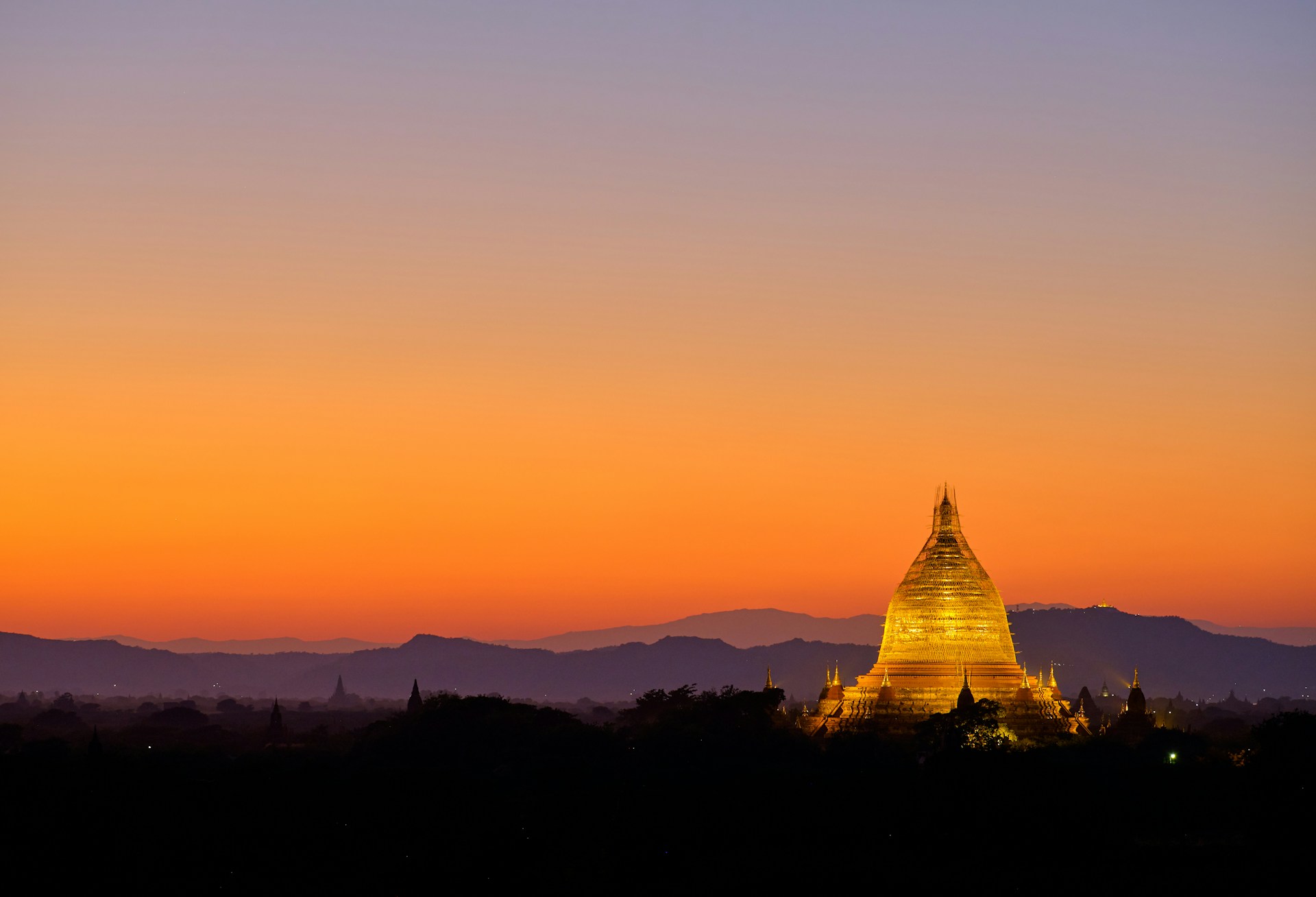
There are places in the world where the weight of human history is so dense, so physically present, that standing in the middle of it changes something in you. Bagan is one of those places. Spread across a 104-square-kilometer plain on the eastern bank of the Ayeyarwady River in central Myanmar, more than 2,200 ancient Buddhist temples, pagodas, and stupas rise from the red earth in various states of weathered magnificence. At sunrise, when morning mist clings to the valley floor and the first light catches the gilded spires, Bagan looks less like a destination and more like a vision.
In 2026, a specific category of traveler is returning to this plain with renewed intention. They are not looking for ease, or luxury, or a polished tourist experience. They are here because Bagan, Myanmar's greatest UNESCO World Heritage Site, inscribed in 2019, offers something that is increasingly rare in the modern world: authentic, crowd-light immersion in a civilization that flourished a thousand years ago, with minimal commercial mediation between visitor and monument. Myanmar welcomed more than 800,000 international visitors between January and October 2025, according to the country's Ministry of Hotels and Tourism, as reported by Travel and Tour World and Mekong Tourism. Bagan, consistently cited among the top destinations within that visitor flow alongside Yangon and Taunggyi, continues to draw history travelers, spiritual seekers, and photographers chasing the single most dramatic landscape of temples on earth.
The modern trend driving this return is Intentional Heritage Travel: a deliberate choice by culturally motivated visitors to engage deeply with living historical sites, support local economies through direct spending, and experience destinations before overtourism transforms them. Bagan, with reduced visitor pressure compared to pre-2021 levels and a cultural landscape that remains startlingly unmediated, is in many ways the definitive case study for this trend in Asia right now.
The history of Bagan is inseparable from the history of Myanmar itself. During the 11th to 13th centuries, the Pagan Empire unified the disparate regions of what is now Myanmar into a single political and religious entity for the first time. At the apex of its power, Bagan functioned as one of the largest cities in Southeast Asia. King Anawrahta, who unified the empire in 1044 CE, was the first Burmese king to adopt Theravada Buddhism as the state religion, and the religious fervor that followed produced one of the most extraordinary acts of collective monument building in human history. Within two centuries, more than 10,000 Buddhist religious structures had been built across the Bagan plain, as documented by multiple heritage and archaeology sources. Subsequent kings each added their own monuments: King Kyanzittha commissioned the iconic Ananda Temple in 1105 CE, considered among the finest examples of Mon architecture in Southeast Asia; King Narathu built the massive Dhammayangyi, the largest single structure in Bagan; and the Shwezigon Pagoda, built by Anawrahta himself, houses a revered replica tooth relic of the Buddha.
The Pagan Empire collapsed in 1287 when Kublai Khan's Mongol forces invaded from the north. The city was abandoned as a capital, the monuments left to the elements, and the plain gradually swallowed the smaller structures in vegetation and dust. Time, earthquakes, and centuries of atmospheric erosion reduced the original 10,000 to approximately 2,200 surviving structures. A catastrophic earthquake in August 2016 measuring 6.8 on the Richter scale destroyed or damaged nearly 400 of those monuments, deepening the case for urgent international conservation attention.
Myanmar first nominated Bagan for UNESCO World Heritage status in 1995 and 1996. The nomination was rejected, partly due to concerns about inappropriate conservation methods, the construction of a modern observation tower inside the archaeological zone, and the displacement of local communities from the protected area. The country reapplied following a political transition in 2011 and took substantive steps to address UNESCO's concerns, including demolishing illegal new structures and developing a comprehensive site management plan. On July 6, 2019, UNESCO's World Heritage Committee formally inscribed Bagan, recognizing its outstanding universal value as testimony to the Pagan civilization that dominated the region from the 11th to 13th centuries. The inscription confirmed Bagan's place alongside Angkor Wat in Cambodia and Machu Picchu in Peru as one of the defining archaeological landscapes of the world, as noted by multiple heritage sources.
The inscription immediately elevated Bagan's international profile. International tourist arrivals to Myanmar as a whole were growing robustly in 2019 and early 2020 before the pandemic disrupted global travel. The political events of February 2021 then created a more complex travel environment that the country is still navigating. The result, from a purely practical standpoint for the intentional traveler, has been a significant reduction in tourist density at Bagan's temples: a site that once saw daily crowds of hundreds now offers extended periods of near solitude.
One of the most significant developments in Bagan's tourism profile over the last two years has been the robust recovery of domestic tourism. During the Thadingyut holiday period in October 2025, Myanmar's Ministry of Hotels and Tourism documented a surge in domestic visitor numbers that exceeded expectations, with Bagan named alongside Inle Lake as one of the two top domestic destinations, as confirmed by Travel and Tour World. This domestic resurgence reflects both the enduring significance of Bagan within Myanmar's own cultural identity and a practical reality: the temples remain fully operational as active places of Buddhist worship and pilgrimage. The Ananda Temple, the Shwezigon Pagoda, and dozens of smaller structures receive regular offerings, monks, and worshippers. Bagan is not a museum. It is a living sacred landscape, and the domestic traveler understands that distinction intuitively.
Myanmar requires most foreign nationals to obtain a visa before travel. The standard route for most nationalities is the Myanmar tourist e-Visa, which costs approximately 50 USD per person for a single-entry tourist stay of up to 28 days, as confirmed by the Wikipedia Visa Policy of Myanmar article citing the Ministry of Immigration and Population. The e-Visa is valid for 90 days from the date of issue and must be used to enter through designated ports, which include Yangon International Airport, Mandalay International Airport, and Nay Pyi Taw International Airport. Following a temporary suspension during the March 2025 earthquake recovery, Myanmar's tourist e-Visa service fully resumed on April 22, 2025, as confirmed by BTW Visas citing official Myanmar immigration sources. Indian nationals have a separate Visa on Arrival facility extended through August 2026 under a trial arrangement, as documented by BTW Visas. Always check the current status of e-Visa processing at the official Myanmar e-Visa portal before booking travel.
Critically, multiple governments including the United States, Australia, Canada, and the United Kingdom currently maintain Level 4 travel advisories for Myanmar, advising against all travel to the country due to ongoing civil conflict, as documented by Go Myanmar Tours citing the US State Department and UK FCDO. Bagan specifically sits within what travel professionals call the Tourist Kite: the cluster of main heritage destinations including Yangon, Mandalay, Bagan, and Inle Lake that the UK's FCDO rates as orange zone (not red), indicating that travel is possible with elevated caution, as confirmed by Adventure to Every Country's 2026 safety analysis. Bagan itself has not recorded documented safety incidents against tourists, as noted by multiple independent travel writers and the Burma Insight safety guide, with zero security issues reported at Bagan's temple zone throughout 2025. Travelers must consult their own government's most current advisory before making any booking decisions and should take out comprehensive travel insurance including medical evacuation coverage.
The most practical entry point for international visitors is Yangon International Airport, with onward domestic connection to Nyaung U Airport (airport code NYU), the nearest airport to Bagan at approximately 4 kilometers from Nyaung U town. Domestic flights from Yangon to Nyaung U take approximately one hour, as confirmed by Heritage Voyager's Bagan site guide. Airlines operating the route include Air KBZ, Myanmar National Airlines, and Golden Myanmar Airlines, with flight costs in the range of approximately 100 to 150 USD documented by Heritage Voyager, though prices should be verified at booking. Alternatively, overnight VIP buses from Yangon (approximately 10 hours, 15 to 25 USD) and Mandalay (approximately 5 hours, 10 to 15 USD) arrive at Nyaung U bus station, as documented by the Myanmar.com Bagan travel guide. A scenic but slower option is the Irrawaddy River ferry from Mandalay, taking 9 to 10 hours downstream and offering views of the river valley that have barely changed in centuries.
Bagan's archaeological zone is too large to cover on foot and the most celebrated way to explore it is by electric bike (e-bike): a quiet, nimble mode of transport that allows visitors to drift between temples along dirt tracks, stop spontaneously, and reach smaller structures that the organized tour bus circuit never visits. E-bike rental is widely available in Nyaung U and across the three main neighborhoods of Old Bagan, New Bagan, and Nyaung U, with documented costs of approximately 6,000 MMK per day in recent guides, though current local pricing should be confirmed on arrival. InsideAsia Tours' travel writing on Bagan describes the e-bike as the ideal balance between freedom and environmental sensitivity: quiet enough not to disturb the sacred atmosphere, and capable of covering the spread of the archaeological zone in a single day.
For a structured introduction, hiring a local Bagan guide for at least one half-day is strongly recommended. The Ananda Temple, built in 1105 CE and considered one of the finest preserved temples in Myanmar, contains a celebrated optical illusion in its four giant gilded Buddha statues whose facial expressions shift from severe to serene depending on the viewing distance, as documented by InsideAsia Tours. This kind of contextual knowledge transforms a walk through carved brick into a genuine historical encounter. Key temples to prioritize include the Ananda Temple for artistry and preservation, the Dhammayangyi for sheer scale and its mysterious bricked-up inner corridors, the Sulamani Temple for beautiful carvings, and the Shwesandaw Pagoda for panoramic sunset views across the plains. Note that climbing on temples is now restricted at most sites as a UNESCO conservation measure, as confirmed by multiple 2025 travel guides.
Floating above Bagan's temple plain at sunrise in a hot air balloon is widely considered one of the defining travel experiences in all of Asia. The Balloons Over Bagan operator is the most established service and has been operating flights over the archaeological zone for decades. Flights launch at sunrise to take advantage of the soft morning light, and a 45-minute flight provides aerial views of the entire Bagan plain, the Ayeyarwady River, and the mountains beyond that are otherwise impossible to obtain. The balloon season runs from October through February during the cool, dry season, with March and part of April still operational but warmer, and the monsoon season from April through September making flights impractical due to unpredictable winds, as confirmed by Beautiful Life Beautiful World's balloon guide and Heritage Voyager. Balloon rides are a significant expense: ticket prices at the upper end of the range reach approximately 300 USD per person or more, as referenced by the World Heritage Site enthusiast review and multiple booking sites. Book well in advance for the October to February peak season, as capacity is limited and demand consistently exceeds supply.

The optimal travel window for Bagan is November through February, when the cool, dry season brings mild temperatures, calm winds, and clear skies. This is also the season when hot air balloon flights operate reliably. October sits at the tail end of the monsoon and can still be productive, especially with the Thadingyut festival adding cultural richness to the visit. The three main base neighborhoods each serve a different traveler type: Old Bagan offers the closest proximity to major temples but commands higher accommodation prices; New Bagan provides mid-range hotel options with good access to the archaeological zone; and Nyaung U offers the most budget-friendly options alongside a local market and a village atmosphere that gives a truer sense of everyday Burmese life, as confirmed by the Myanmar.com Bagan ultimate guide. For reference, Heritage Voyager documents the airport taxi from Nyaung U airport to hotels at approximately 4 to 8 USD range, though current local pricing should always be verified on arrival.
Bagan is not an archaeological park in the Western sense. The temples and pagodas of the plain are active places of Buddhist worship, maintained by local communities whose ancestors built them. Dressing modestly when entering any religious structure is non-negotiable: shoulders and knees must be covered, and shoes must be removed before entering every temple, stupa, and pagoda regardless of size or state of preservation. Removing shoes is a mark of respect that the Burmese observe with absolute consistency, and visitors who ignore it cause genuine offense.
Resist the impulse to climb on ancient brickwork for photography, even where it is not explicitly prohibited. The structures are genuinely fragile: centuries of monsoon erosion, earthquake damage, and now the cumulative micro-pressure of tourism have left many walls and stairways structurally compromised in ways that are not visually apparent. UNESCO's conservation management plan explicitly identifies uncontrolled climbing as a primary threat to the integrity of the site.
Support the local economy by buying directly from Bagan's lacquerware workshops, a craft tradition that dates back to the Pagan Empire and is now one of the most distinctive and ethically grounded souvenirs available anywhere in Myanmar. Lacquerware production employs local artisans in a skill passed across generations, and purchasing directly from workshop studios rather than airport souvenir stalls ensures the economic benefit stays within the community that maintains this extraordinary landscape.
Kotor is a double-listed UNESCO World Heritage Site in Montenegro's fjord-like bay. Your fact-checked 2026 guide to the Adriatic's most layered medieval city and the rise of Western Balkans travel.
The Faroe Islands generated 1.4 billion DKK from tourism in 2025 while pioneering Europe's most innovative sustainable tourism model. Your fact-checked 2026 guide to the North Atlantic's most dramatic archipelago.
McMurdo Sound and the Ross Sea welcome only about 1,150 visitors per season. Your fact-checked 2026 guide to the world's most remote expedition and the huts of Scott and Shackleton.