Get consult
Unlock the secrets of the world’s most breathtaking locales with our expert insights — guiding you toward the truly remarkable destinations that define a lifetime of travel.



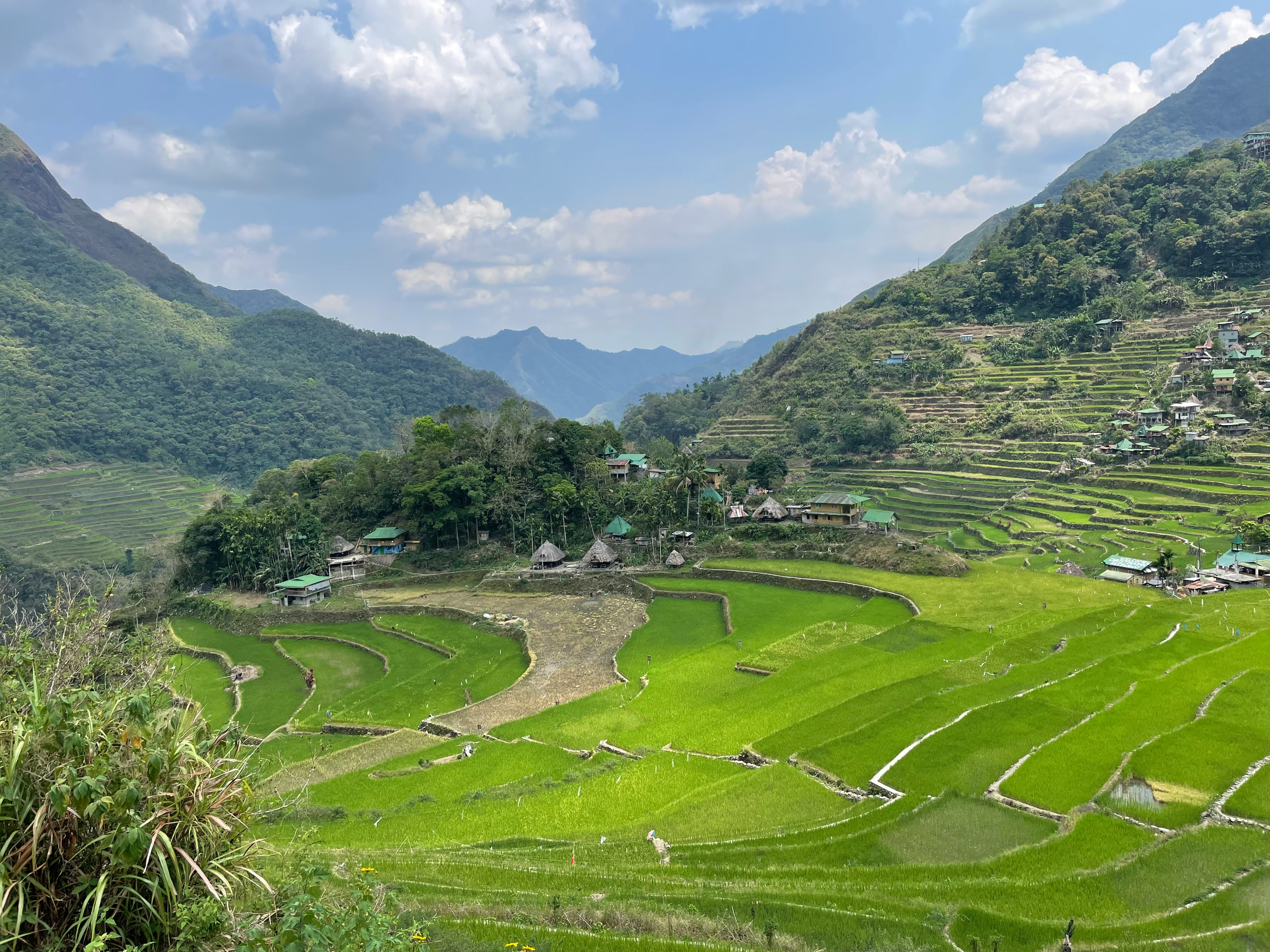
Photo by Omri D. Cohen on Unsplash
High in the Cordillera mountains of northern Luzon, at elevations reaching 1,500 meters above sea level, lies one of the most astonishing feats of human engineering ever created. The Banaue Rice Terraces — often called the "Eighth Wonder of the World" — are a series of cascading agricultural terraces carved into steep mountain slopes by the ancestors of the Ifugao people over 2,000 years ago, using nothing but hand tools and an intimate knowledge of the land.
These terraces are not ruins or relics. They are a living landscape, still actively farmed by the same communities whose forebears built them. The stone retaining walls, some rising as high as 15 to 16 meters, follow the natural contours of the mountains and are fed by an ancient irrigation system that channels water down from the rainforests above through a network of dams, channels, and bamboo pipes. UNESCO declared the Rice Terraces of the Philippine Cordilleras a World Heritage Site in 1995, calling it an expression of "the harmony between people and their environment."
Coming here is not just sightseeing. It is a humbling encounter with the enduring ingenuity and resilience of the human spirit.
Many visitors use the term "Banaue Rice Terraces" as a catch-all, but it's worth understanding the geography. The town of Banaue is the main hub and has its own impressive terraces visible from viewpoints along the main road — accessible without a hike and great for orientation. The Main View Deck, located about 4.5 km from the town center, offers the most sweeping panorama.
The most spectacular — and UNESCO World Heritage-listed — terraces are located in the surrounding villages:
The multi-day trek from Banaue to Cambulo to Batad is the definitive way to experience the region. The trail winds through rice terraces on one side of a valley, a river flowing below, passing through traditional Ifugao villages where life continues largely as it has for centuries. Trekkers sleep in simple homestays, share meals with local families, and wake to mountain mist drifting over the terraced hillsides.
The one-night version (Banaue → Cambulo → Batad) takes two days and requires a reasonable level of fitness. The terrain is challenging in places — narrow paths, stone steps, and some elevation change — but the route is well-marked and guides are mandatory to hire through the Banaue tourism office. Guides also provide invaluable cultural context that transforms a hike into a genuine education.
For those with less time, Batad can be visited as a day trip from Banaue, though an overnight stay in the village is strongly recommended for the experience of watching evening light settle over the terraces and waking to the morning mist.
The terraces cannot be understood apart from the people who built and sustain them. The Ifugao are one of the Philippines' indigenous highland communities, and their culture permeates every aspect of life in this region. Entire communities cooperate on the cyclical, seasonal rhythms of planting, irrigation, pest control, and harvest — tied to lunar cycles and sometimes accompanied by religious rituals that have been practiced unchanged for generations.
In Tam-An Village, just 240 steps below Banaue's main hotel, visitors can meet traditional Ifugao carvers and weavers who practice crafts passed down through generations. The village is also known for its "no-nail houses" — traditional Ifugao homes built from timber without a single nail, held together by precise joinery and structural ingenuity.
The Banaue Museum is another essential stop, offering exhibits on Ifugao history, culture, artifacts, and the story of the terraces themselves.
Banaue is beautiful year-round, but each season offers a different experience:
Banaue is approximately 340 km from Manila — about 8 to 10 hours by overnight bus. Ohayami Trans and Coda Lines offer nightly departures from Manila that arrive in Banaue early morning, maximizing your time in the mountains. Alternatively, fly to Cauayan Airport in Isabela and arrange a van transfer from there.
Most visitors to the Philippines head straight for the beaches — and they are magnificent. But to truly understand the depth and diversity of this archipelago, you need to venture into the mountains. Banaue offers something the beach cannot: a profound encounter with history, with a living culture that has endured for two millennia, and with a landscape that is not just beautiful but meaningful.
The terraces of Banaue are more than a wonder of engineering. They are a testament to what human beings can achieve when they work in harmony with the earth rather than against it.
Lace up your boots. The stairway to heaven is waiting.
Kotor is a double-listed UNESCO World Heritage Site in Montenegro's fjord-like bay. Your fact-checked 2026 guide to the Adriatic's most layered medieval city and the rise of Western Balkans travel.
The Faroe Islands generated 1.4 billion DKK from tourism in 2025 while pioneering Europe's most innovative sustainable tourism model. Your fact-checked 2026 guide to the North Atlantic's most dramatic archipelago.
McMurdo Sound and the Ross Sea welcome only about 1,150 visitors per season. Your fact-checked 2026 guide to the world's most remote expedition and the huts of Scott and Shackleton.