Get consult
Unlock the secrets of the world’s most breathtaking locales with our expert insights — guiding you toward the truly remarkable destinations that define a lifetime of travel.



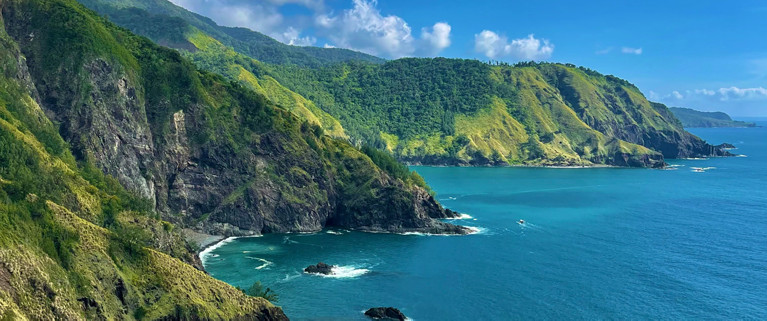
Photo by Karl Galamiton on Unsplash
Closer to Taiwan than to Manila, the province of Batanes sits at the very northern tip of the Philippine archipelago — a remote cluster of ten islands battered by winds from two great bodies of water, where green hills tumble into cliffs and time moves at its own unhurried pace. Known as the "Home of the Winds," Batanes is unlike any other destination in the Philippines. There are no mega-resorts, no crowded party beaches, and no rush. What you'll find instead is one of the most visually stunning, culturally rich, and genuinely unspoiled places in all of Southeast Asia.
The province is made up of three main inhabited islands — Batan, Sabtang, and Itbayat — each with its own distinct character. Batan is the gateway, home to the capital Basco and most of the island's infrastructure. Sabtang is a living museum of Ivatan culture. Itbayat, the largest and most remote, is an explorer's reward for those willing to make the journey.
No photograph fully prepares you for the visual drama of Batanes. The island's most iconic landscapes include:
Batanes is home to the Ivatan people, an indigenous community who have inhabited these windswept islands for centuries and developed a culture perfectly adapted to their environment. The most visible expression of this is the traditional Ivatan stone house — thick-walled, low-roofed dwellings built from coral stone and limestone with thatched cogon grass roofs, engineered to withstand typhoons and ferocious winds. Many of these houses, some centuries old, are still inhabited today.
The village of Chavayan on Sabtang Island is the finest example of a preserved Ivatan settlement. Walking its narrow lanes between stone houses is like stepping into a different century. Here, the traditional art of making vakul (a woven head covering used as protection from rain and sun) and kanayi (a woven vest) are still practiced by local women.
Another uniquely Ivatan institution is the Honesty Coffee Shop in the town of Ivana — an unmanned store where customers help themselves, log their purchases in a notebook, and leave payment in a box. Founded in 1995, it has operated without an attendant ever since, and it remains one of the most moving expressions of the values that define this community.
The ideal time to visit Batanes is during the dry season from March to May, when skies are clear, seas are calm, and the hills are at their most lush and vivid green. The island's typhoon season runs from July through October, and strong weather can cause flight cancellations — so always build flexibility into your itinerary.
The only way to reach Batanes from mainland Luzon is by air. Philippine Airlines operates flights from Manila and Clark International Airport (CRK) to Basco Airport, with a flight time of approximately 1 hour and 45 minutes. Tickets can be expensive — round-trip fares from Manila typically range from ₱12,000 and up — but this is precisely what has kept Batanes beautifully uncrowded. In 2024, the island welcomed just over 13,000 tourists, far below its pre-pandemic numbers, reflecting a deliberate shift toward quality, sustainable tourism.
Batan Island is best explored by tricycle, motorbike rental, or guided van tour. Most tour operators in Basco offer organized North and South Batan day tours that cover the major viewpoints and cultural sites. For Sabtang, boats depart from Ivana Port in the early morning with return trips in the early afternoon — plan your day accordingly.
Batanes offers a range of homestays, guesthouses, and small hotels rather than large resorts, and that's entirely by design. Staying with an Ivatan family is a genuinely enriching experience. Local Ivatan cuisine is simple and hearty — don't leave without trying uvud balls (made from banana pith), vunong (turmeric rice), and fresh dorado (flying fish). Bring enough cash — ATMs in Basco are limited, and there are none on Sabtang or Itbayat.
Batanes holds the distinction of being the first Philippine member of the UNWTO's International Network of Sustainable Tourism Observatories. The community is deeply committed to preserving its natural and cultural heritage, and visitors are expected to travel responsibly: no single-use plastics, respect for sacred and cultural sites, and support for local guides and businesses. This is not just a rule — it's the spirit of the place.
Batanes doesn't offer beach parties or nightlife. It offers something rarer: the sensation of standing at the edge of the world, in a landscape of impossible beauty, among people whose honesty and warmth feel almost radical in their simplicity. It's the kind of place that quietly resets something inside you. If you go once, you'll want to go back.
Book your flights early, pack light, and leave room for wonder.
Kotor is a double-listed UNESCO World Heritage Site in Montenegro's fjord-like bay. Your fact-checked 2026 guide to the Adriatic's most layered medieval city and the rise of Western Balkans travel.
The Faroe Islands generated 1.4 billion DKK from tourism in 2025 while pioneering Europe's most innovative sustainable tourism model. Your fact-checked 2026 guide to the North Atlantic's most dramatic archipelago.
McMurdo Sound and the Ross Sea welcome only about 1,150 visitors per season. Your fact-checked 2026 guide to the world's most remote expedition and the huts of Scott and Shackleton.