Get consult
Unlock the secrets of the world’s most breathtaking locales with our expert insights — guiding you toward the truly remarkable destinations that define a lifetime of travel.



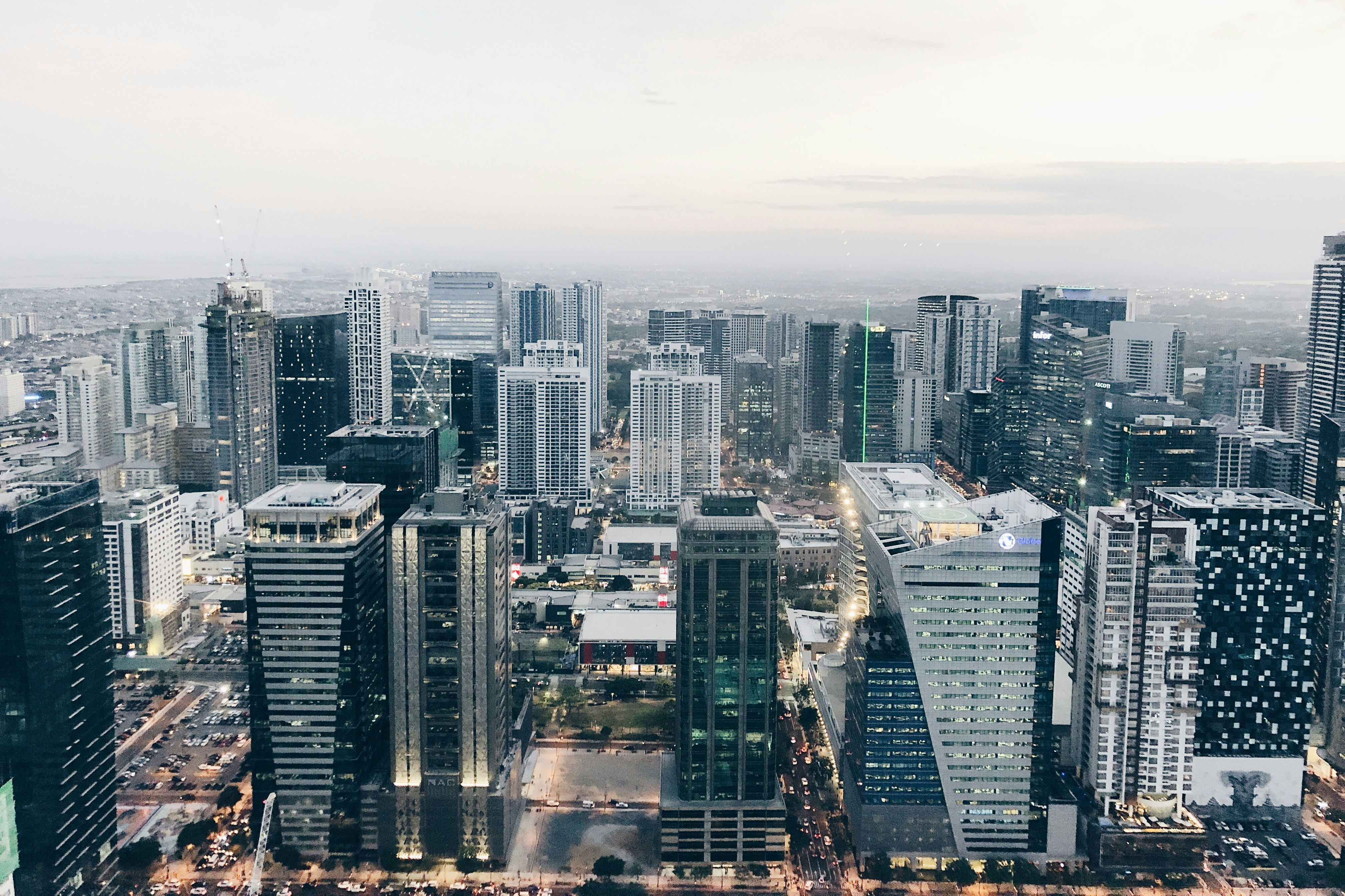
Photo by OJ Serrano on Unsplash
If you spend any time in global digital nomad forums, travel subreddits, or remote work communities in 2025 and 2026, one Philippine location keeps surfacing in the same breath as Bali, Chiang Mai, and Lisbon: Bonifacio Global City, or BGC — the gleaming, walkable, fiber-connected district in the southern edge of Metro Manila.
Multiple 2025 publications named BGC the Philippines' top urban base for remote workers and location-independent professionals, citing its premium coworking infrastructure, reliable fiber internet, English-speaking community, and cost of living that — while higher than provincial Philippine cities — remains substantially below comparable hubs in Singapore, Tokyo, or Sydney. The modern trend transforming BGC is what the digital nomad community calls "Urban Hub Migration": the shift of remote workers away from traditional beach-town nomad bases and toward well-organized, infrastructure-rich city districts that offer the amenities of global capitals at a fraction of the cost.
BGC in 2026 is not just a place to visit. It is a place where a growing community of global remote workers are choosing to base themselves for months at a time — and the city's infrastructure, culture, and urban planning make it unusually well-suited for exactly that.
The story of BGC is one of the most dramatic urban transformations in Philippine — and arguably Asian — modern history. The area was the site of Fort Bonifacio, a major United States military installation established in the early 20th century as part of the American colonial administration. The fort served as the headquarters of the Philippine Army after independence and remained a military camp through the Marcos era.
Following the withdrawal of US forces from the Philippines in 1992, the Bases Conversion and Development Authority (BCDA) began the process of converting former military land into civilian use. The first master plan for what would become BGC was conceived in the mid-1990s, with the Ayala Land-led development beginning to take shape in the 2000s.
The district's art scene has also emerged as a defining cultural feature. BGC is home to a permanent collection of large-scale public murals, sculpture installations, and the Ayala Museum — alongside a restaurant scene that spans everything from Ilocano regional cuisine to Japanese omakase to third-wave specialty coffee from local roasters.
According to multiple 2025 and 2026 sources — including ocarramedia.com's comprehensive 2026 digital nomad guide and wandermapped.blog's 2025 Philippines nomad guide — remote workers in BGC should budget approximately $2,000 to $2,500 USD per month for a comfortable lifestyle including a furnished one-bedroom apartment, coworking fees, food, transportation, and leisure. A furnished one-bedroom apartment in BGC ranges roughly from $400 to $800 USD per month depending on building and floor level. These figures are consistent across multiple independently published nomad guides and should be treated as estimates, as individual costs vary significantly.
BGC's coworking scene is the most developed in the Philippines. WeWork at Uptown Mall, Regus at Eco Tower, and KMC Solutions are the most frequently cited premium options. Clock In at Bonifacio High Street is recommended for freelancers and smaller teams wanting a more social, community-oriented environment. Day passes, hot desks, and private office suites are all available. Most spaces offer fiber internet speeds that multiple nomad reviewers have measured at 25 to 100 Mbps, though individual speeds vary by time of day and building infrastructure.
Grab (Southeast Asia's dominant ride-hailing app) is the standard transportation tool in Metro Manila and works reliably within and around BGC. The district itself is one of the few areas of Metro Manila that is genuinely walkable — most daily needs (groceries, restaurants, gyms, coworking, parks) can be reached on foot within 15 to 20 minutes. Traffic in the wider Metro Manila area can be severe; plan accordingly for trips to other parts of the city.
BGC has the most reliable internet in the Philippines. Fiber providers servicing the area include PLDT/Smart, Globe At Home, and Converge ICT. Nomad guides consistently advise carrying a backup pocket Wi-Fi or maintaining a local SIM card with a data plan — the standard precaution anywhere in Southeast Asia. Within coworking spaces, connectivity is generally reliable enough for video calls, cloud work, and live deployments.
Most nationalities enter the Philippines on a tourist visa valid for 30 days, extendable in increments of up to 59 days at any Bureau of Immigration office. Long-term stays are possible through repeated extensions, though this is a legal gray area for those working remotely. The Philippines has been discussed as a candidate for a formal digital nomad visa; as of March 2026, no such visa category has been officially launched. Verify the current status with the Philippine Bureau of Immigration before planning an extended stay.
BGC is one of the wealthiest districts in Southeast Asia, and it exists within Metro Manila — one of the most economically unequal metropolitan areas in Asia. Responsible urban travel in BGC means being intentional about where your money goes. Eating at Filipino-owned restaurants rather than exclusively international chains, tipping service workers at a level that reflects your actual purchasing power, and engaging with the cultural institutions (the Ayala Museum, the public art walks, the local community events) all matter. BGC's polished exterior can obscure the fact that it is surrounded by urban communities with very different economic realities. Traveling through it with awareness of that context — not guilt, but awareness — is what separates a thoughtful traveler from a tourist passing through.
Kotor is a double-listed UNESCO World Heritage Site in Montenegro's fjord-like bay. Your fact-checked 2026 guide to the Adriatic's most layered medieval city and the rise of Western Balkans travel.
The Faroe Islands generated 1.4 billion DKK from tourism in 2025 while pioneering Europe's most innovative sustainable tourism model. Your fact-checked 2026 guide to the North Atlantic's most dramatic archipelago.
McMurdo Sound and the Ross Sea welcome only about 1,150 visitors per season. Your fact-checked 2026 guide to the world's most remote expedition and the huts of Scott and Shackleton.