

Get consult
Unlock the secrets of the world’s most breathtaking locales with our expert insights — guiding you toward the truly remarkable destinations that define a lifetime of travel.



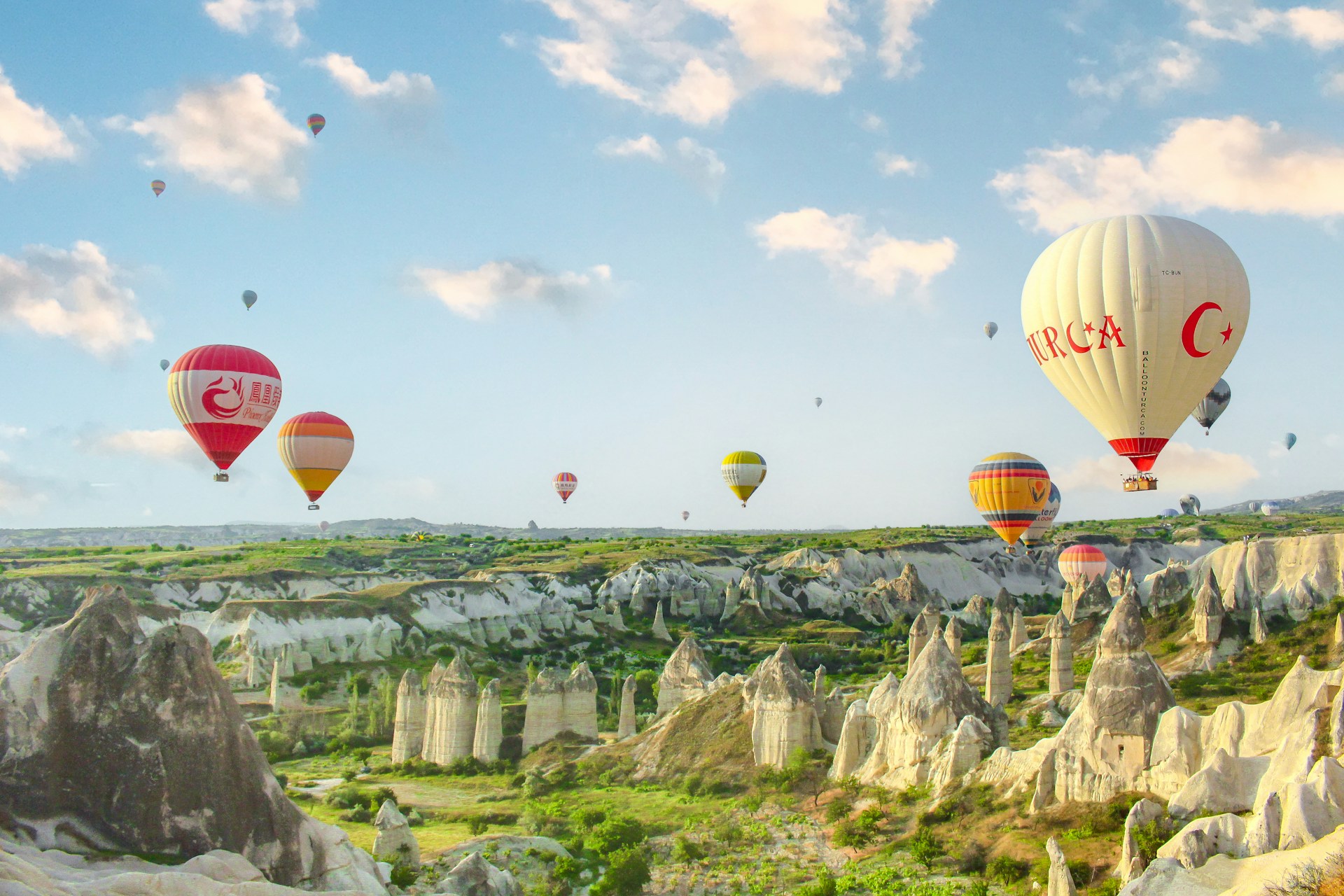
There is a particular image that has become one of the most recognizable travel photographs on earth: dozens of colorful hot air balloons drifting in slow formation above a landscape of pale volcanic spires and ancient cave villages in the pink light of a Central Anatolian sunrise. That image is Cappadocia. And in 2026, the reality behind that photograph has evolved into something far more layered, more luxurious, and more carefully managed than most travelers expect.
Turkey welcomed a record 64 million international visitors in 2025, generating 65.2 billion USD in tourism revenue, the highest annual figure in the country's history, announced by Culture and Tourism Minister Mehmet Nuri Ersoy and confirmed by Travel Mole and the Turkish Statistical Institute. The government has set a target of 68 billion USD in tourism revenue for 2026. Cappadocia sits at the center of this surge. In 2024, the region recorded 769,814 passengers on hot air balloon flights alone, a record that broke the 700,000 threshold for the first time, representing a 24 percent increase over 2023, as confirmed by Nevşehir Governor Ali Fidan and reported by Turkiye Today and Focus on Travel News. Turkey's Ministry of Transport additionally reported that across all eight balloon tourism regions in 2024, 933,000 domestic and international tourists took balloon flights, with over 80 percent of all flights concentrated in Cappadocia, as documented by Caria Holidays citing ministerial data.
The modern trend Cappadocia leads in 2026 is High-Value Experiential Tourism: the global shift away from mass-market sightseeing toward premium, immersive, once-in-a-lifetime experiences that combine natural wonder, ancient heritage, and world-class luxury hospitality. Cappadocia has executed this transition more completely than almost any other destination in Asia, transforming cave dwellings that sheltered persecuted Christians in the Byzantine era into some of the most celebrated boutique hotels on earth.
Cappadocia's history is extraordinary by any measure. The region's soft volcanic rock, called tuff, was shaped over millions of years by the eruptions of Mount Erciyes and Mount Hasan into the distinctive formations called fairy chimneys: tall, tapered spires that rise from the valley floors in clusters and individual columns across a landscape unlike anything else on the planet. The earliest settlements carved into this rock date back to approximately 1800 BCE. By the Byzantine period, entire communities had burrowed into the earth, creating underground cities, churches, monasteries, and interconnected cave networks that sheltered thousands of people from successive waves of invasion. The Göreme Open Air Museum, a UNESCO World Heritage Site, preserves a concentration of rock-cut churches from the 10th to 12th centuries whose Byzantine frescoes remain among the finest examples of early Christian art surviving anywhere in the world.
That ancient foundation has not changed. What has changed in the last two to three years is the character of Cappadocia's tourism economy, driven by three specific forces.
The transformation of Cappadocia's accommodation sector from basic guesthouses to internationally recognized luxury properties represents one of the most remarkable hospitality success stories in contemporary Asia. The Museum Hotel in Uçhisar, the only Relais and Châteaux property in Cappadocia, operates 34 cave and stone rooms furnished with hundreds of authenticated historical artifacts from the Hittite, Roman, Seljuk, and Ottoman periods, registered with the Nevşehir Museum. Its Lil'a Restaurant serves forgotten Cappadocian dishes alongside modern Turkish cuisine on a terrace with panoramic valley views. Nightly rates begin at approximately 200 euros and reach beyond 1,000 euros for premium suites, as documented by multiple 2025 hospitality guides.
Argos in Cappadocia in Uçhisar is a sustainably operated hotel built across a 2,000-year-old cave network, featuring a wine cellar, firelit suites, an underground spa, and two restaurants sourcing exclusively from within a 60-kilometer radius of the property. Kayakapi Premium Caves in Ürgüp, ranked third best luxury hotel in the world by TripAdvisor's Travelers' Choice Best of the Best awards, is built across a restored private historical neighborhood and houses Revithia, a Michelin-starred restaurant. These are not novelty accommodations. They are world-class hospitality experiences housed in one of the oldest inhabited landscapes on earth, and they are attracting a global luxury traveler segment that previously had no reason to visit Turkey over competing luxury destinations in Asia.
One of Turkey's most successful recent tourism innovations has been the Night Museum program, which in 2025 brought 554,516 visitors to 27 major historical sites after dark, including Cappadocian heritage sites. The program, documented by Travel and Tour World citing Turkish Statistical Institute data, helps alleviate overcrowding during peak daytime hours and extends the tourism season into the cooler autumn months. The program is confirmed to continue and expand in 2026, offering moonlit or lantern-lit access to sites that are incomparably atmospheric after sunset. For Cappadocia, where the fairy chimneys change color dramatically with the quality of light, the night experience at key viewpoints and the Göreme Open Air Museum has become a sought-after extension of the standard daylight itinerary.
The annual International Balloon Festival in Cappadocia, held every August at the Göreme festival area, has grown into a major international event that draws balloon pilots and enthusiasts from around the world. By 2025, the festival hosted 38 specially designed hot air balloons from 27 countries, according to ToursCE's comprehensive festival guide. The 2025 festival ran from August 7 to 10 and filled the morning sky with balloons shaped like animals, castles, and abstract designs alongside the regular commercial fleet. The 2026 edition is expected to be the largest yet, with early indicators suggesting expanded country participation and enhanced cultural programming as part of the Nevşehir Culture Route (Kültür Yolu) summer festivities.
Cappadocia is served by two airports. Nevşehir Kapadokya Airport (NAV) is the closest, approximately 40 kilometers from Göreme. Kayseri Erkilet Airport (ASR) is approximately 73 kilometers away but often offers more flight options and lower fares. Both airports have daily connections from Istanbul, and Kayseri receives flights from additional domestic and seasonal international routes. Shuttle services to the main Cappadocian towns of Göreme and Ürgüp are available from both airports. By bus from Istanbul, journey times are approximately 10 to 12 hours overnight: Kamil Koç and other major bus operators serve the Nevşehir route regularly. Most nationalities can obtain a Turkish e-visa online at evisa.gov.tr before travel, with instant or same-day approval in most cases.
The balloon ride is the defining experience of Cappadocia and the single most important logistical decision of any visit. Balloon flights take place at sunrise, with pickup times typically between 4:00 and 5:00 AM depending on the season. The flight itself lasts approximately one hour. Standard basket sizes hold 8 to 28 passengers, while private flights are available for smaller groups. Ticket prices range from approximately 85 to 500 USD per person depending on season, package, and basket exclusivity, as documented across multiple 2025 and 2026 operator sites. Book as early as possible: during spring (April to May) and autumn (September to October), the best operators sell out weeks in advance. Weather cancellations do occur: build a buffer day into your itinerary. Children under 6 are prohibited from flights. Drones are not permitted near balloon flight zones. Royal Balloon and Kapadokya Balloons are among the most consistently recommended operators, with verified international safety certifications.
The optimal seasons are April through June and September through October, when temperatures are mild (approximately 15 to 25 degrees Celsius), balloon flight days are more frequent due to calmer winds, and the landscape is at its most visually compelling: spring poppies in the valleys and golden autumn light on the tuff formations. Summer (July and August) is hotter and more crowded, though the International Balloon Festival in August makes it worthwhile for that specific experience. Winter brings cold temperatures and occasional snow, which transforms the fairy chimneys into a genuinely rare and beautiful landscape, with cave hotel fireplaces adding to the atmosphere. Book luxury cave hotels six or more months in advance for peak season, as documented by multiple accommodation guides.
The Göreme Open Air Museum (UNESCO-listed, modest entrance fee) is the most important cultural site in the region and should be visited in the morning before tour groups arrive. The rock-cut churches here, particularly the Dark Church (Karanlık Kilise), contain the finest Byzantine frescoes in Cappadocia. Derinkuyu Underground City is the deepest of the region's ancient subterranean settlements, extending approximately eight stories underground with interconnected tunnels, stables, churches, and air shafts: a remarkable architectural achievement carved by hand without power tools. Kaymaklı Underground City is shallower and recommended for first-time visitors or those with claustrophobia concerns. Uçhisar Castle, the highest point in Cappadocia, provides panoramic views best experienced at sunset. Valley hikes through Rose Valley, Red Valley, and Love Valley can be done independently with a basic map and sturdy footwear, revealing fairy chimney landscapes largely absent of other visitors in the early morning hours.
Cappadocia's main attractions are spread across a 50-kilometer area centered roughly around Göreme, Ürgüp, and Uçhisar. Rental cars are available from both airports and are the most flexible option. Organized daily tours covering the key attractions are widely available from any hotel and typically include Göreme Open Air Museum, underground cities, Uçhisar Castle, and valley viewpoints. Local taxis connect the main towns for reasonable fares. The Kayseri-to-Göreme shuttle takes approximately 1 to 1.5 hours and costs a modest fee, as documented by The Gone Goat's 2026 itinerary guide.
Cappadocia's fairy chimneys and volcanic formations are irreplaceable geological features millions of years in the making. The single most important rule for responsible travel in the region is to stay on marked trails and avoid climbing or leaning on the rock formations, which are far more fragile than they appear and have been damaged in recent years by visitors seeking photos on or from the formations. When visiting underground cities and cave churches, follow guide instructions and do not touch the fresco surfaces: the oils from human hands accelerate their deterioration irreversibly. Choose accommodation and tour operators who demonstrate a genuine commitment to the region's communities and heritage: properties like Argos in Cappadocia (with its 60-kilometer ingredient sourcing policy) and Ariana Sustainable Luxury Lodge (solar-powered) model what responsible tourism in this landscape looks like. The morning balloon spectacle that defines Cappadocia globally exists because the region has maintained the conditions for it: clear skies, intact valleys, and an ancient landscape that has not been built over. That is worth protecting deliberately.
Kotor is a double-listed UNESCO World Heritage Site in Montenegro's fjord-like bay. Your fact-checked 2026 guide to the Adriatic's most layered medieval city and the rise of Western Balkans travel.
The Faroe Islands generated 1.4 billion DKK from tourism in 2025 while pioneering Europe's most innovative sustainable tourism model. Your fact-checked 2026 guide to the North Atlantic's most dramatic archipelago.
McMurdo Sound and the Ross Sea welcome only about 1,150 visitors per season. Your fact-checked 2026 guide to the world's most remote expedition and the huts of Scott and Shackleton.