Get consult
Unlock the secrets of the world’s most breathtaking locales with our expert insights — guiding you toward the truly remarkable destinations that define a lifetime of travel.



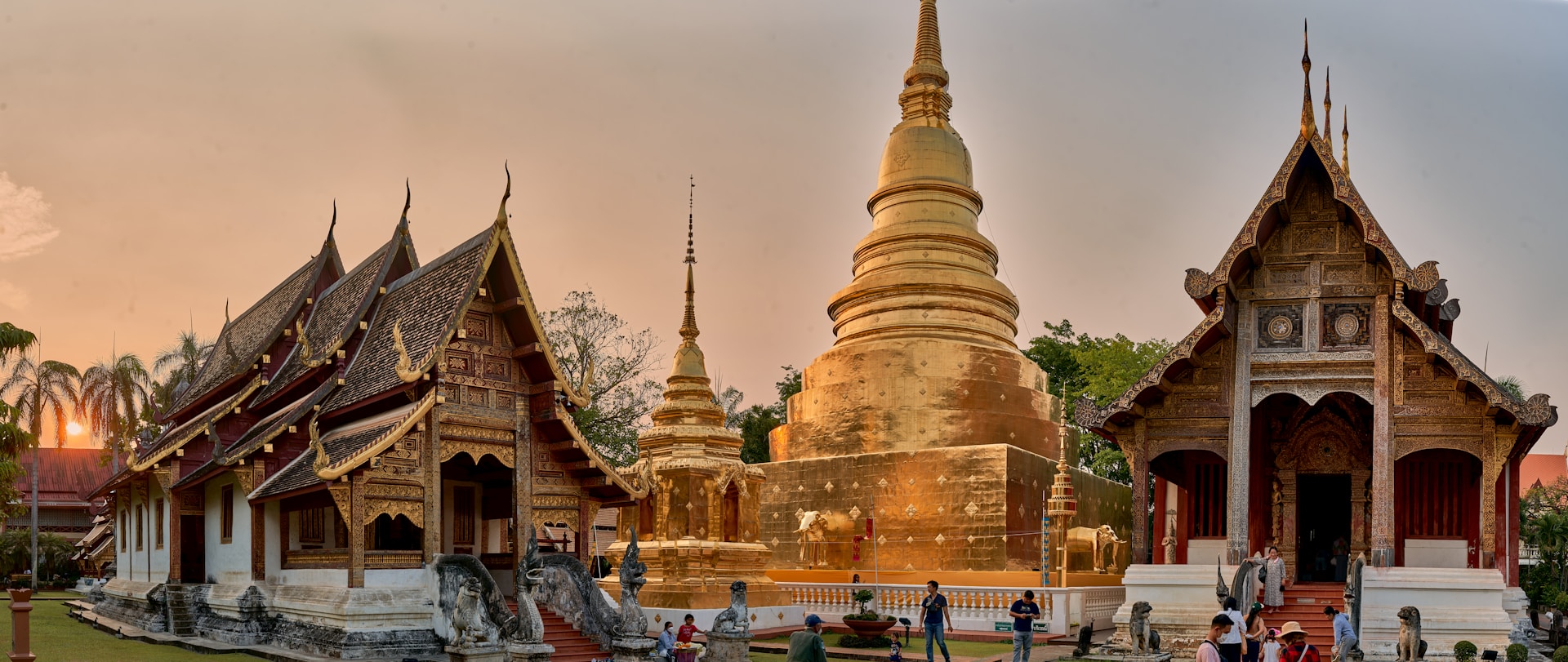
Photo by Norbert Braun on Unsplash
There is a city in northern Thailand, surrounded by forested mountains and ancient temple walls, that has quietly become the most important remote work destination in Asia. It is not a tech park or a co-working brand. It is a 700-year-old walled city with a moat, a Duke-like reverence for Buddhism, and a street food culture so deeply rooted that the locals have a saying: if you eat well in Chiang Mai, you will never fully enjoy food anywhere else. In 2026, Chiang Mai is the city that digital nomads from Europe, North America, and Australia choose when they are done pretending that a beachside laptop setup is a sustainable way to live and work.
The data backs this up. According to HotelWithTub's global ranking of the most popular digital nomad cities in 2025, published by Travel and Tour World in July 2025, Bangkok ranked first globally with a score of 4.55 out of 5, while Chiang Mai ranked 26th in the world, continuing its position as Thailand's most established long-stay nomad base outside the capital. Thailand as a whole is confirmed as Southeast Asia's number one digital nomad hub, with Chiang Mai, Bangkok, Koh Phangan, Koh Lanta, Phuket, and Krabi all placing in the global top 100.
The event that cemented Chiang Mai's status in 2026 was the Nomad Summit 2026, held from January 16 to 18 in the city, followed by Nomad Week from January 19 to 26, a series of community activities across Chiang Mai. As documented by The Digital Nomad Asia, this is one of the largest digital nomad events in the world, drawing hundreds of nomads, entrepreneurs, and location-independent professionals from around the world to Chiang Mai annually since 2015. In 2026, it marked over a decade of this community claiming the city as its spiritual and operational home in Asia.
The modern trend Chiang Mai embodies is Digital Nomad Village Growth: the transformation of a culturally rich secondary city into a fully functioning long-stay remote work ecosystem, with coworking infrastructure, visa policy, community events, and affordable living converging into a model that other Asian cities are actively trying to replicate.
Chiang Mai has attracted foreign long-stay visitors for decades. Backpackers discovered it in the 1980s and 1990s. Expats settled here in the 2000s. But the digital nomad movement, which began emerging around 2015 according to a 2024 peer-reviewed study on digital nomadism published in the Information Systems Journal (Wiley), transformed the city's economy and infrastructure in ways that earlier waves of visitors did not. The Nimmanhaemin district, known locally as Nimman, became the geographic center of this transformation: a walkable neighborhood of coworking spaces, specialty coffee shops, plant-based restaurants, and co-living apartments where the nomad community concentrated.
The single most significant policy shift for Chiang Mai's nomad economy in recent years was Thailand's formal acknowledgment of this community. According to Navigate Thailand's November 2025 travel trends guide, Thailand launched a Multiple-Entry Digital Nomad Visa in late 2025, valid for up to 5 years for remote workers earning overseas income. This addressed the long-standing frustration documented by Thrive in Thailand's 2025 nomad guide, where travelers relied on visa runs or language school visas to extend their stays. Additionally, as confirmed by Bel Around the World, Thailand's e-Visa platform became available globally as of January 2025, allowing applicants to apply entirely online without visiting a Thai embassy. These two developments together created the most accessible legal pathway for long-stay remote workers in Thailand's history.
The affordability that first attracted nomads to Chiang Mai has held. Thrive in Thailand's 2025 nomad guide documents that remote workers can live comfortably on THB 30,000 to 50,000 per month (approximately USD 850 to 1,400). Modern condos in Nimman and surrounding areas rent for approximately THB 6,000 to 15,000 per month (approximately USD 170 to 420). Street food from Chiang Mai's famous markets and vendor stalls starts at approximately THB 50 per meal. Internet speeds at coworking spaces and cafes range from 100 to 500 Mbps, with affordable home broadband readily available, as confirmed by Thrive in Thailand. Navigate Thailand's 2025-2026 trends guide confirms that new co-living complexes and coworking spaces have been opening in the Nimmanhaemin district specifically to meet sustained demand.
Chiang Mai's growth comes with one well-documented annual challenge that responsible travel guides consistently flag. From approximately February to April, surrounding agricultural land is burned to clear crops, creating hazardous air quality conditions across the city and region. This is documented by both Thrive in Thailand and Rochalia's January 2026 nomad guide. Most long-stay nomads plan to travel elsewhere during these months, and the city's broader tourism sector acknowledges this as a significant environmental and public health issue that requires structural solutions, not just traveler workarounds.
Chiang Mai is served by Chiang Mai International Airport (CNX), with direct flights from Bangkok (approximately 1 hour, multiple daily departures on Thai Airways, Bangkok Airways, and low-cost carriers), as well as international connections to several regional hubs. Overnight sleeper trains from Bangkok's Hua Lamphong Station are a popular and scenic alternative for travelers with more time, taking approximately 12 to 13 hours. The train arrives at Chiang Mai Railway Station, which is a short ride from the Old City.
Chiang Mai's Old City, enclosed within a square moat and partially intact walls, contains over 30 Buddhist temples within its boundaries. Wat Phra Singh and Wat Chedi Luang are the two most significant, both within easy walking distance of each other in the Old City center. Wat Doi Suthep, the golden hilltop temple visible from most of the city, is accessible by songthaew (shared red truck taxi) or tuk-tuk and remains one of the most visited sites in all of Thailand. Modest entry fees apply at most temples; dress codes require covered shoulders and knees.
The Nimmanhaemin Road area (Nimman) is the center of Chiang Mai's digital nomad and creative class community. It contains the highest concentration of coworking spaces, specialty cafes with reliable high-speed Wi-Fi, international restaurants, yoga studios, and co-living apartments in the city. It is walkable, well-lit, and home to the Maya Mall shopping center, which anchors the district. For nomads choosing a neighborhood to base themselves, Nimman offers the most consolidated infrastructure, though the Old City and Santitham neighborhoods offer quieter and cheaper alternatives with their own distinct character.
Chiang Mai's position in the northern mountains makes it a natural base for some of Thailand's most compelling day trips and multi-day excursions. Doi Inthanon National Park, home to Thailand's highest peak and dramatic twin pagodas overlooking cloud-filled valleys, is approximately 2 hours by car. The mountainous districts of Pai (3 hours by winding mountain road) and Chiang Rai (3 to 4 hours north) are popular extensions. Hill tribe villages in the surrounding highlands offer cultural immersion opportunities that should be approached through community-endorsed operators to ensure benefits flow directly to local families.
Thailand's new Multiple-Entry Digital Nomad Visa, launched late 2025, is valid for up to 5 years for remote workers earning overseas income, as confirmed by Navigate Thailand. For shorter stays, the standard tourist visa and visa exemption schemes apply: verify current entry requirements for your nationality at the Royal Thai Embassy or official Thai immigration website before travel, as policies evolve. The e-Visa platform is available globally as of January 2025. Chiang Mai's population reached approximately 1.79 million residents in 2025, according to Thailand's Department of Provincial Administration, as cited by Rochalia.
The most honest sustainability challenge in Chiang Mai is not environmental in the conventional sense. It is economic: a city whose cost of living remains low partly because local wages are low, and where an influx of higher-earning foreign remote workers risks pricing local residents out of the neighborhoods they built. Travel and Tour World's July 2025 analysis of Thailand's digital nomad boom explicitly noted government concerns about housing costs and the need for zoning protections in nomad-heavy districts. The most responsible approach for long-stay visitors is to spend deliberately within the local economy: eat at Thai-owned street food stalls and markets rather than foreign-facing restaurant districts, hire local guides for temple and mountain excursions, study the Thai language even at a basic level, and participate in community organizations rather than consuming the city from within a sealed nomad bubble. Chiang Mai has given remote workers an extraordinary quality of life. The least they can give back is genuine cultural engagement.
Kotor is a double-listed UNESCO World Heritage Site in Montenegro's fjord-like bay. Your fact-checked 2026 guide to the Adriatic's most layered medieval city and the rise of Western Balkans travel.
The Faroe Islands generated 1.4 billion DKK from tourism in 2025 while pioneering Europe's most innovative sustainable tourism model. Your fact-checked 2026 guide to the North Atlantic's most dramatic archipelago.
McMurdo Sound and the Ross Sea welcome only about 1,150 visitors per season. Your fact-checked 2026 guide to the world's most remote expedition and the huts of Scott and Shackleton.