Get consult
Unlock the secrets of the world’s most breathtaking locales with our expert insights — guiding you toward the truly remarkable destinations that define a lifetime of travel.



There are 18 islands in the North Atlantic, halfway between Norway and Iceland, that receive approximately 130,000 tourists a year and have more sheep than people. The landscape is so cinematically extreme, sea cliffs dropping 400 meters straight into the Atlantic, waterfalls leaping from cliff edges directly into the ocean, lake surfaces that appear to float impossibly above the sea, that photographs of it routinely circulate on social media with captions questioning whether they are real. National Geographic ranked the Faroe Islands first out of 111 island communities in the world in 2007, as confirmed by Wikipedia's Faroe Islands tourism article. And yet what makes the Faroe Islands the most interesting destination story in Europe in 2026 is not the landscape. It is what the Faroese government and Visit Faroe Islands have decided to do about the people who come to see it.
In 2025, foreign visitors to the Faroe Islands generated 1.4 billion Danish krona in export value, a 100 million krona increase over 2024, making tourism the third-largest export sector at 7.6 percent of total Faroese exports, as confirmed by Daily Northern citing Hagstova Foroya (the Faroese statistics agency) and public broadcaster Kringvarp Foroya. 70,000 tourists arrived by plane in 2025, up from 65,000 in 2024, while sea arrivals held steady at 60,000, with overall visitor numbers stable at approximately 130,000 annually, as confirmed by Daily Northern citing Visit Faroe Islands data. In October 2025, the Faroe Islands introduced a tourist tax, following Venice and Amsterdam, with revenue directed to a Nature Preservation Fund financing hiking path maintenance, local tourism initiatives, and nature protection schemes, as confirmed by AFAR's Faroe Islands sustainable tourism documentation. And in the spring of 2026, as it has every spring since 2019, the Faroe Islands ran its annual Closed for Maintenance program: a weekend in which some of the most popular sites in the islands close to regular tourists and open exclusively to a handful of carefully selected volunteers from around the world. The trend driving the Faroe Islands in 2026 is Nordic Edge Tourism and Pioneering Sustainable Destination Management: a model in which the destination actively manages its own narrative, its own visitor volumes, and its own physical infrastructure in ways that no other European destination has attempted at this scale.
The Faroe Islands are an autonomous territory within the Kingdom of Denmark, self-governing in all domestic matters since 1948, as confirmed by multiple governance and tourism sources. The archipelago covers approximately 1,399 square kilometers, has a permanent population of approximately 55,000 people as of 2025, and is located 320 kilometers north of Scotland and 430 kilometers southeast of Iceland in the North Atlantic, as confirmed by Nordregio's 2025 academic study on Nordic community tourism. The islands have been permanently settled since the 9th century when Norse settlers arrived, though Irish monks preceded them by several centuries. The Faroese language, a North Germanic language descended from Old Norse and closely related to Icelandic, is spoken by virtually the entire population, as confirmed by multiple language and cultural sources. The economy is dominated by fishing and aquaculture, which account for the majority of exports and employment, with tourism now established as the third-largest export sector, as confirmed by Hagstova Foroya's 2025 export data cited by Daily Northern.
The transformation of the Faroe Islands from a virtually unknown North Atlantic archipelago into a globally recognized travel destination happened faster than almost any comparable destination in modern European tourism history. The inflection point is generally identified as Visit Faroe Islands' rebranding campaign in the mid-2010s, which positioned the islands as Europe's best-kept secret and paired that messaging with some of the most striking destination photography of any European tourism campaign, as confirmed by Phys.org's October 2025 academic research report on Faroese tourism. The Lonely Planet recommendation, the Financial Times feature, the Sunday Times coverage, and ultimately the National Geographic ranking were milestones in a trajectory that took the islands from obscurity to overcrowding risk in less than a decade. By 2019, the Faroese government and Visit Faroe Islands recognized that the very qualities being marketed, the untouched landscapes, the authentic village culture, the absence of mass tourism infrastructure, were being threatened by the volume of visitors those qualities were attracting. In 2019, the Faroese parliament passed a new framework for tourism management, and Visit Faroe Islands launched the Closed for Maintenance program as the most visible expression of a new philosophy: that the destination itself should be an active participant in managing the tourism experience rather than a passive recipient of visitor volumes, as confirmed by the official Visit Faroe Islands Closed for Maintenance history page and Nordregio's 2025 academic study. In 2024, the Faroese parliament enacted a law specifically intended to give local communities greater influence over tourism development, as confirmed by Phys.org's 2025 academic research report.
The Closed for Maintenance, Open for Voluntourism program is one of the most widely studied and replicated sustainable destination management initiatives in modern tourism. Its mechanics are straightforward and its implications are profound. Once a year, in spring, a selection of popular visitor sites across the islands are closed to regular tourists for a weekend. In their place, a small group of carefully chosen international volunteers arrives to carry out maintenance work on trails, paths, viewpoints, and cultural infrastructure. The volunteers receive free accommodation, food, and local transport. They pay their own flights to one of the gateway cities served by Atlantic Airways. And they work, genuinely and physically, alongside Faroese locals and municipal teams on projects that range from path construction to accessibility improvements to signpost repair to fence building. Since the pilot launch in April 2019, more than 600 volunteers from 50 countries have completed 54 projects across 10 islands, as confirmed by AFAR citing Visit Faroe Islands development manager Johan Pauli Helgason. More than 23,000 people had applied for the program by early 2025, giving it an acceptance rate of approximately 2.5 percent, harder to get into than Harvard, as confirmed by AFAR's January 2025 detailed report on the 2025 edition. The 2024 edition included a project making the path to the black-sand beach in Tjornuvik accessible to wheelchair users and stroller-pushing parents: practical infrastructure that serves the Faroese community year-round, not only tourists, as confirmed by AFAR. The 2026 program registration opened in early 2026 with projects listed on the official Closed for Maintenance site at visitfaroeislands.com, as confirmed by Guide to Faroe Islands' January 2026 update. Beyond the annual program, Visit Faroe Islands introduced a campaign in 2025 promoting self-navigating car rentals specifically designed to spread visitors more evenly across the archipelago and reduce pressure on the most overcrowded sites, as confirmed by Phys.org's academic report. The tourist tax introduced in October 2025 adds a further structural layer, funding the Nature Preservation Fund that makes trail maintenance financially sustainable regardless of volunteer program availability, as confirmed by AFAR.
The physical geography of the Faroe Islands is the most dramatic of any European destination accessible by commercial flight. The islands are the exposed tops of an ancient volcanic ridge, their surfaces covered in a vivid green that the combination of Atlantic moisture and cool temperatures maintains year-round. The characteristic landscape features, the sea cliffs, the waterfalls, the lake surfaces appearing to defy gravity above ocean level, are not photographic exaggerations. They are what the Faroe Islands actually looks like. Sorvagsvatn (also known as Leitivatn), on Vagar island, is the largest lake in the Faroe Islands at 3.4 square kilometers and creates one of the most celebrated optical illusions in European landscape photography: viewed from the Traelaniipa cliff edge during the hike from Sorvagsvatn village, the lake surface appears to be suspended dramatically above the Atlantic Ocean, as confirmed by multiple 2026 Faroe Islands travel guides. The hike to Traelaniipa and back from the Sorvagsvatn trailhead takes approximately 2 to 3 hours at moderate pace, as confirmed by the Guide to Faroe Islands' 2026 itinerary. The Mulafossur waterfall at Gasadalur village on Vagar island, which cascades directly from a cliff edge into the Atlantic below the turf-roofed village, is the single most photographed image in the Faroe Islands and one of the most reproduced landscape photographs in Northern European social media, as confirmed by multiple Faroe Islands visitor guides. The village of Gasadalur itself was accessible only by mountain path until 2004, when a tunnel through the mountain finally connected it to the rest of Vagar, as documented by Faroese cultural heritage sources. Gasadalur has 13 permanent residents. Mykines island, reached by a 45-minute ferry from Sorvagur on Vagar (service weather-dependent), is the westernmost of the Faroe Islands and the primary location for puffin watching from May to August, as confirmed by the complete 2026 Faroe Islands travel guide on travelwithhello.com. The lighthouse trail on Mykines requires advance ticket booking and takes approximately 4 to 5 hours roundtrip. The Kallur Lighthouse trail on Kalsoy island, widely known among hikers as one of the most spectacular short hikes in Europe and featured in the James Bond film production, reaches a lighthouse at the northern tip of Kalsoy above sheer sea cliffs with views across the northern archipelago.

Vagar Airport (FAE), on Vagar island, is the only airport in the Faroe Islands. Atlantic Airways, the national carrier, operates year-round scheduled services connecting Vagar to Copenhagen, Paris Charles de Gaulle, Edinburgh, Oslo, Bergen, Reykjavik, and seasonal routes to other European cities, as confirmed by Solo Female Wanderer's 2026 Faroe Islands transport guide and the Guide to Faroe Islands. The direct service from New York (JFK) that Atlantic Airways launched was cancelled for 2025 and onwards, as confirmed by Solo Female Wanderer. Copenhagen is the most frequent hub and offers the most flight options: the Copenhagen to Vagar flight takes approximately 2 hours. For most international travelers outside of Europe, the recommended routing is to fly into Copenhagen and connect from there. The Faroe Islands are an autonomous territory of Denmark and are NOT part of the European Union or the Schengen Area: travelers from countries not covered by the Faroese visa exemption list must apply through a Danish embassy, as confirmed by Goway Travel's visa guidance. Citizens of EU and Schengen countries, the UK, US, Canada, Australia, and most other OECD countries can visit visa-free for stays up to 90 days, but the Schengen visa alone is not sufficient, as confirmed by Goway Travel. An alternative to flying is the Norröna ferry operated by Smyril Line, which runs between Hirtshals in northern Denmark and Torshavn with a stop at Seydisfjordur in Iceland: the crossing from Denmark takes approximately 2 days, with the ferry equipped with cabins, a pool, and fitness center, as confirmed by Solo Female Wanderer.
A rental car is by far the most practical and rewarding way to explore the Faroe Islands, as confirmed by the Guide to Faroe Islands' 2026 comprehensive guide and Journey of Exploration's travel guide. The public bus system (Strandfaraskip Landsins) connects major population centers but operates infrequently and does not reach most of the viewpoints and hiking trailheads that define a Faroe Islands itinerary. The islands are connected by an impressive network of roads, bridges, and sea tunnels including two subsea tunnels that charge tolls: the Eysturoy tunnel and the Vaga tunnel both charge automatically, so ensure your rental car agreement includes toll coverage, as confirmed by the Trip.com Torshavn guide for 2026. Driving distances are short: the entire archipelago can be navigated from end to end in a few hours. Minimum recommended visit is 7 days to see the major highlights without rushing, as confirmed by the complete 2026 Faroe Islands travel guide on travelwithhello.com. Note that weather changes extremely rapidly in the Faroe Islands: fog, rain, and wind can descend within minutes on any given morning, and hiking itineraries must be built around flexibility rather than fixed schedules. Always check the weather forecast at vedur.fo (the Faroese meteorological office) before any hike. Sheep wander freely across roads throughout the islands: drive with attention, particularly on mountain roads.
The essential Faroe Islands experiences in order of visitor consensus are: Sorvagsvatn and Traelaniipa on Vagar island for the lake-above-the-ocean hike (2 to 3 hours, moderate, start from Sorvagsvatn village, hike fee applies); Mulafossur waterfall and Gasadalur village for the most iconic view in the archipelago; Mykines island for puffins from May to August (book ferry and hiking tickets in advance through mykines.fo, as confirmed by the Trip.com 2026 guide); Torshavn the capital, for the historic Tinganes district of colorful wooden buildings and the Skansin fortress overlooking the harbor; Kirkjubour, the medieval ecclesiastical center on the southwestern coast of Streymoy, containing the ruins of Magnus Cathedral (begun around 1300) and the Olavskirkja church still in use, alongside what is claimed to be the oldest inhabited wooden house in the world, as confirmed by Guide to Faroe Islands; Vestmanna bird cliffs on Streymoy for boat tours through sea caves and cliff faces alive with nesting seabirds; and Kalsoy island for the Kallur Lighthouse hike. Many popular hiking trailheads now require advance ticket purchase with fees ranging from 100 to 500 DKK to fund trail maintenance, as confirmed by the travelwithhello.com 2026 comprehensive guide.
Faroese cuisine has undergone a transformation over the past decade that mirrors the broader New Nordic food movement but with a specifically Faroese identity: a cuisine built almost entirely on what the islands, the surrounding ocean, and their agricultural tradition produce. The anchor ingredients are Faroese Atlantic salmon (raised in the cold, clear waters of the fjords and widely regarded as among the finest in the world), lamb (the free-ranging sheep that outnumber the human population produce a distinctively flavored meat from the wild grasses, herbs, and heather they graze on), seabird (fulmar and puffin remain traditional foods eaten less commonly today), and the extraordinary range of preserved and fermented products that the Faroese climate and culture have developed over centuries. The most distinctive traditional food is skerpikjot, wind-dried mutton aged in a traditional hjallur drying shed for a minimum of several months and up to several years, producing a dense, intensely flavored cured meat that is an acquired taste and an essential cultural experience, as confirmed by multiple Faroese food guides. In Torshavn, the restaurant scene has reached a level of genuine international quality: Koks, the Faroese fine dining restaurant that held two Michelin stars before relocating its operations, established the Faroe Islands' culinary credentials on the global stage and inspired a generation of Faroese chefs. The Etika Sushi Bar in Torshavn, which serves exceptional Japanese cuisine built on Faroese Atlantic salmon, is consistently rated among the best restaurants in the islands, and Aarstova in the old town serves traditional lamb dishes in a turf-roofed setting that is among the most atmospheric dining rooms in Northern Europe, as confirmed by the Guide to Faroe Islands' 2026 dining guide.
The Faroe Islands can be visited year-round, but the primary tourism season runs from May through September, with June and July offering the longest daylight hours and the most reliable conditions for hiking and outdoor activity. May and early June are the best months for puffin watching on Mykines (puffins arrive in April and depart by late August), for wildflowers on the cliff faces, and for the lowest tourist volumes before peak summer. July and August are peak season with the best weather probability but the highest visitor numbers: popular sites including Traelaniipa, Mykines, and Gasadalur are at maximum capacity during these months, making early morning arrival at trailheads (before 8 AM) essential. September through November offers dramatic light, autumn colors in the valleys, and the possibility of Aurora Borealis sightings on clear nights. Winter (December through February) is off-season with the fewest tourists, lowest prices, and the highest probability of both Aurora and the fierce Atlantic weather that defines the islands' character at its most raw. Budget ranges for 2026: the Faroe Islands are a premium Nordic destination. Expect approximately 150 to 250 EUR per person per day for a mid-range experience covering accommodation, meals, car rental, and ferry and hiking fees, as confirmed by the 2026 comprehensive travel guide on travelwithhello.com. Currency is the Danish krone (DKK), which is universally accepted. Credit cards are accepted virtually everywhere. The tourist tax introduced in October 2025 will be added to accommodation bills. Tipping is not customary in the Faroe Islands and is not expected.
The Faroe Islands have 55,000 residents. The village of Saksun has 13 permanent inhabitants. In 2023, locals in Saksun put up sharply worded signs in English to regulate tourist behavior and, in some cases, to actively discourage visitors from coming at all, as documented by Phys.org's October 2025 academic research report on Faroese tourism. The researcher whose work is cited in that report describes the fundamental paradox of the Faroese tourism model: the more effectively the marketing promotes the authentic, untouched quality of the islands, the harder it becomes to preserve that quality in the face of the visitor volumes the marketing generates. The Faroese parliament's 2024 law giving local communities greater influence over tourism development is a direct legislative response to that paradox, as confirmed by Phys.org. The tourist tax, the Closed for Maintenance program, the hiking fees, the self-navigating car rental dispersal campaign: these are not inconveniences layered on top of a tourism product. They are the product. The Faroe Islands in 2026 is making an explicit argument that tourism can be conducted in a way that leaves a destination better than it found it, and it is putting its own landscape and community on the line to prove that argument. The minimum a visitor can do is engage with that philosophy rather than around it.
Stay on marked trails. Pay hiking fees without complaint: they pay for the paths you are walking on. Do not drive off-road. Do not enter private farmland or approach livestock. Do not disturb nesting seabirds at cliff edges: the puffin colonies of Mykines and the gannet colonies of the Vestmanna cliffs are wild animal communities that require human restraint to survive alongside human tourism. At Saksun, Gasadalur, and any other village whose 13 or 30 or 50 permanent residents have made the specific and deliberate choice to remain in a remote location and maintain a traditional way of life: you are a guest in their home. Photograph from the public path. Do not walk through private gardens for a better angle. Do not park blocking farm access. The Faroe Islands' landscape belongs to the Faroese people, not to the photographers who post its images. Engage with it accordingly.
Kotor is a double-listed UNESCO World Heritage Site in Montenegro's fjord-like bay. Your fact-checked 2026 guide to the Adriatic's most layered medieval city and the rise of Western Balkans travel.
McMurdo Sound and the Ross Sea welcome only about 1,150 visitors per season. Your fact-checked 2026 guide to the world's most remote expedition and the huts of Scott and Shackleton.
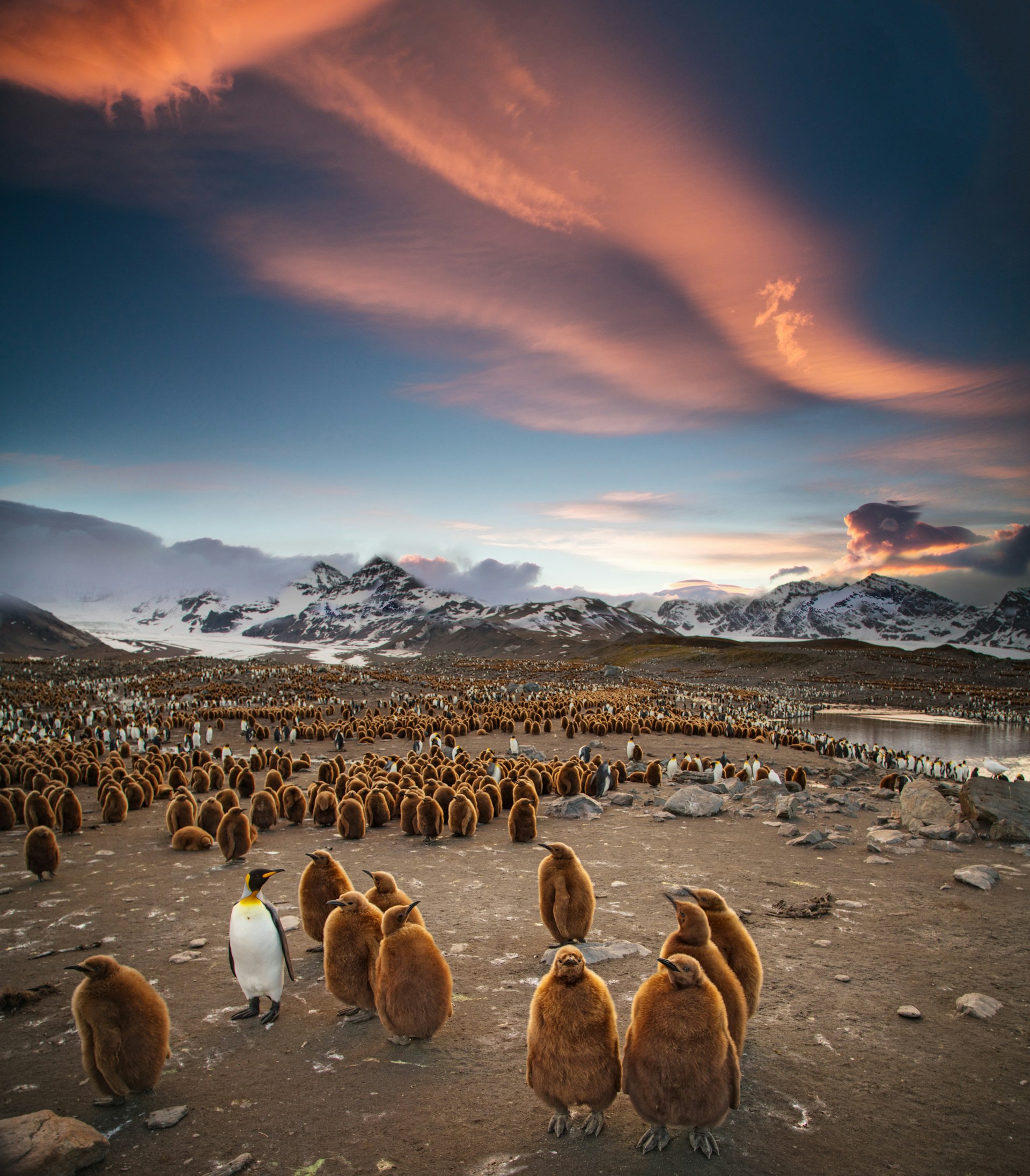
South Georgia received 15,853 visitors in 2024 to 2025 with steady year-on-year growth. Your fact-checked 2026 guide to the world's greatest wildlife spectacle and Shackleton's final resting place.