Get consult
Unlock the secrets of the world’s most breathtaking locales with our expert insights — guiding you toward the truly remarkable destinations that define a lifetime of travel.




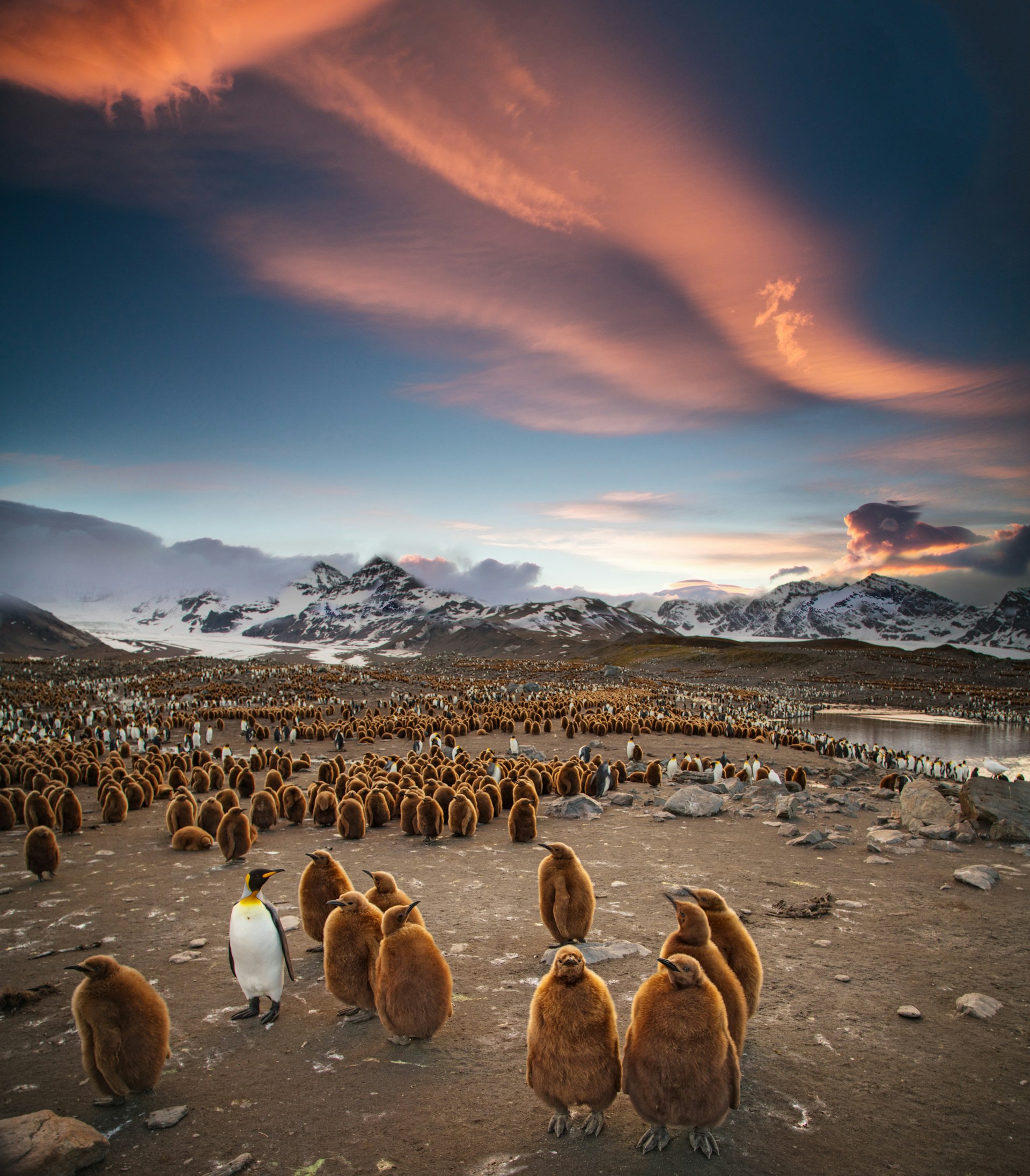
Photo by henrique setim on Unsplash
There is a number that defines the Ross Sea as a travel destination more precisely than any description of its landscape can. In any given season, approximately 1,150 visitors reach the Ross Sea region of Antarctica, compared to more than 100,000 who visit the Antarctic Peninsula, as confirmed by IAATO data cited across multiple expedition operator sources. The Ross Sea receives roughly 1 percent of all Antarctic visitors. It is accessible for only two months of the year. Voyages take 25 to 34 days. The sea ice that guards it changes from day to day and year to year, and no itinerary can guarantee its most significant experiences. And yet the waiting lists for the handful of operators who run voyages here are substantial and growing. Because the people who go to the Ross Sea are not going to see Antarctica. They are going to the place where Antarctica was first truly known, where the most consequential stories of the Heroic Age of Exploration still stand frozen in time in their original buildings, and where the world's largest marine protected area covers an ocean so undisturbed that it is described by scientists as the last large intact marine ecosystem left on Earth.
The 2025 to 2026 season confirmed the Ross Sea's growing status as the ultimate Antarctic experience. The Aurora Expeditions vessel Douglas Mawson pushed past 78 degrees south in the Ross Sea during the 2025 to 2026 season, setting an industry record for the deepest southern penetration by a commercial passenger ship, as confirmed by Nomad Lawyer citing Aurora Expeditions' season report. The Scenic Eclipse II navigated McMurdo Sound through the East Antarctic pack ice in January 2026, as confirmed by Travel and Tour World's January 2026 reporting. Heritage Expeditions, the original and most experienced Ross Sea operator with more than 35 years operating in the region, ran two voyages in 2026 (January 10 to February 6 and February 5 to March 4) and has two 2027 voyages scheduled, as confirmed by Heritage Expeditions' official itinerary listings. The Ross Sea is redefining adventure cruise travel in the polar regions, as confirmed by Travel and Tour World's January 2026 analysis. The trend driving this in 2026 is Deep Antarctica Expedition Tourism and the Heroic Age of Exploration: a specific and growing segment of polar travelers who are drawn not by wildlife density or accessibility but by historical gravity, scientific significance, and the experience of being in a place so remote that fewer people have visited it in the entire history of human exploration than attend a single Premier League football match.
The Ross Sea's recorded European history begins on January 5, 1841, when Royal Navy Captain James Clark Ross, commanding HMS Erebus with HMS Terror in company, broke through the pack ice and entered the bay that bears his name, as documented in the Grokipedia Ross Sea historical records. Ross was looking for the magnetic South Pole and found instead an open ocean of extraordinary dimensions, the Trans-Antarctic Mountain chain rising to the west, a chain of volcanic islands including the still-active Mount Erebus (3,794 meters), and at the southern end an ice barrier of a scale that exceeded anything in his experience: a floating ice shelf stretching 700 kilometers along its northern edge and rising 15 to 50 meters above the waterline, as confirmed by Oceanwide Expeditions' Ross Sea destination guide. Ross named it the Great Barrier. Later explorers would call it the Ross Barrier. Today it is known as the Ross Ice Shelf, the largest floating body of ice on earth, and it is roughly the size of France, as confirmed by Oceanwide Expeditions and Heritage Expeditions' Ross Sea geological documentation.
The Heroic Age of Antarctic Exploration, roughly 1895 to 1922, was conducted almost entirely from the Ross Sea. The sequence of expeditions that launched from Ross Island in McMurdo Sound and used the Ross Ice Shelf as their highway toward the South Pole produced the most significant body of polar exploration literature ever written, as confirmed by Swoop Antarctica's Ross Sea history documentation. The key expeditions and their huts form the most concentrated collection of Heroic Age heritage anywhere in Antarctica. Carsten Borchgrevink's British Antarctic Expedition of 1898 to 1900 erected a hut at Cape Adare, the first permanent building constructed in Antarctica and the first expedition to deliberately overwinter on the Antarctic continent, as confirmed by Swoop Antarctica and Heritage Expeditions' historical documentation. Cape Adare also holds the largest Adelie penguin colony in the world, as confirmed by Swoop Antarctica. Captain Robert Falcon Scott's Discovery expedition of 1901 to 1904 established its winter quarters at Hut Point on Ross Island, built the Discovery Hut, conducted extensive sledge journeys that mapped the Ross Ice Shelf, and reached a furthest south of 82 degrees 17 minutes south on December 30, 1903, as confirmed by Grokipedia's Ross Sea expedition history. Ernest Shackleton's Nimrod expedition of 1907 to 1909 erected a prefabricated hut at Cape Royds in February 1908, housing 15 men, and launched a polar party that reached 88 degrees 23 minutes south on January 9, 1909, just 97 miles from the South Pole, as confirmed by Grokipedia and the Cool Antarctica Cape Royds documentation. Shackleton turned back, famously telling his wife he would rather be a live donkey than a dead lion. Scott's Terra Nova expedition of 1910 to 1913 established its base at Cape Evans, also on Ross Island, and launched the fateful journey to the South Pole during which Scott and his four companions died on the return journey in March 1912 after finding Roald Amundsen had beaten them by five weeks. The Terra Nova Hut at Cape Evans remains the most emotionally resonant structure in Antarctica, its interior preserved almost exactly as Scott and his men left it, as confirmed by Swoop Antarctica's polar historian guide to the huts.
The physical condition of the huts today is extraordinary. The Antarctic Heritage Trust completed major conservation work on Cape Royds between 2004 and 2008, as confirmed by Swoop Antarctica's hut guide. The stable, dry, cold climate of McMurdo Sound has preserved organic materials inside the huts, including clothing, food stores, scientific equipment, and personal effects, in a state that makes them arguably the most remarkably preserved early 20th-century interiors anywhere in the world. Visitors who enter them step into 1908 or 1911 in a way that no museum can replicate.
The designation of the Ross Sea as the world's largest marine protected area is the most consequential international conservation agreement reached for any ocean ecosystem in recorded history. The process that produced it took more than a decade of scientific advocacy, diplomatic negotiation, and multilateral consensus-building that required unanimous agreement from 24 nations and the European Union. On October 28, 2016, at the 35th annual meeting of the Commission for the Conservation of Antarctic Marine Living Resources (CCAMLR) in Hobart, Australia, the Ross Sea Region Marine Protected Area (RSrMPA) was established, covering 1.55 million square kilometers of the Ross Sea, of which 1.12 million square kilometers is fully protected as a General Protection Zone prohibiting commercial fishing, as confirmed by NOAA Fisheries, the New Zealand Ministry of Foreign Affairs and Trade, and CCAMLR's official MPA documentation. The MPA entered into force on December 1, 2017. The US and New Zealand had first proposed the MPA in 2012, but the proposal was defeated at the 2013, 2014, and 2015 CCAMLR meetings due to opposition from Russia and China, as confirmed by Wikipedia's Ross Sea article and Grokipedia's MPA history. The 2016 consensus was achieved after years of modifications and diplomatic effort. The IUCN described the Ross Sea as one of the last oceans in the world that has not been significantly impacted by humans, as confirmed by IUCN's official statement at the 2016 CCAMLR meeting. The MPA is approximately 1.5 times the size of the largest national park on land, as confirmed by the New Zealand Ministry of Foreign Affairs and Trade. Its 35-year duration clause, controversial in conservation circles, runs to 2051 and represents a provisional rather than permanent protection status that the conservation community continues to advocate for extending, as confirmed by ASOC's Ross Sea MPA documentation and Wikipedia's Ross Sea article.
Unlike the Antarctic Peninsula, which departs from Ushuaia, Argentina, Ross Sea expeditions depart from New Zealand or Australia. The primary departure port is Lyttelton or Dunedin in New Zealand, with some itineraries departing from or arriving into Hobart, Tasmania, as confirmed by Heritage Expeditions, Swoop Antarctica, and Adventure Life's Ross Sea itinerary documentation. Expeditions Online confirms typical voyages last 25 to 30 or more days, operating in January through March when sea ice allows deeper penetration. The crossing from New Zealand to the Ross Sea takes approximately 7 to 10 days in each direction through the subantarctic islands, which are an integral part of the expedition rather than mere transit: the Snares, Auckland Islands, Campbell Island, and Macquarie Island are UNESCO World Heritage sites and extraordinary wildlife destinations in their own right, as confirmed by Heritage Expeditions and Swoop Antarctica's itinerary documentation. Flying into Christchurch or Dunedin and planning at minimum one to two days in New Zealand before embarkation is the standard approach. Heritage Expeditions' Heritage Adventurer carries 140 guests and holds the highest passenger ship ice class rating (1A Super) for Antarctic operations, as confirmed by Heritage Expeditions' vessel documentation.
The Ross Sea itinerary is anchored on Ross Island in McMurdo Sound and the surrounding region. The core historic sites are on or near Ross Island, and the realistic possibility of visiting any of them depends entirely on sea ice conditions that cannot be guaranteed in advance. Cape Adare, at the northern tip of Victoria Land, is the first significant landing site: the Borchgrevink hut of 1899, the first permanent building in Antarctica, is here alongside the world's largest Adelie penguin colony. The exposed location makes Cape Adare notoriously difficult to land at, as confirmed by Swoop Antarctica's hut guide. Cape Royds, on the western side of Ross Island, holds Shackleton's 1908 Nimrod Hut, situated approximately 32 kilometers from Scott's Discovery Hut and overlooking McMurdo Sound directly below Mount Erebus, as confirmed by Cool Antarctica's Cape Royds documentation. Cape Evans, also on Ross Island, holds Scott's Terra Nova Hut of 1911, the most emotionally powerful of all the historic huts, with provisions, clothing, scientific equipment, and personal items frozen in their original positions, as confirmed by Swoop Antarctica's polar historian guide. Hut Point on Ross Island is the location of Scott's Discovery Hut of 1902 and sits adjacent to the enormous McMurdo Station, the US Antarctic research base that functions as the size of a small town with up to 1,200 scientists and support personnel during the Antarctic summer, complete with a bowling alley, annual music festival called Icestock, and the world's most southerly ATM, as confirmed by Swoop Antarctica. The Ross Ice Shelf, the largest floating body of ice on earth, is always on itinerary and never loses its power: sailing along the 700-kilometer northern edge and watching the 15 to 50-meter ice cliff pass slowly astern is the most scale-defining experience available in the Southern Ocean. On ships equipped with helicopters, the McMurdo Dry Valleys in Victoria Land offer one of the most alien landscapes on the planet: a snow-free terrain described as the driest place on earth, where rain has not fallen for approximately 2 million years, as confirmed by Swoop Antarctica and Scenic Cruises' Ross Sea documentation.
The Ross Sea's wildlife profile differs significantly from the Antarctic Peninsula's, reflecting its more southerly position and more extreme climate. The defining species is the Emperor penguin, Antarctica's largest penguin and one of the most difficult to reliably observe in the wild. Emperor penguins breed in winter on sea ice and are visible at specific sites around Ross Island under favorable conditions: sightings are possible but cannot be guaranteed on any itinerary, as confirmed by Heritage Expeditions and Swoop Antarctica. The Adelie penguin is the most abundant species encountered, with the world's largest Adelie colony at Cape Adare. Orca (killer whales) feed actively in McMurdo Sound during January and February and are among the most reliably encountered large wildlife in the Ross Sea, as confirmed by Heritage Expeditions' 2026 itinerary documentation. Weddell seals, the world's most southerly breeding mammal, haul out on sea ice throughout McMurdo Sound. The Ross Sea's isolation means all wildlife has essentially no learned fear of humans: the behavioral encounters available, particularly with Weddell seals at close range on sea ice, are among the most intimate large mammal experiences in polar tourism. The Ross Sea ecosystem contains at least 10 species of mammal, approximately 60 species of birds, nearly 100 types of fish, and around 1,000 species of invertebrates, as confirmed by Oceanwide Expeditions' Ross Sea ecosystem documentation. Antarctic toothfish, also known commercially as Chilean sea bass and reaching up to 2.2 meters in length, plays the same apex ecosystem role in the Ross Sea that the great white shark plays in temperate ocean systems.

The Ross Sea is accessible for commercial expedition ships during a window of approximately two months only: January and February, when the sea ice retreats sufficiently to allow passage into the deeper regions of the bay, as confirmed by Swoop Antarctica and Heritage Expeditions' operational documentation. Beyond this window the pack ice is impenetrable. The narrow window means that the Ross Sea experiences near 24-hour daylight during the expedition season, which is both practically useful and, for many visitors, one of the most disorienting and beautiful aspects of the experience: a midnight sun that never sets above the white ice and the black volcanic rock of Ross Island creates visual conditions with no equivalent in temperate experience. Pack ice conditions vary dramatically year to year and day to day: operators and their captains make real-time navigation decisions based on ice reporting, collaboration with government maritime authorities, and decades of accumulated experience in the region, as confirmed by Travel and Tour World's January 2026 Ross Sea operational report. February sailings generally offer better access to McMurdo Sound and the historic huts than January sailings, as confirmed by Heritage Expeditions' operational notes.
Ross Sea expeditions are the most expensive standard Antarctic itineraries available. Typical Ross Sea voyages run from approximately 15,000 to 40,000 USD per person for 25 to 34-day itineraries, with luxury ship options above this range, as confirmed by Adventure Life, Swoop Antarctica, and expedition cruise pricing aggregators. Heritage Expeditions' Heritage Adventurer (140 guests) and Aurora Expeditions' Greg Mortimer and Douglas Mawson (approximately 130 guests), and Scenic Cruises' Scenic Eclipse II (approximately 228 guests) are among the principal vessels operating Ross Sea itineraries in the 2025 to 2026 and 2026 to 2027 seasons, as confirmed by the operators' own itinerary documentation. Book 12 to 24 months in advance: Heritage Expeditions' Ross Sea voyages are typically fully subscribed well ahead of each season, as confirmed by the operator's booking guidance. The Ross Sea traveler profile is specific: most are experienced polar travelers who have already visited the Antarctic Peninsula and, often, South Georgia, and are drawn to the Ross Sea specifically for its historical depth and its extreme remoteness. The journey itself, crossing the subantarctic islands and the Southern Ocean, is as important to most Ross Sea travelers as the destination. People who are motivated primarily by wildlife density would be better served by the Antarctic Peninsula or South Georgia. People who are motivated by historical gravity, by being in one of the most remote places on earth, and by the particular emotional weight of standing inside a century-old hut at the bottom of the world exactly as its occupants left it: the Ross Sea is where they belong.
The Ross Sea Marine Protected Area is the result of a 12-year campaign by scientists, conservation advocates, and diplomats who understood that this ocean ecosystem, described by Antarctic ecologist David Ainley as the last large intact marine ecosystem left on Earth, was threatened by the same commercial fishing pressure that has degraded every other significant ocean ecosystem on the planet. The 35-year duration clause and the Special Research Zone that allows limited toothfish fishing within the MPA represent compromises that the conservation community regards as inadequate, as confirmed by ASOC's MPA documentation and the IUCN's position on MPA permanence. The MPA needs to be renewed by CCAMLR consensus in 2051 to maintain its protections: this is not a guaranteed outcome and it depends on the same multilateral diplomatic will that took 12 years to produce the 2016 agreement.
For expedition travelers, the Ross Sea imposes the full weight of IAATO protocols alongside specific requirements for visiting the historic huts. All hut visits are managed by the Antarctic Heritage Trust and require strict biosecurity protocols, limited group sizes, and behavior that treats the huts as the irreplaceable primary source historical documents they are. Do not touch any artifact, surface, or structure inside the huts. Do not enter any roped-off area. Photography without flash is permitted. The 1908 provisions on the shelves of Cape Royds Hut, the personal effects at Cape Evans, the geological samples at Discovery Hut: these are the physical remnants of expeditions that defined the course of polar science for a century. They are not props. Approach them as a historian would approach a primary document: with complete reverence and zero physical contact.
Being one of approximately 1,150 people who reach the Ross Sea in a given season carries a specific obligation. You are visiting the most pristine marine ecosystem on earth and one of the most significant concentrations of Heroic Age heritage anywhere. The reasonable expectation is that you will return as an informed advocate for both the marine protection regime and the continued preservation of the historic huts, and that your visit will contribute to the argument that the human presence the MPA permits, conducted with absolute respect, is part of the case for its conservation rather than a contradiction of it.
Kotor is a double-listed UNESCO World Heritage Site in Montenegro's fjord-like bay. Your fact-checked 2026 guide to the Adriatic's most layered medieval city and the rise of Western Balkans travel.
The Faroe Islands generated 1.4 billion DKK from tourism in 2025 while pioneering Europe's most innovative sustainable tourism model. Your fact-checked 2026 guide to the North Atlantic's most dramatic archipelago.
South Georgia received 15,853 visitors in 2024 to 2025 with steady year-on-year growth. Your fact-checked 2026 guide to the world's greatest wildlife spectacle and Shackleton's final resting place.