Get consult
Unlock the secrets of the world’s most breathtaking locales with our expert insights — guiding you toward the truly remarkable destinations that define a lifetime of travel.



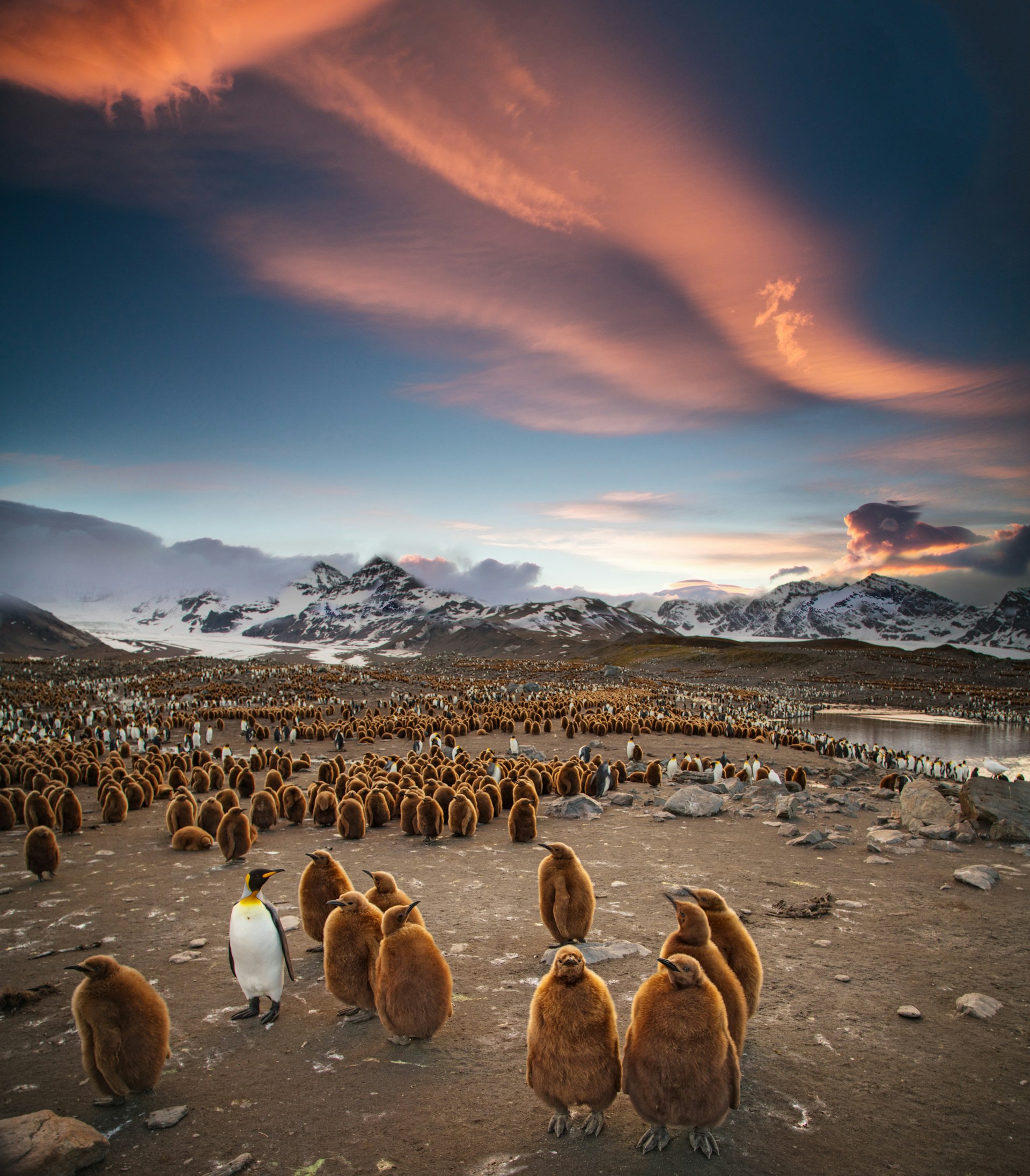
Photo by Ian Parker on Unsplash
There is a moment that happens to almost every traveler who rounds the headland into St Andrews Bay on South Georgia Island for the first time. The Zodiac engine cuts to idle. The guide beside you says nothing. And there, covering the entire beach and the plain behind it in every direction as far as you can see, are king penguins. Not dozens. Not hundreds. More than 150,000 breeding pairs, their golden-yellow neck patches blazing against slate-grey feathers, the noise a continuous roar of vocalizations that carries across the water before you reach the shore. The smell hits you next. And then the scale of it truly lands: the area between Elsehul Bay and Salisbury Plain on South Georgia's northern coast is believed to have more wildlife per square foot than anywhere else on earth, as confirmed by Quark Expeditions citing wildlife density research. You are not looking at a documentary. You are inside it.
In the 2024 to 2025 season, South Georgia received 15,853 passengers across 40 expedition cruise ships making 110 visits and 7 yachts making 8 visits, with an overall total including all staff and crew of 30,037 visitors, as confirmed by the official Annual Visitor Report of the Government of South Georgia and South Sandwich Islands (GSGSSI) as reported by MercoPress. Cruise ship visitor numbers have increased steadily from 5,831 in 2011 to 2012 to 15,816 in 2024 to 2025, with the exception of the pandemic years, as confirmed by the GSGSSI Annual Visitor Report. The 2024 to 2025 season saw 10 more expedition cruise ship visits than the previous season and over 1,000 more passengers, with 5 new operators and 3 new vessels operating within the territory, as confirmed by MercoPress citing the GSGSSI report. The trend driving South Georgia in 2026 is Wildlife Pilgrimage and the World's Greatest Wildlife Spectacle: a deepening global traveler recognition that this remote British Overseas Territory in the South Atlantic Ocean offers an encounter with the natural world at a scale and intensity that no other accessible destination on the planet can match. South Georgia is not simply a stop on an Antarctic itinerary. It is the reason to make the journey.
South Georgia's human history begins with its European discovery in 1675 by English merchant Anthony de la Roche, who named it Roche Island, as confirmed by Intrepid Travel's South Georgia destination guide. The island came to wider attention when Captain James Cook circumnavigated and surveyed it in 1775 aboard HMS Resolution, noted the complete absence of any indigenous population, renamed it the Isle of Georgia, and declared it a British possession, as confirmed by Intrepid Travel. Cook also noted the extraordinary abundance of fur seals and sea elephants, which triggered one of the most catastrophic chapters in Southern Ocean history. Sealing expeditions began arriving almost immediately after Cook's reports reached commercial markets, and within decades the fur seal population had been hunted to near-extinction. Between 1904 and 1966, South Georgia served as the epicenter of the Southern Ocean whaling industry, with the whaling station at Grytviken established in 1904 becoming the headquarters of an industrial operation that processed thousands of whales annually, as confirmed by Planet Janet Travels' South Georgia history documentation. At its peak, several whaling stations operated simultaneously along South Georgia's northern coast, including Husvik, Stromness, and Leith Harbour. The ruins of these stations, some of the most atmospheric industrial heritage sites in the Southern Hemisphere, are still visible and constitute a major part of any South Georgia visit today.
The transformation from whaling capital to conservation success story is one of the most remarkable ecological recoveries in modern history. Since the cessation of commercial whaling and sealing in the 20th century and the implementation of stringent environmental protections under GSGSSI governance, South Georgia's wildlife populations have recovered to extraordinary levels. Today, South Georgia is home to over 60 million breeding birds of over 30 different species, and over 4 million seals along a coastline of just 167 kilometers, as confirmed by Quark Expeditions citing wildlife density research. Antarctic fur seals, hunted nearly to extinction in the 18th and 19th centuries, now number approximately 5 million on South Georgia, representing about 95 percent of the global population, as confirmed by Secret Atlas citing species distribution data. South Georgia also holds over 50 percent of the world's population of Southern elephant seals, as confirmed by Secret Atlas and Antarctica Specialists' wildlife documentation. The island is also the only place on earth where the South Georgia pipit breeds, the only songbird native to the Antarctic region, and the only location where the South Georgia pintail duck is found, as confirmed by Antarctica Specialists' endemic species documentation.
The GSGSSI, working closely with the South Georgia Heritage Trust and the British Antarctic Survey's King Edward Point research station, has also overseen one of the most significant rodent eradication programs in history. Rats and mice introduced during the whaling era had devastated ground-nesting bird populations for decades. The eradication program, completed in 2015, removed invasive rodents from the entire island, and the recovery of ground-nesting birds including the South Georgia pipit has been dramatic and ongoing, as documented by the South Georgia Heritage Trust's conservation records. In 2014, the GSGSSI's new visitor film, narrated by Sir David Attenborough, described the island as a global rarity: an ecosystem in recovery, as confirmed by the South Georgia Museum's official website.
No story in the history of exploration is more closely tied to South Georgia than the Endurance expedition of Sir Ernest Shackleton. In August 1914, Shackleton led his Imperial Trans-Antarctic Expedition from London aboard the Endurance, intending to make the first land crossing of Antarctica. The ship became trapped in pack ice in the Weddell Sea in January 1915, drifted for months, and was finally crushed and sunk on November 21, 1915. Shackleton and his crew of 28 men camped on the ice, then launched three small lifeboats from the remnants of the ship, and after more than five months on the ice reached the uninhabited Elephant Island on April 15, 1916. From there, Shackleton and five of his men set out in the smallest of the lifeboats, the 22-foot James Caird, for the whaling stations of South Georgia, 800 miles of open Southern Ocean away, as confirmed by TourRadar's South Georgia expedition documentation and Intrepid Travel. The 15-day crossing of the Drake Passage in an open boat, navigated by celestial observation alone in one of the most hostile seas on earth, and the subsequent unequipped three-day traverse of South Georgia's central mountain range to reach the whaling station at Stromness, is considered one of the greatest feats of leadership and survival in the history of exploration. Every man who had waited on Elephant Island was eventually rescued. Not a single member of the expedition was lost. Shackleton returned to South Georgia in 1922 for his fourth expedition and suffered a fatal heart attack off the island's coast. At his wife's request, he was buried at Grytviken, where his grave remains one of the most visited sites on the island and where, by longstanding expedition tradition, visitors toast him with a shot of Scotch whisky, as confirmed by Intrepid Travel and TourRadar's South Georgia guides. The hike retracing Shackleton's 1916 mountain crossing from King Haakon Bay to Stromness is now one of the most celebrated multi-day trekking routes in the Southern Hemisphere, offered by specialist operators for experienced hikers.

South Georgia has no airport or airstrip. The only way to visit is by ship, as confirmed by the GSGSSI's official FAQ and every expedition operator serving the island. Ships depart primarily from Ushuaia, Argentina, the southernmost city in the world, with the crossing to South Georgia taking approximately 2 days of open Southern Ocean sailing, as confirmed by Intrepid Travel's destination guide. The typical South Georgia itinerary runs 18 to 22 days including Ushuaia departure and return, with 4 to 7 days on the island itself depending on operator and weather conditions, as confirmed by Adventure Life and Poseidon Expeditions' itinerary documentation. Most comprehensive itineraries combine South Georgia with either the Falkland Islands or the Antarctic Peninsula or both, creating one of the most wildlife-saturated itineraries available in the Southern Hemisphere. Plan for at minimum 4 dedicated days on South Georgia: weather is unpredictable and the island's most significant sites are spread across its northern and southeastern coastline, requiring time to navigate. Many operators offering 2 to 3 days are cutting the experience short, as confirmed by Secret Atlas's dedicated South Georgia commentary. The GSGSSI requires all operators to apply for entry permits through the official GSGSSI portal at least 3 months in advance, with Expedition Leaders required to complete a mandatory annual briefing and assessment before any passenger may disembark, as confirmed by the official GSGSSI Visitors documentation.
South Georgia's most significant wildlife and heritage sites are concentrated on the island's northern and eastern coastlines. St Andrews Bay is the largest king penguin colony on the island, with 150,000 breeding pairs forming one of the most staggering concentrations of large wildlife visible from a standing position anywhere on earth, surrounded by thousands of southern elephant seals, as confirmed by multiple expedition operator wildlife guides and Oceanwide Expeditions' species documentation. A point-of-view photograph standing among the colony at St Andrews Bay delivers an image that, by unanimous expedition guide consensus, is the single most overwhelming wildlife encounter South Georgia offers. Salisbury Plain, the second largest king penguin colony with approximately 60,000 breeding pairs and a total population of around 250,000 including chicks and non-breeders, is the site that most expedition leaders identify as the most accessible and visually complete colony experience, as confirmed by Travel Yes Please's Salisbury Plain guide and Oceanwide Expeditions' wildlife documentation. The amphitheater-like mountains behind the beach, the river of penguins winding across the outwash plain, and the elephant seal and fur seal presence on the beach simultaneously create an encounter that exceeds anything a wildlife documentary can prepare you for. Gold Harbour, a natural harbor overlooked by hanging glaciers and tumbling icefalls, contains approximately 25,000 breeding pairs of king penguins alongside four penguin species viewable from the same landing site, as confirmed by Cheesemans Ecology Safaris' South Georgia expedition documentation. Prion Island is the primary accessible site for wandering albatross on the nest, strictly controlled with closure between November 20 and January 7 to coincide with fur seal breeding season. Grytviken, the former whaling station and now the location of the South Georgia Museum, Shackleton's grave, the Norwegian church, and a small gift shop and post office, is the historical and emotional anchor of any South Georgia visit. The museum, housed in the former whaling station manager's villa and managed by the South Georgia Heritage Trust, covers the whaling era, Shackleton's expeditions, and the island's wildlife in detail that provides essential context for everything you will encounter on the island, as confirmed by Planet Janet Travels and the South Georgia Museum's official site.
South Georgia's wildlife season runs from October through March, with the austral winter months completely inaccessible due to conditions. Each month of the season offers a different dominant wildlife experience. October and November: Elephant seal bulls arrive and establish breeding beaches, engaging in the dramatic territorial battles that rank among the most physically impressive wildlife encounters on earth. The largest males weigh up to 2,200 kilograms, as confirmed by Secret Atlas and Polar Escapes wildlife documentation. King penguin eggs are being incubated. Fur seals begin arriving. The island has a snow-dusted early-spring quality that many photographers consider the most dramatic visual period. December and January: King penguin chicks are hatching. Fur seal pups are being born on every beach. Wandering albatross are raising chicks on their grassy hillside nest mounds. This is peak breeding season, with maximum wildlife density and the highest visitor volumes. February and March: King penguin chicks are in their brown woolly juvenile phase and congregating in enormous creches. Whale watching is at its most productive. Fur seal pups are weaning and beginning to play in the surf. The light becomes more golden and the autumn atmosphere settles on the island. South Georgia holds 7 of the 30 species listed under the Agreement on the Conservation of Albatross and Petrels, including the wandering albatross, black-browed albatross, grey-headed albatross, and light-mantled albatross, as confirmed by Secret Atlas citing the ACAP species list. Wandering albatross, with wingspans reaching up to 3.5 meters, the largest of any living bird, nest at Bird Island and Prion Island: visiting their nesting sites in the presence of a qualified ornithologist guide is one of the most profound wildlife experiences the expedition world offers.
The Shackleton Traverse, the mountain crossing route from King Haakon Bay on South Georgia's southwestern coast to Stromness whaling station on the northeastern coast, retracing the final leg of Shackleton's 1916 survival journey, is offered by a small number of specialist operators who include the hike as part of their South Georgia program. The route covers approximately 37 kilometers across glaciated mountain terrain and takes 2 to 3 days to complete, as documented by expedition operators offering the traverse. It requires significant prior trekking experience, full expedition kit, and favorable weather conditions that cannot be guaranteed. The emotional weight of walking the same ground that Shackleton crossed with no equipment, no food, and the lives of 22 men waiting on a rock island behind him is an experience that those who have completed it describe as genuinely transformative. The crossing was first recreated for sport in 1955 by members of the British Antarctic Survey. Book through operators who have local knowledge, safety infrastructure, and established relationships with GSGSSI, as confirmed by expedition booking guidance from TourRadar and Adventure Life.
South Georgia expedition cruises are among the most expensive itineraries in the polar travel market, reflecting the remoteness, the duration, and the specialized vessels required. A typical 18 to 22-day itinerary combining South Georgia with the Falkland Islands and Antarctic Peninsula runs from approximately 10,000 to 25,000 USD per person, with luxury small-ship options reaching 35,000 USD or more, as confirmed by Adventure Life and TourRadar's South Georgia pricing documentation. Book 12 to 18 months in advance: the most reputable small-ship operators (44 to 154 passengers) sell out 12 to 18 months ahead of peak season, as confirmed by Secret Atlas's booking guidance. The GSGSSI charges a landing fee that is built into every operator's pricing: this revenue funds GSGSSI's conservation programs, the rodent eradication aftercare, and ongoing environmental monitoring. Biosecurity is the most critical practical obligation on any South Georgia visit. The introduction of non-native seeds, insects, or pathogens is among the most significant risks to South Georgia's recovering ecosystem, as confirmed by the GSGSSI's official biosecurity documentation. Every item of clothing and equipment must be thoroughly cleaned before any landing, between every landing site, and before departing the island. The GSGSSI's Biosecurity Handbook is mandatory reading for all operators and expedition leaders. Avian influenza (HPAI) affected South Georgia for the second consecutive season in 2024 to 2025, with 19 landings aborted due to HPAI protocols: expedition leaders are empowered to cancel landings without notice if disease risk is identified, as confirmed by the MercoPress GSGSSI Annual Visitor Report.
South Georgia has no permanent human population. The only people present year-round are GSGSSI government officers and British Antarctic Survey personnel at King Edward Point, supplemented by South Georgia Museum staff during the summer season, as confirmed by the GSGSSI's FAQ. The island exists in its current extraordinary ecological state because its governance, under the GSGSSI working closely with IAATO and the South Georgia Heritage Trust, has been specifically designed to prevent the destruction that characterized the whaling and sealing era. Every aspect of your visit, from the entry permit system to the mandatory expedition leader assessment to the biosecurity protocols to the strict wildlife approach distances, is part of that system. Following all protocols without exception is not optional hospitality. It is the price of admission to one of the most significant conservation success stories in modern history.
The wildlife you are encountering on South Georgia has no learned fear of humans. Fur seals and elephant seals will approach you because they are curious, not because they have been conditioned by human proximity. King penguins will walk toward you because penguins do not register standing humans as a threat. The correct response to this is not to interpret it as permission for closer contact. Maintain the wildlife approach distances specified by your expedition guides at all times. Do not approach nesting albatrosses. Do not walk on lichen, moss, or tussock grass: these slow-growing communities take decades to recover from a single footprint. Do not remove anything from South Georgia: not feathers, not bones, not rocks, not sand. Do not leave anything behind: no food scraps, no packaging, no physical trace of any kind. The fur seals, elephant seals, and king penguins whose photographs you will take home have no other home. This island is all they have. They were here long before the first whaling ship arrived in 1904, and they will be here long after the last expedition ship has sailed north. Treat South Georgia as if its recovery depends on how you behave during your visit. Because it does.
Kotor is a double-listed UNESCO World Heritage Site in Montenegro's fjord-like bay. Your fact-checked 2026 guide to the Adriatic's most layered medieval city and the rise of Western Balkans travel.
The Faroe Islands generated 1.4 billion DKK from tourism in 2025 while pioneering Europe's most innovative sustainable tourism model. Your fact-checked 2026 guide to the North Atlantic's most dramatic archipelago.
McMurdo Sound and the Ross Sea welcome only about 1,150 visitors per season. Your fact-checked 2026 guide to the world's most remote expedition and the huts of Scott and Shackleton.