Get consult
Unlock the secrets of the world’s most breathtaking locales with our expert insights — guiding you toward the truly remarkable destinations that define a lifetime of travel.




Photo by Ziyao Xiong on Unsplash
There is a particular quality to Hobart that is difficult to explain to someone who has not been there. The city sits at the bottom of Australia, tucked between the brooding dolerite peak of kunanyi/Mount Wellington and the cold blue water of the Derwent River, and it carries the weight of a very specific kind of history, the history of the end of the world, of transportation and punishment, of distance so extreme it functioned as a sentence in itself. And then, in 2011, something extraordinary happened: a professional gambler named David Walsh spent 110 million Australian dollars of his own money digging a museum into a sandstone cliff above the river, filled it with art about sex and death, and invited the world to come disagree about whether it was brilliant or appalling. Most people who visited decided it was both, simultaneously. And Hobart has never been the same since.
In 2025, Tasmania recorded its best tourism performance in its history. Tasmania welcomed 1.36 million visitors in 2025, surpassing all pre-COVID visitation highs for the first time, with visitor spend reaching 3.6 billion AUD, representing a 44 percent increase since 2019, as confirmed by Tasmania's Minister for Tourism Jane Howlett citing official Tourism Tasmania data. Hobart was named Expedia's Destination of the Year for 2026, with searches for Hobart travel options increasing 25 percent on the platform, as confirmed by the official Tasmanian Premier's office citing Expedia's Destination of the Year report. The Tasmanian Government's 2030 Visitor Economy Strategy progress report for July to December 2025 confirmed 50,000 additional air seats between Hobart and Melbourne and a new seasonal route from Hobart to Newcastle, reflecting sustained demand growth, as confirmed by the official Tasmanian Premier's office press release of March 2026. Gordon Ramsay praised Tasmania's food and produce as among the best in the world, as confirmed by multiple official Tasmanian Government and Tourism Tasmania press releases. The trend defining Hobart specifically in 2026 is Dark Tourism, Arts Pilgrimage, and Edge-of-the-World Wilderness Immersion: a deepening traveler recognition that Hobart is not simply a gateway to wilderness but a singular cultural destination in its own right, a city where convict history, provocative art, Antarctic exploration, and some of the freshest food and whisky in the Southern Hemisphere exist within walking distance of each other.
Hobart is the second-oldest capital city in Australia, founded in 1804 when Lieutenant-Governor David Collins established a permanent settlement at Sullivans Cove on the Derwent River, naming it Hobart Town after Lord Hobart, the British Secretary of State, as confirmed by Wikipedia's Hobart article and the History of Hobart documentation. The site was chosen for its deep natural harbour, and it quickly became the primary gateway for the convict transportation system that would shape the entire character of Van Diemen's Land, as Tasmania was then known. More than 65,000 convicts set foot in Tasmania through Hobart's Old Wharf, marching in chains from the ships to the barracks, as documented by the Salamanca Arts Centre's official heritage history. The city's most iconic physical feature, the Georgian sandstone warehouses of Salamanca Place, were built using convict labour in the 1830s to store whale oil, wool, and imported goods, as the harbour became one of the world's busiest whaling ports, as confirmed by the Salamanca Arts Centre's history and the History of Hobart documentation.
Port Arthur, on the Tasman Peninsula approximately 90 minutes from Hobart, was established in 1830 as the primary site for punishing convicts who had further transgressed after arriving in Australia. Between 12,000 and 14,000 prisoners were held at Port Arthur at various times between 1830 and 1877 when the complex finally ceased operations, as confirmed by Britannica's Port Arthur documentation and the Port Arthur Historic Site Management Authority. The site, now a UNESCO World Heritage property as part of the Australian Convict Sites inscription, contains more than 30 preserved buildings and ruins across a peninsula of extraordinary natural beauty: coastal cliff walks, the Isle of the Dead convict cemetery, and the Remarkable Cave are integral to a site visit, as confirmed by the Port Arthur Historic Site Management Authority's official visitor guide.
Tasmania changed its name from Van Diemen's Land on January 1, 1856, as a deliberate attempt to erase the association with the penal colony, as confirmed by the History of Hobart documentation. Hobart's subsequent decades were marked by economic decline following the Victorian gold rush, revival through the fruit and jam industry (earning the state the title Apple Isle), and a long mid-twentieth-century quiet that preserved its Georgian and Victorian architecture through simple neglect of the economics that would have demolished it elsewhere. The result is a city whose built heritage is, by Australian standards, astonishing: the Hope and Anchor Tavern (1807), the Cascade Brewery (1824, Australia's longest operating brewery), Ingle Hall (1811), the Theatre Royal (1837, Australia's oldest continuously operating theatre), and Hadley's Orient Hotel (1834, Australia's oldest continuously operating hotel), as confirmed by Wikipedia's Hobart article. In 1976, the derelict Salamanca warehouses were rescued by arts advocates including Claudio Alcorso and repurposed as the Salamanca Arts Centre, the seed of the cultural precinct that now defines the waterfront, as confirmed by the Salamanca Arts Centre's official history.
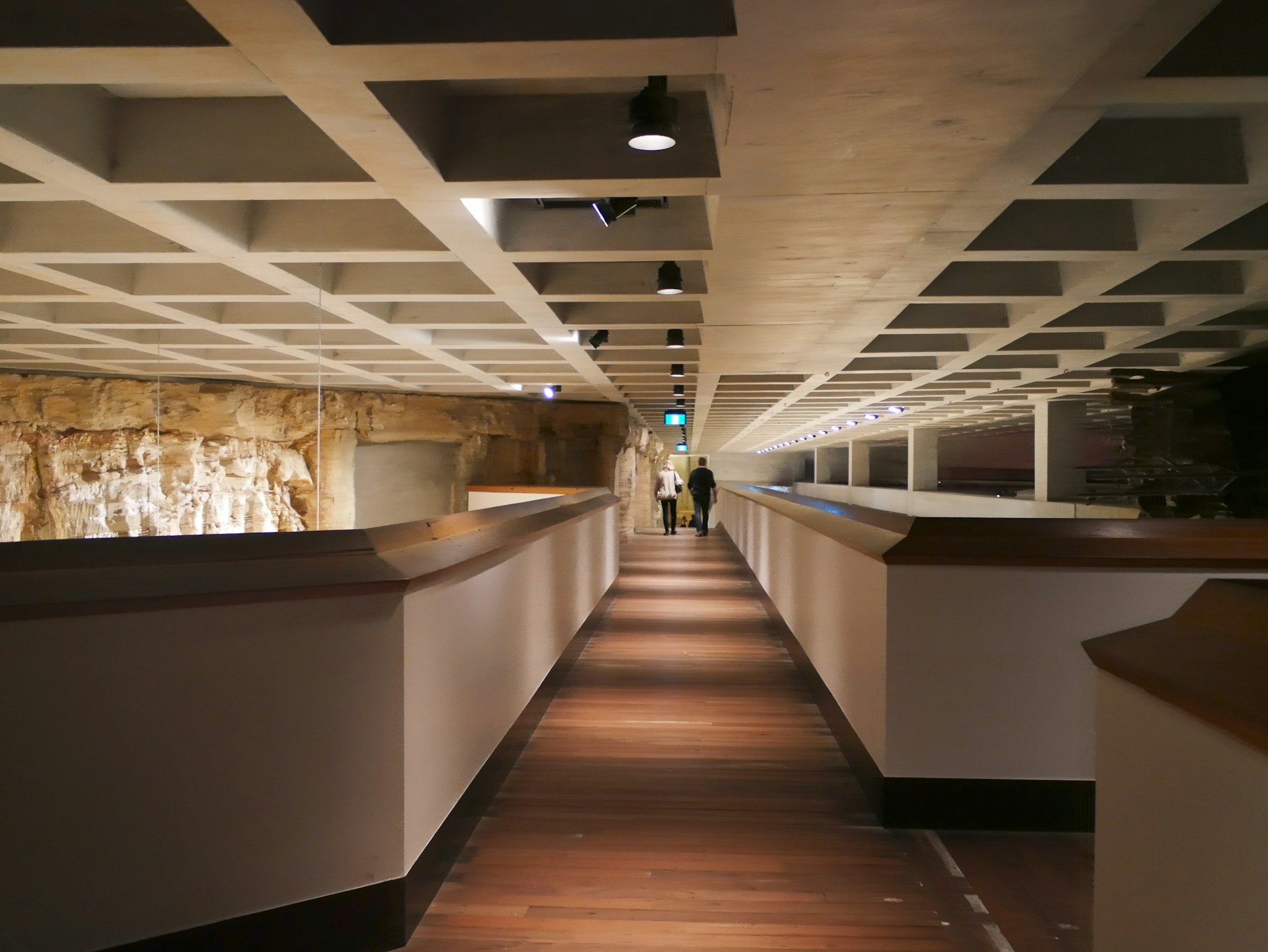
The Museum of Old and New Art is the largest privately funded museum in the Southern Hemisphere. It was built by David Walsh, a Tasmanian-born professional gambler and mathematical prodigy who used his winnings to fund a collection he describes as a subversive adult Disneyland, centered on themes of sex and death, as confirmed by Wikipedia's MONA article. The museum opened on January 21, 2011, on the Berriedale peninsula 11 kilometers north of Hobart, built primarily underground into a sandstone cliff above the Moorilla winery. It houses over 1,900 works from Walsh's private collection in three subterranean floors, navigated using a proprietary mobile app called The O that provides multiple interpretive lenses for each work, ranging from curator notes to Walsh's own personal commentary, as confirmed by Wikipedia's MONA article and the official MONA visit page. By 2018, almost 2.5 million tickets had been issued since opening, as confirmed by the Business Council of Australia's MONA Effect documentation. MONA estimates that it created approximately 1,300 direct and indirect full-time jobs and generated a projected 134.5 million AUD in economic contribution to the Tasmanian economy in 2017 to 2018 alone, as confirmed by the Business Council of Australia's MONA documentation. In 2012, Lonely Planet ranked Hobart as one of the ten must-visit cities for 2013, explicitly citing MONA as the transformative factor, as confirmed by Wikipedia's MONA article. The phenomenon became known as the MONA Effect: a single cultural institution changing a city's global identity, drawing comparisons with the Guggenheim Museum's transformation of Bilbao.
MONA is open Thursday through Monday, 10 AM to 5 PM. It is closed on Tuesdays and Wednesdays. Tasmanian residents receive free entry; non-Tasmanian adults pay a standard admission fee. The most atmospheric way to arrive is via the MR-I and MR-II fast ferries from Brooke Street Pier in Salamanca, a 25-minute ride up the Derwent River, as confirmed by the official MONA visit page. Book tickets and ferry in advance, particularly for peak summer months (December through February), school holidays, and festivals: morning ferry slots can sell out weeks ahead, as confirmed by the Wonderful Museums MONA practical guide. Dark Mofo, MONA's annual mid-winter arts festival launched in 2013, runs in June around the winter solstice and has transformed Hobart's winter from an off-season into a peak tourism period. In its 2023 edition, Dark Mofo attracted 45,000 interstate visitors, sold more than 100,000 tickets, and generated more than 5.5 million AUD for the Tasmanian economy, as confirmed by Wikipedia's Dark Mofo article. Dark Mofo returns June 11 to 22, 2026, as confirmed by the official MONA Dark Mofo page.
Hobart International Airport (HBA) is the primary gateway, receiving direct domestic flights from Sydney, Melbourne, Brisbane, and other Australian capitals via Qantas, Virgin Australia, and Jetstar, as confirmed by the Tasmania.com official travel guide and multiple 2026 Hobart travel guides. The Spirit of Tasmania ferry from Melbourne (overnight crossing, approximately 10 to 11 hours, multiple cabin classes) is an alternative for travelers who want to bring a vehicle or prefer a sea approach to the island, as confirmed by the Trip.com Hobart 2026 guide. Once in Hobart, a rental car is strongly recommended for exploring Port Arthur, Bruny Island, kunanyi/Mount Wellington, and Tasmania's wilderness regions. The city center itself is highly walkable: Salamanca Place, Battery Point, the waterfront, and the CBD are all navigable on foot. A shuttle bus service operates to the summit of kunanyi/Mount Wellington for visitors without vehicles, as confirmed by the Chris and Wren Tasmania itinerary guide. The Derwent Ferry operates a service between Brooke Street Pier and Bellerive Quay, providing a scenic and practical river crossing, as confirmed by Wikipedia's Hobart article. Book accommodation well in advance for the December to February summer peak, the Sydney to Hobart Yacht Race (late December), and Dark Mofo (June), when Hobart's accommodation fills completely, as confirmed by the Wonderful Museums MONA guide and multiple 2026 Hobart travel sources.
Salamanca Place is the non-negotiable starting point for any Hobart visit. The Georgian sandstone warehouses built by convict labour in the 1830s now house galleries, restaurants, bars, and the Salamanca Arts Centre, as confirmed by the Salamanca Arts Centre history. Salamanca Market runs every Saturday from 8:30 AM to 3 PM with over 300 stalls of artisan crafts, Tasmanian produce, live music, and local art, as confirmed by the Trip.com Hobart 2026 guide. Arrive before 9 AM for the best selection and smallest crowds, as confirmed by the Tasmania Tours 2026 guide. Kelly's Steps, built in 1839 by Captain James Kelly to provide access between Battery Point and the waterfront, remain a daily pedestrian shortcut and a tangible link to the colonial harbour era, as confirmed by the History of Hobart documentation. Battery Point, immediately above the waterfront via Kelly's Steps, is Hobart's most atmospheric neighborhood: a hillside of restored early-19th-century cottages, ship captains' houses, and tiny lanes where the domestic architecture of colonial Hobart has survived largely intact. It is the best place in the city for walking without a destination, simply turning corners to see what is there.
kunanyi/Mount Wellington rises 1,271 meters directly above the city and is visible from almost every point in central Hobart, as confirmed by the Tasmania Tours 2026 guide. The summit, topped by a distinctive dolerite organ pipes formation and a transmission tower, offers panoramic views over Hobart, the Derwent River, Bruny Island, and extensive southern Tasmanian wilderness. Drive to the summit via the 21-kilometer Pinnacle Road scenic route (approximately 20 to 25 minutes from the city center) or take the shuttle bus from Hobart for visitors without vehicles. The summit is significantly colder than the city regardless of season: bring a warm layer even in summer, as the temperature differential can be 10 to 15 degrees Celsius, as confirmed by the Trip.com Hobart practical guide. The mountain is within Wellington Park and contains over 40 recognized walking trails, ranging from short strolls to the full-day Organ Pipes Walk (7.4 kilometers return from The Springs carpark, approximately 3 hours, taking visitors directly past the dolerite columns), as confirmed by the Time Out Hobart 2026 guide. Aurora Australis sightings from the summit are possible on nights with strong geomagnetic activity: the Facebook group Aurora Australis Tasmania with 300,000 members provides real-time alerts and location recommendations, as confirmed by the Time Out Hobart 2026 guide.
Port Arthur is 90 minutes from Hobart by car via the Arthur Highway on the Tasman Peninsula, as confirmed by the Port Arthur Historic Site's official visitor guide. Site entry tickets start at 53 AUD for adults and include a guided introductory walking tour, Harbour Cruise, access to the Museum, Convict Study Centre, Interpretation Gallery, and the Dockyard site, as confirmed by the official Port Arthur Historic Site ticketing page. Tickets are valid for two consecutive days, which is significant: the site is large and deserves proper time, with optional additional tours including the Isle of the Dead cemetery boat trip, the Escape from Port Arthur experience, and the 90-minute lantern-lit Ghost Tour departing at sunset, as confirmed by the Port Arthur Historic Site's official tours page. Book in advance: the site is Tasmania's most visited paid attraction outside of MONA and popular guided tours, particularly the Ghost Tour, reach capacity well ahead of time, as confirmed by the Port Arthur site's booking guidance. April to September 2026 note: the Tasman Arch and Devil's Kitchen lookouts are closed for construction works; alternative lookouts and walks are available in the area, as confirmed by Intrepid Travel's 2026 southern Tasmania tour guidance.
Hobart offers distinctly different experiences across its four seasons, all of them compelling. Summer (December through February) brings the warmest weather, the Sydney to Hobart Yacht Race spectacle in late December, and the highest visitor volumes. Pack UV protection: Tasmania's southerly position and clear skies produce extreme UV levels despite the relatively mild temperatures, as confirmed by Time Out Australia's Hobart guide. Autumn (March through May) is widely regarded as the most beautiful season: golden foliage along the Derwent, moderate temperatures, and the Farm Gate Market at its seasonal best. Winter (June through August) brings Dark Mofo, the nude solstice swim in the Derwent at dawn, and Hobart's most atmospheric nighttime character. Budget ranges for 2026: mid-range travelers should plan for approximately 200 to 350 AUD per day covering accommodation, meals, and activities, with Port Arthur (53 AUD) and MONA (approximately 25 AUD) as the primary paid attractions. Hobart's food scene has become one of the defining reasons to visit: Tasmanian Atlantic salmon, oysters from Bruny Island, truffles from the Coal River Valley, local whisky from distilleries including Lark and Sullivan's Cove, and craft beer from Moo Brew (MONA's offsite brewery) are all accessible from the city center. The Farm Gate Market in the CBD runs every Sunday and is the local counterpoint to Salamanca's Saturday market: smaller, more produce-focused, and used primarily by Hobartians themselves, as confirmed by the Time Out Australia 2026 Hobart guide. Sullivan's Cove French Oak Single Malt won the World's Best Single Malt at the World Whisky Awards in 2014, an accolade that remains one of the most cited facts in Tasmanian culinary tourism.
Hobart's tourism success carries specific responsibilities. The city's built heritage, the Georgian sandstone of Salamanca, the colonial lanes of Battery Point, the industrial waterfront of the old wharf district, exists because it was not demolished during the economic cycles that cleared equivalent architecture in other Australian cities. The ongoing challenge is to ensure that the weight of visitor numbers does not accelerate the commercial homogenization that has replaced authentic local character in tourist precincts elsewhere. When you eat and drink in Hobart, choose locally owned establishments. When you shop at Salamanca Market, buy directly from the artisans who made the work.
The convict history embedded in Hobart's stones is not a theatrical backdrop. It is the history of forced labor, punishment, and systems of control that shaped the identity of this island. Port Arthur is a place of genuine historical gravity. The Isle of the Dead, the solitary confinement cells, the Point Puer boys' prison: these were real places where real people suffered. Visit them with appropriate seriousness. The nipaluna/Hobart region is the traditional Country of the Muwinina people of the Mouheneener nation, who fished and gathered along the Derwent shoreline for thousands of years before European settlement transformed the waterfront into a whaling port. Carbon-dated middens at Salamanca Place trace their presence back 5,000 years, as confirmed by the Salamanca Arts Centre's official heritage documentation. The Cascade Brewery, built in 1824 using convict labour, sits at the foot of kunanyi/Mount Wellington, a mountain the Muwinina people knew as their own. Walking the summit of kunanyi and standing on those extraordinary dolerite rocks at the top of the world: the Aboriginal people who stood there before you saw the same view. The same cold wind came off the Southern Ocean. The same silence. The same end of the world.
Kotor is a double-listed UNESCO World Heritage Site in Montenegro's fjord-like bay. Your fact-checked 2026 guide to the Adriatic's most layered medieval city and the rise of Western Balkans travel.
The Faroe Islands generated 1.4 billion DKK from tourism in 2025 while pioneering Europe's most innovative sustainable tourism model. Your fact-checked 2026 guide to the North Atlantic's most dramatic archipelago.
McMurdo Sound and the Ross Sea welcome only about 1,150 visitors per season. Your fact-checked 2026 guide to the world's most remote expedition and the huts of Scott and Shackleton.