Get consult
Unlock the secrets of the world’s most breathtaking locales with our expert insights — guiding you toward the truly remarkable destinations that define a lifetime of travel.



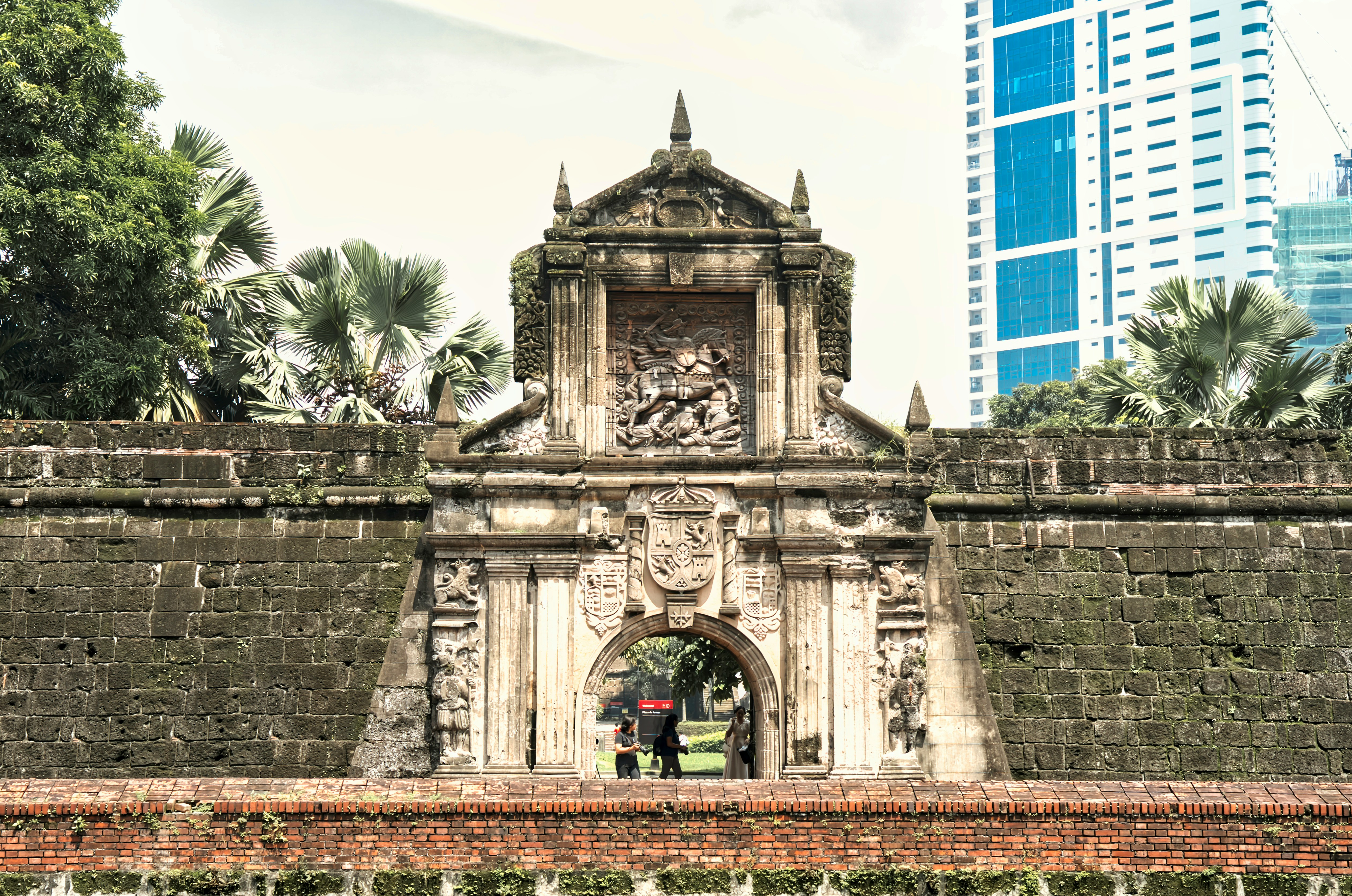
Photo by German Rivera De La Torre on Unsplash
In 1945, the Battle of Manila reduced one of the most magnificent colonial cities in Asia to rubble. In a matter of weeks, centuries of Spanish baroque architecture — churches, convents, palaces, and schools — were obliterated. Today, within 0.67 square kilometers of ancient stone walls, Intramuros is rising again: cobblestone streets, restored battlements, horse-drawn carriages, and churches that have been built, destroyed, and rebuilt so many times they have become, quite literally, indestructible symbols of Filipino resilience.
But the Intramuros of today is not the Intramuros of the archive. And somewhere between the ruins and the reconstruction lies a story that most travelers miss entirely.
Archived records from the late 19th century and early American colonial period tell of a church so magnificent it was called the "Sueño Dorado" — the Golden Dream. The San Ignacio Church, completed in 1889 along Calle Arzobispo, was the crowning achievement of the Jesuit order in the Philippines. Designed by architect Felix Roxas Sr. in a Neoclassical style and furnished with extraordinary hardwood interiors carved by master sculptor Isabelo Tampingco, it was considered the finest ecclesiastical building inside the walled city.
Historic photographs from the 1930s show it standing proudly behind the old Spanish walls — vast, luminous, and detailed with a craftsman's devotion. Then came February 1945. During the Battle of Manila, the church burned continuously for four days. By the time the fires went out, only the outer walls remained standing. The Jesuit order rebuilt their Manila church elsewhere — the Church of the Gesù on the Ateneo de Manila University campus in Quezon City — and the ruins of San Ignacio were handed over to the government.
For decades, the site of the Jesuits' Golden Dream was occupied by a warehouse. By the late 1990s and early 2000s, the cleared ruins served a different purpose entirely: a neighborhood basketball court. Photographs from 2007 show children playing between the ruined walls of what was once the most celebrated church in Intramuros. The sacred and the everyday, occupying the same crumbling space.
The story of San Ignacio Church doesn't end in rubble. In 2011, the Intramuros Administration began a multi-phase restoration project using a budget of over ₱400 million. After years of heritage consultations with sixteen experts in architecture and preservation, Museo de Intramuros opened its doors to the public in 2019 — a fully reconstructed ecclesiastical museum built within the restored walls of the original church.
Today, the museum houses over 500 religious artifacts recovered from old churches in and around the walled city: gilded retablos, santos, colonial furniture, and fragments of a world that was nearly completely erased. Entry is free. The experience is profound.
Most visitors cover Intramuros in the heat of the day and leave before the light changes. Don't. Walk Calle Arzobispo at dusk, when the tungsten lamps click on and the cobblestones glow amber. Stand in front of Museo de Intramuros and consider what you're looking at: a church that was a Golden Dream, then a ruin, then a basketball court, then a museum. In a single façade, you are looking at the entire arc of Philippine history — conquest, destruction, forgetting, and the stubborn insistence on remembering.
The Intramuros Administration also offers bamboo bike tours and AR-enhanced walking tours that overlay historical photographs onto the modern streetscape. Seeing the pre-war city superimposed on its own ghost is one of the most arresting experiences Manila has to offer.
Intramuros is located in the heart of Manila, adjacent to Rizal Park and accessible from most Metro Manila points via taxi, ride-hailing apps, or the LRT-1 (Central Station). Most sites are open daily; Fort Santiago is open from 8:00 AM to 9:00 PM, with a ₱75 entrance fee. Museo de Intramuros is free of charge.
Intramuros is not a relic. It is a conversation — between what was, what was lost, and what refuses to disappear.
Kotor is a double-listed UNESCO World Heritage Site in Montenegro's fjord-like bay. Your fact-checked 2026 guide to the Adriatic's most layered medieval city and the rise of Western Balkans travel.
The Faroe Islands generated 1.4 billion DKK from tourism in 2025 while pioneering Europe's most innovative sustainable tourism model. Your fact-checked 2026 guide to the North Atlantic's most dramatic archipelago.
McMurdo Sound and the Ross Sea welcome only about 1,150 visitors per season. Your fact-checked 2026 guide to the world's most remote expedition and the huts of Scott and Shackleton.