Get consult
Unlock the secrets of the world’s most breathtaking locales with our expert insights — guiding you toward the truly remarkable destinations that define a lifetime of travel.




Photo by Farkhod Saydullaev on Unsplash
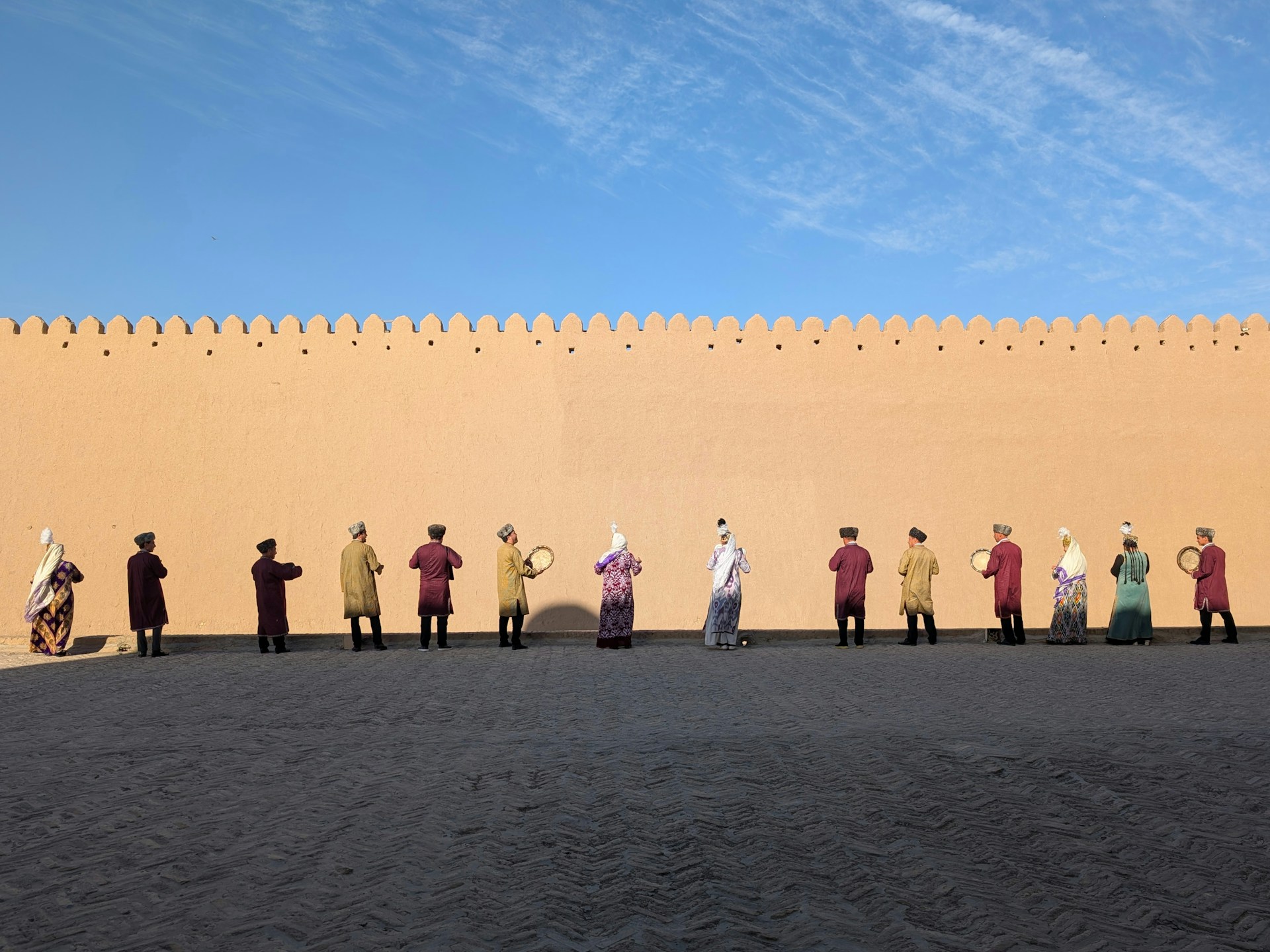
For more than two and a half millennia, Khiva has existed at the edge of the known world: a desert oasis in western Uzbekistan where camel caravans once rested before crossing the vast Karakum into Persia. Its walled inner city, the Itchan Kala, became Central Asia's first UNESCO World Heritage Site in 1990 and is home to more than 50 ancient monuments, many in a state of preservation so extraordinary that visiting feels less like touring a museum and more like walking into a city that has simply continued breathing across the centuries.
And yet, for most of that same period, Khiva has been one of the hardest places in Asia to actually reach. Sitting 280 miles from Bukhara across desert terrain, and more than 600 miles from the capital Tashkent, the city remained a spectacular outlier on the Uzbek tourist circuit: visited by the dedicated, skipped by the rushed. That is about to change permanently. In 2026, a new high speed rail service connecting Tashkent directly to Khiva is set to launch, slashing a journey that once took 14 hours down to approximately 7 hours and 40 minutes, as confirmed by National Geographic, Euronews, and Travel and Tour World citing Uzbek railway authorities. The launch date is targeted for May 2, 2026, making 2026 the first year in Khiva's long history when the city is genuinely accessible to the mainstream international traveler.
Uzbekistan as a whole is in the middle of one of the most remarkable tourism growth stories in Asia. The country welcomed nearly 11.7 million foreign visitors in 2025, a 46.8 percent increase over the previous year, according to the National Statistics Committee of Uzbekistan as reported by Travel and Tour World. UN Tourism named Uzbekistan among the seven fastest-growing tourism destinations worldwide for 2025, recording a 73 percent increase in international arrivals compared to 2019 levels, as confirmed by both Euronews and Travel Tomorrow citing UN Tourism data. In the first two months of 2026 alone, Uzbekistan received 1.77 million visitors, a 33 percent year-on-year increase, according to MICE Travel Advisor. Khiva, historically underrepresented in those numbers relative to its extraordinary heritage value, is now positioned to absorb a significant share of this growth for the first time.
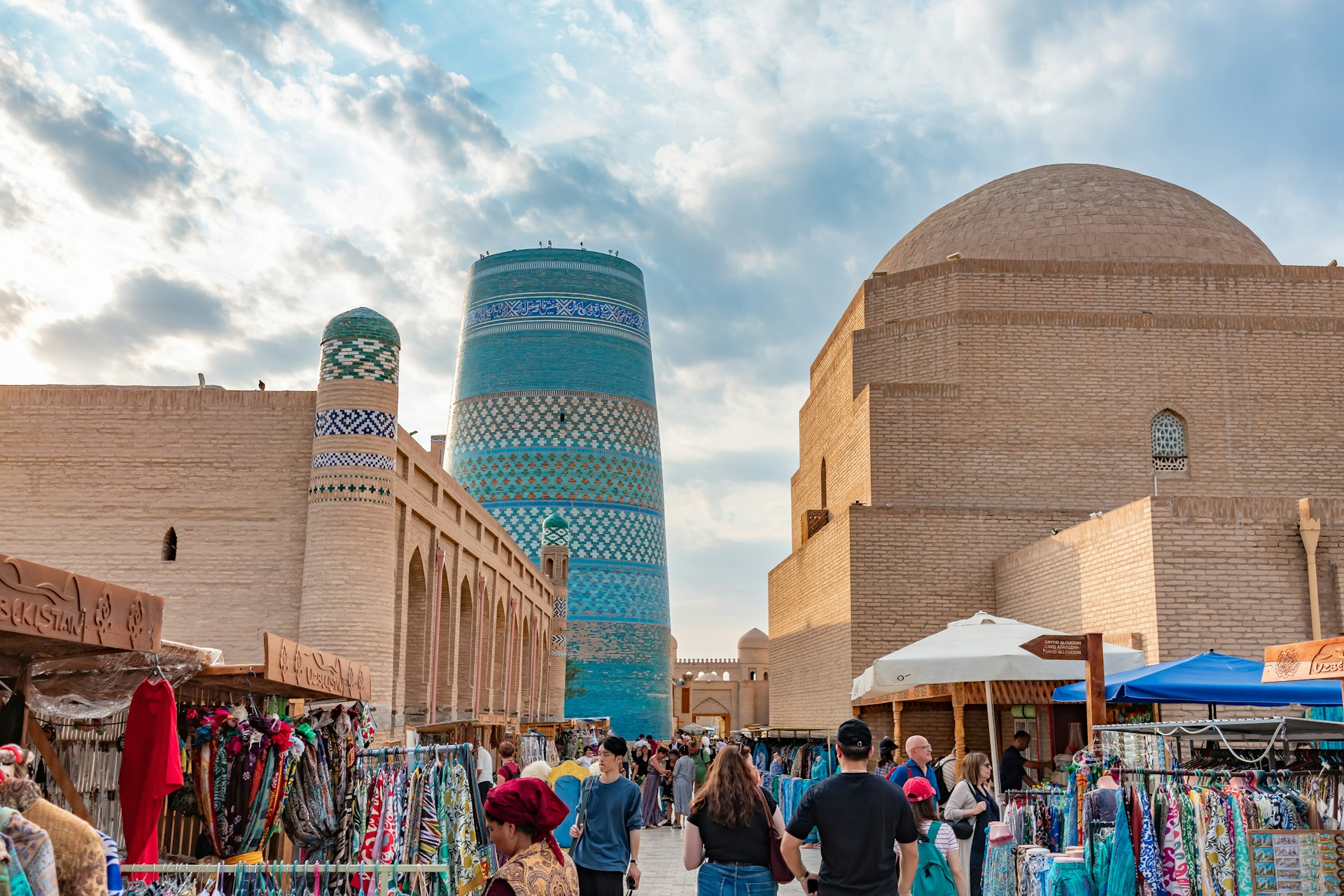
The ancient identity of Khiva is inseparable from its geography. The city takes its very name from the legend that Shem, son of the biblical Noah, dug a well here in the desert and called the water Khey Vakh: good water. Archaeologists confirm continuous human settlement for more than 2,500 years, and the Itchan Kala's current form reflects centuries of construction under the Khanate of Khiva, which ruled the region until the Russian conquest in 1873. The result is a walled city so densely concentrated with medieval architecture that it functions almost as a single living monument: the Kalta Minor Minaret, unfinished in the 19th century and now one of the most photographed objects in Central Asia; the Juma Mosque, with its forest of 213 individually carved wooden columns, the oldest dating from the 10th century; the Pahlavon Mahmud Mausoleum, tiled in every shade of blue, turquoise, and green; and the Islamkhodja Minaret, 187 feet tall, which can be climbed for a bird's-eye view across the entire walled city, as documented by National Geographic.
What has changed in the last two to three years is not the ancient city, but everything surrounding it.
The new rail service uses Hyundai Rotem electric trains, manufactured in South Korea and branded the Jaloliddin Manguberdi after the medieval Uzbek hero who resisted the Mongol invasion. The trains were shipped from South Korea in late 2025 and have been undergoing testing and driver training ahead of commercial launch, as confirmed by travel writer Laura's Suitcase and Travel and Tour World. The 1,286-kilometer route runs from Tashkent through Samarkand and Bukhara to Urgench and then on to Khiva, running at speeds that bring the total journey down to 7 hours and 40 minutes from what was previously a 14-hour overnight train ride. The new Khiva train station is already built and operational, located a five-minute taxi ride or 20-minute walk from the Itchan Kala gate, as documented by National Geographic. Urgench International Airport, the closest air hub to Khiva at 23 miles, is simultaneously undergoing major renovation to expand its capacity to 3 million passengers per year, as confirmed by National Geographic.
Recognizing that improved connectivity would bring a surge in visitors requiring more accommodation and entertainment infrastructure, President Shavkat Mirziyoyev officially opened the Arda Khiva tourist complex in October 2024 on a 25-hectare site along the shores of Govuk Lake, just 4 kilometers from the Itchan Kala. The complex, which has been described by Uzbekistan's official tourism portal as the "Eastern Venice" of the country, features a 2-kilometer canal network navigable by gondola, replicas of the Kalta Minor Tower and other Itchan Kala architectural landmarks, 17 hotels and guesthouses with a combined capacity of 1,000 visitors, a 3,000-seat amphitheater for international festivals and concerts, four water parks, nine restaurants, a food court, 11 artisan workshops covering wood carving, pottery, gold embroidery, and ganch plasterwork, and a dedicated jewelry center, as confirmed by the official Uzbekistan Travel portal and Gazeta.uz reporting on the opening ceremony. The complex is designed to accommodate up to 3 million visitors annually and is expected to create at least 2,000 jobs in the Khorezm region.
The broader Uzbek hospitality sector has been growing at pace. In 2025 alone, over 836 new lodging establishments were added across the country, including 106 hotels, 226 hostels, and 460 family guesthouses, according to Travel and Tour World. International brands including Marriott International, which made its Uzbekistan debut with a new Samarkand property in 2025, are now operating in the country alongside plans for a Mercure Khiva five-star hotel, as reported by National Geographic. Farovon Khiva, a five-star property neighboring the Arda Khiva complex and within easy reach of the Itchan Kala, is among the newest options for travelers seeking luxury accommodation.
As of January 1, 2026, US citizens can enter Uzbekistan visa-free for up to 30 days, confirmed by a presidential decree signed November 3, 2025 and officially verified by the US State Department's Uzbekistan country page and Central Asia Guide. Citizens of most EU member states, Canada, Australia, Japan, South Korea, and a growing list of Gulf states including Saudi Arabia, Qatar, Kuwait, Oman, and Bahrain also now enjoy visa-free entry for stays of up to 30 days, as confirmed by the Visa Policy of Uzbekistan Wikipedia article citing official decrees. Citizens of India and Pakistan should check current requirements at the official Uzbekistan e-visa portal at e-visa.gov.uz before travel. Foreign nationals must register with local authorities within 3 days of arrival, a requirement that most hotels handle automatically on your behalf.
The most convenient international gateway is Urgench International Airport, 23 miles from Khiva, which has flights from Istanbul via Turkish Airlines and from Paris, Madrid, and Rome via Uzbekistan Airways, with daily domestic connections to Tashkent, as confirmed by National Geographic's 2026 Khiva guide. A taxi from Urgench airport to Khiva costs approximately 12 USD as of 2025 data, though prices should be verified on arrival. Alternatively, from May 2026 onward, the new Jaloliddin Manguberdi high speed train connects Tashkent to Khiva in approximately 7 hours and 40 minutes, with tickets bookable through Uzbekistan Railways at uzrailpass.uz. The train covers the full Silk Road circuit, stopping in Samarkand and Bukhara en route, making it possible to visit all three UNESCO-listed cities on a single journey. Tickets on popular dates sell out quickly, especially around national holidays, so advance booking is strongly recommended based on patterns documented for the existing Afrosiyob service by Laura's Suitcase.
Khiva has a continental desert climate with extreme summer heat and cold winters. The optimal travel windows are March through May and September through November, when daytime temperatures are mild and the blue sky and bright sunshine create the most photogenic backdrop for the city's tile work and architecture, as documented by both National Geographic and Nomad Lawyer. March 20 to 21 is Nowruz, Uzbekistan's traditional New Year at the spring equinox, a national holiday with concerts, parades, and feasting throughout the country. Summer visits (July and August) are possible but temperatures regularly exceed 40 degrees Celsius and the experience can be exhausting. Most travelers find that two to three days in Khiva is sufficient to cover the Itchan Kala thoroughly, with extra time for a day trip to the ancient fortresses of Khorezm in the surrounding desert.
The walled inner city is almost entirely pedestrianized and most attractions are within easy walking distance of each other. Key sites confirmed by multiple sources include the Kalta Minor Minaret, the unfinished symbol of Khiva whose tiled base is 14.5 meters in diameter; the Juma Mosque, built and rebuilt between the 10th and 18th centuries with a covered courtyard unique in Central Asian Islamic architecture; the Pahlavon Mahmud Mausoleum, the turquoise-tiled resting place of the city's patron saint and a masterpiece of Khorezm decorative art; the Islamkhodja Minaret, the tallest structure in Khiva at 187 feet, climbable for panoramic city views; the Konya Ark citadel, which served as the Khans' throne room; and the Tash Khauli Palace, the summer residence of the Khivan Khans, with extraordinarily detailed tilework in its harem and ceremonial courtyards. A combined ticket covering the main sites within the Itchan Kala is available at the entrance gates and offers better value than purchasing individual site tickets, though exact fees should be verified on arrival as they are subject to change.
Uzbekistan's currency is the Uzbekistani som (UZS). Visa cards are increasingly accepted in Tashkent and major tourist hotels, but Khiva remains largely cash-based for smaller transactions, bazaar shopping, and meals at local teahouses. ATMs are available in the city but are less reliably stocked than in the capital. US dollars can be exchanged at official exchange offices throughout Khiva at competitive rates. Mobile payments including Apple Pay and Google Pay are not yet widely supported, as confirmed by Audley Travel's 2026 Uzbekistan guide. Carry sufficient cash for the entirety of your Khiva stay.
The Itchan Kala is not a theme park. The monuments, lanes, and teahouses within its walls are shared by the people of Khiva as a living community, and the coming surge of visitors brought by the high speed rail connection will place new pressure on spaces that have remained remarkably intimate. Dress modestly when entering mosques and religious sites: shoulders and knees should be covered for both men and women, and women should carry a headscarf for entry into active places of worship. Photography inside the mausoleums and mosques should be done discreetly and only where permitted. Respect the practice of plov and tea as gestures of hospitality rather than as photo opportunities: if invited to sit and eat with a local family or craftsperson, accept the hospitality genuinely. Buy directly from the artisan workshops inside the Itchan Kala rather than from mass-produced souvenir stalls: the city's tradition of wood carving, silk ikat weaving, and suzani embroidery supports families whose heritage skills are irreplaceable. The Uzbek government's Uzbekistan 2030 strategy includes a target of 15 million annual tourists while explicitly committing to the preservation of UNESCO-listed sites and natural environments. As a visitor, traveling slowly, spending locally, and engaging with local culture rather than merely photographing it is the most direct way to contribute to that balance.
Kotor is a double-listed UNESCO World Heritage Site in Montenegro's fjord-like bay. Your fact-checked 2026 guide to the Adriatic's most layered medieval city and the rise of Western Balkans travel.
The Faroe Islands generated 1.4 billion DKK from tourism in 2025 while pioneering Europe's most innovative sustainable tourism model. Your fact-checked 2026 guide to the North Atlantic's most dramatic archipelago.
McMurdo Sound and the Ross Sea welcome only about 1,150 visitors per season. Your fact-checked 2026 guide to the world's most remote expedition and the huts of Scott and Shackleton.