Get consult
Unlock the secrets of the world’s most breathtaking locales with our expert insights — guiding you toward the truly remarkable destinations that define a lifetime of travel.


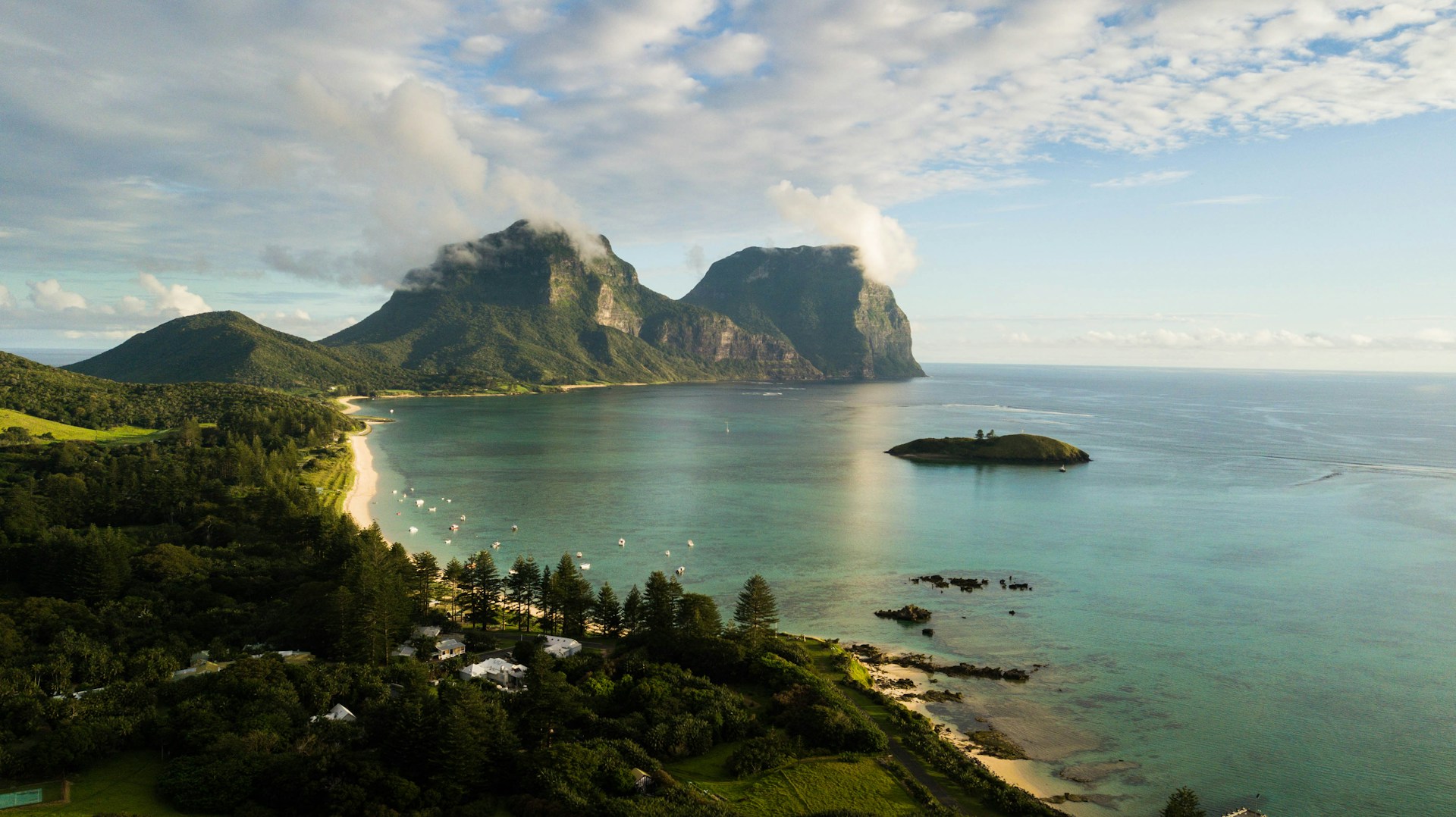
Photo by Dylan Shaw on Unsplash
There are destinations that are hard to get to. And then there is Lord Howe Island. The 400-visitor cap that has governed this UNESCO World Heritage island since the early 1980s means that at any given moment, the entire island holds fewer people than a single mid-sized hotel. The waitlist for accommodation routinely extends well into the following year. Return flights from Sydney cost upwards of 666 USD. The island has no mobile phone coverage, limited internet, a 25 kilometer-per-hour speed limit enforced across its entire 11-kilometer length, and a resident population of approximately 350 people who have consciously chosen to keep it exactly this way for generations.
None of that is a deterrent. It is the point. Lord Howe Island in 2026 is the clearest and most mature expression of Ultra-Limited Access Slow Tourism in the Pacific: a destination whose scarcity is not a function of distance or difficulty but of deliberate, community-mandated choice. While the rest of the world debates how to manage overtourism after the damage has already been done, Lord Howe has been running a working model of sustainable visitor management for more than 40 years, as confirmed by CNN Travel, InsideHook, and Destination Think's responsible tourism documentation. The result is an island that is, in almost every measurable way, in better ecological condition today than when it received its UNESCO inscription. That is not a common story. It is almost unprecedented.
Lord Howe Island is located 600 kilometers northeast of Sydney in the Tasman Sea, between Australia and New Zealand, at coordinates placing it in the northern island subtropical forest ecoregion that the WWF has given its own unique classification, the Lord Howe Island subtropical forest, as confirmed by InsideHook and UNESCO World Heritage Centre documentation. It is the remnant of a shield volcano that erupted from the seafloor approximately seven million years ago, as confirmed by multiple geology and heritage sources, producing the dramatically vertical twin peaks of Mount Gower (875 meters) and Mount Lidgbird (777 meters) at its southern end, the sheltered coral lagoon on its western side, and the extraordinary geological formation of Ball's Pyramid 23 kilometers to the southeast, the world's tallest sea stack at 562 meters, rising vertically from the ocean surface, as confirmed by the Coral Coe and Takeyourbackpack 2026 guides.
The island was discovered by European navigators in 1788, and permanent settlement began in June 1834, with early settlers being European and American whalers whose descendants have remained on the island for six, seven, and eight generations, as confirmed by Wikipedia's Lord Howe Island article and InsideHook. When whaling declined, the island turned to exporting its most famous endemic species: the Kentia palm (Howea forsteriana), the world's most popular indoor palm, which grows exclusively in the lowland coastal subtropical forests of Lord Howe Island and nowhere else on earth, as confirmed by the Kentia Palm species documentation and Lord Howe Island Rodent Eradication Project's biodiversity records. Kentia palm seeds and seedlings remain a significant part of the island's economy alongside tourism.
The Lord Howe Island Group was inscribed as a UNESCO World Heritage Site in 1982, recognized as a remarkable example of isolated oceanic islands born of volcanic activity more than 2,000 meters under the sea, with spectacular topography and home to numerous endemic species, as confirmed by the UNESCO World Heritage Centre's official listing. The inscription criteria included the island's extraordinary natural beauty, its intact ecosystems, and its role as critical habitat for threatened species including the Lord Howe Woodhen (Gallirallus sylvestris), a flightless bird that was at the time of inscription considered one of the world's rarest birds, with a population that had been devastated by introduced predators. A successful captive breeding program and invasive species management has since allowed the Woodhen population to recover significantly, as confirmed by the World Heritage Outlook IUCN assessment. The island supports 241 species of indigenous plants, of which 105 are endemic, meaning they grow nowhere else on earth. More than 1,600 terrestrial insect species have been recorded, of which approximately 60 percent are found nowhere else, as confirmed by the Lord Howe Island Rodent Eradication Project's biodiversity documentation.
The visitor cap is not a soft guideline or a booking preference. It is enforced through a bed license policy mandated by the Lord Howe Island Board, the island's governing authority: only 400 licensed tourist beds exist on the island, meaning the physical infrastructure itself prevents more than 400 visitors from being present at any one time. When combined with the permanent resident population of approximately 350, the island's total human presence never exceeds around 800 people, as confirmed by the World Heritage Outlook IUCN assessment and multiple verified tourism sources. The policy has been in place for more than 40 years, making Lord Howe's visitor management system one of the oldest and most effective in the world, as confirmed by CNN Travel, Destination Think's responsible tourism documentation, and Travel With Care. The cap is explicitly cited by sustainable tourism researchers and destination management organizations as a global model: while most destinations attempt to retroactively manage overtourism after the damage has been done, Lord Howe implemented preventive limits before the word overtourism existed in the tourism industry vocabulary, as documented by Destination Think.
The result is visible and measurable. More than 85 percent of the island remains covered in its native forest. Around 70 to 75 percent of the island's land area is designated as Permanent Park Preserve, prohibiting all development, as confirmed by CNN Travel, the Explore Responsible Tourism documentation, and the Australian Government's DCCEEW heritage listing. The marine environment is in genuinely excellent condition: the Lord Howe Island Marine Park covers 48,000 hectares and is home to over 90 species of coral and 500 species of fish, as confirmed by Visit NSW and Qantas's Lord Howe travel guide, and the lagoon's coral coverage is untouched by the bleaching events that have affected the Great Barrier Reef, because the water temperature at Lord Howe's latitude is cooler and less vulnerable to the thermal stress driving tropical bleaching, as confirmed by the Coral Coe detailed marine guide.
Lord Howe's most significant ongoing conservation challenge involves invasive species introduced accidentally over centuries of settlement and shipping. The rodent eradication program completed in 2019 removed the black rats and mice that had devastated ground-nesting bird populations for nearly two centuries, and the results have been transformative: seabird species that had not bred successfully on the main island for decades have returned, as documented by conservation organizations monitoring the post-eradication recovery. Visitors arriving at Lord Howe Island Airport are greeted by trained biosecurity dogs whose role is to detect and intercept invasive plant seeds, insects, and other material that might have arrived in luggage, shoes, or on clothing, as confirmed by InsideHook. Boot wash stations are required at the entrance to all walking tracks to prevent the spread of Myrtle Rust, a fungal pathogen threatening endemic plant species, as confirmed by the official Lord Howe Island travel tips documentation. This is not theatrical: it is functional conservation infrastructure that every visitor participates in whether they realize it or not.
Lord Howe Island Airport (LDH) is served by SmartLynx Australia operating daily flights from Sydney with a flight time of under two hours, as confirmed by the official Lord Howe Island travel essentials page. Book through SmartLynx or Qantas to earn and redeem Qantas points and access the Qantas Lounge in Sydney. Eastern Air Services offers weekly flights and charter services from Port Macquarie, the Gold Coast, and Newcastle. Connecting services from all Australian capital cities and many regional centers are available through Qantas and QantasLink. The single most important booking rule for Lord Howe: confirm accommodation before arranging flights, as confirmed by Tourism Australia and the official Lord Howe Island travel guide. Because the bed license system limits the island to 400 visitor beds, accommodation fills months ahead in peak season (December through February and all Australian school holidays). A 14-kilogram checked baggage and 7-kilogram carry-on limit applies to all Lord Howe flights, with surfboards and golf clubs carried subject-to-load, as confirmed by the official Lord Howe Island travel tips page. Get travel insurance: the island's weather is unpredictable and flights can be cancelled or turned back with little warning, as strongly recommended by We Are Explorers' Lord Howe budget guide. Return flights from Sydney run upwards of 666 USD, as confirmed by CNN Travel. Once on the island, your accommodation will provide complimentary airport transfers.
The island is 11 kilometers long and 2 kilometers wide. The entire length can be cycled end-to-end in approximately 20 minutes. A limited number of rental cars is available, but the island enforces a strict 25 kilometers per hour speed limit on all roads, which are shared by walkers, cyclists, and vehicles simultaneously, as confirmed by the official Lord Howe Island travel tips page. The practical reality is that bicycle is the ideal mode of transport for almost all visitors, and most accommodation properties provide bicycle hire. The island has no public transport: your accommodation meets your flight and provides transfers, as confirmed by the official Lord Howe Island travel tips page. Mobile phone coverage does not exist on Lord Howe Island. Public internet access is available near the Community Hall and Museum for 11 AUD per 1GB or 29 AUD per 3GB, and several hospitality establishments offer limited free wireless, as confirmed by the official Lord Howe Island travel tips page. The TownCenter app is a free offline application developed specifically for Lord Howe featuring local businesses, historical information, and walking routes: download it before you board your flight.
Mount Gower is Lord Howe Island's defining experience and one of the finest day hikes in the Southern Hemisphere. The summit sits at 875 meters and is accessible only on a guided climb with a licensed guide, as confirmed by Qantas's Lord Howe travel guide and the Visit NSW Lord Howe Island page. The most respected guide operation is Lord Howe Environmental Tours. The hike is a full day: steep, strenuous, and requiring good physical fitness, rope-assisted sections on the upper cliffs, and appropriate footwear. The summit reward is a cloud forest, a rare ecological community found this far south only on Lord Howe, with endemic mosses, orchids, and ferns draped across a flat volcanic plateau above the cloud line. Views extend across the lagoon, the island's entire length, and out to Ball's Pyramid on the horizon. The cloud forest's endemic plant community is so unusual that visiting it is categorized as a once-in-a-world experience, not merely a once-in-a-lifetime one. Book the guided climb as early as possible: spaces fill months ahead during peak season.
The Lord Howe Island Marine Park covers 48,000 hectares and is located at the crossroads of five major ocean currents, creating a marine community that is a hybrid of tropical reef species from the north, temperate NSW species from the south, and endemic species found only in these waters, as confirmed by Visit NSW's marine park documentation. The lagoon on the island's western side is the most accessible snorkeling environment: calm, clear, and home to extensive coral gardens with turtles, reef fish, and over 90 species of coral, as confirmed by Qantas and Visit NSW. The coral is in genuinely excellent condition, unaffected by the bleaching events impacting the Great Barrier Reef, as confirmed by the Coral Coe marine guide. Ned's Beach on the eastern shore offers a different experience: a shallow, sheltered bay where a decades-old tradition of hand-feeding local fish has produced some of the most accessible marine wildlife encounters anywhere in Australia. Large kingfish, trevally, and Maori wrasse enter the shallows alongside smaller reef fish during late-afternoon feeding, as documented by the Coral Coe guide and multiple visitor accounts. More than 60 world-class dive sites are located within a 10 to 20-minute boat ride from shore, as confirmed by Visit NSW. Ball's Pyramid, 23 kilometers southeast, is the most dramatic visual experience on the water: boat tours from Lord Howe Island pass close enough to see the 562-meter sheer volcanic pinnacle clearly, with marine life on the underwater sections of the stack, completely undisturbed by recreational diving, reportedly extraordinary. The snorkeling and diving season runs from September through May, as confirmed by Visit NSW.
Lord Howe Island has a mild year-round climate with temperatures averaging 20 to 25 degrees Celsius in summer, as confirmed by the official Lord Howe Island travel essentials page. The peak season is December through February (Australian summer) and all Australian school holiday periods, when accommodation fills furthest in advance and flight availability is tightest. Spring (September through November) and Autumn (March through May) offer the best balance of pleasant weather, high availability, and the full operational season for marine activities. Winter (June through August) brings the most accommodation availability, cooler temperatures, and significantly lower pricing. Budget expectations in 2026: Lord Howe is unambiguously premium. Return flights from Sydney run 666 USD or more, as confirmed by CNN Travel. Accommodation ranges from self-catering cottages at the budget end (around 200 AUD per night for two) to luxury all-inclusive lodge stays at Capella Lodge or Pinetrees Lodge at the premium end (several hundred to over 3,000 AUD per night for two), as confirmed by CNN Travel and Qantas's travel guide. There is no large resort on Lord Howe: the accommodation ecosystem is fundamentally boutique and domestic in character. Currency is the Australian Dollar. Credit cards are widely accepted but not universally: carry cash for smaller purchases. The ATM at the Lord Howe Island Bowling Club is the only 24-hour cash access point on the island, as confirmed by the official Lord Howe Island travel tips page. Foreign currency and traveller's cheques are not processed on the island.
When you are one of the 400 visitors on Lord Howe Island at any given time, you are not simply a tourist. You are a participant in the world's oldest and most effective model of visitor-managed island conservation. The island's sixth-, seventh-, and eighth-generation residents have built their entire way of life around a principle that runs directly counter to the logic of most tourism economies: that fewer visitors, paying more and staying longer, produces better outcomes for the environment, the community, and the visitor experience simultaneously. The evidence, across more than four decades, is that they are right.
The practical obligations this creates for you as a visitor are specific. Use the boot wash stations at every walking track entrance without exception. Do not import any plant material, seeds, or soil: biosecurity dogs at the airport are not a formality. Do not remove any natural material from the island, including shells, coral fragments, rocks, or sand. Stay on marked trails at all times. Respect the no-take zones within the marine park. The hand-feeding tradition at Ned's Beach is a decades-old community institution: use only the bread and fish food provided at the beach, not your own, and do not attempt to handle or chase the fish. At Ball's Pyramid, the world's largest stick insect (the Lord Howe Island Phasmid, Dryococelus australis) lives on the rock face in a colony that was the only surviving population of the species after it was feared extinct: the island and its surrounds are active conservation sites, not decorative scenery.
The 350 permanent residents who share their island with you for the duration of your stay are not tourism industry employees. They are a community whose ancestors chose this place and whose descendants are choosing it still, at considerable personal cost in terms of isolation, limited services, and the practical difficulty of island life. Treat their home with the respect that choice deserves.
Kotor is a double-listed UNESCO World Heritage Site in Montenegro's fjord-like bay. Your fact-checked 2026 guide to the Adriatic's most layered medieval city and the rise of Western Balkans travel.
The Faroe Islands generated 1.4 billion DKK from tourism in 2025 while pioneering Europe's most innovative sustainable tourism model. Your fact-checked 2026 guide to the North Atlantic's most dramatic archipelago.
McMurdo Sound and the Ross Sea welcome only about 1,150 visitors per season. Your fact-checked 2026 guide to the world's most remote expedition and the huts of Scott and Shackleton.