Get consult
Unlock the secrets of the world’s most breathtaking locales with our expert insights — guiding you toward the truly remarkable destinations that define a lifetime of travel.




Photo by Polina Kuzovkova on Unsplash
There is no city in the Western Hemisphere quite like Habana Vieja. Compressed into roughly two square miles of cobblestoned streets and sun-bleached plazas on the northwestern coast of Cuba, Old Havana is the largest and best-preserved Spanish colonial urban center in the Americas. It contains more than 900 buildings of historical importance spanning five centuries of architectural styles, from severe 16th-century military fortifications to exuberant Cuban Baroque churches, elegant neoclassical mansions, and crumbling Art Deco apartment blocks whose peeling facades reveal layers of the city's long and complicated story, as documented by National Geographic and the UNESCO World Heritage designation records. In 2026, this neighborhood is trending not for ease of access or comfort, but for the exact opposite reason: because visiting it is genuinely difficult, genuinely meaningful, and genuinely unlike anything else a traveler from North America can experience.
Cuba's broader tourism landscape in 2025 was shaped by a severe and ongoing energy crisis. From January to July 2025, Cuba welcomed approximately 1.58 million visitors, roughly 83 percent compared with the previous year, as reported by Mezha Media citing Cuban tourism industry data. Rolling blackouts, some lasting up to 20 hours in affected provinces, and severe fuel shortages created real logistical challenges across the island, as confirmed by Al Jazeera and IEEE Spectrum's analysis of Cuba's electrical grid. Havana, including Old Havana, has been partly shielded from the worst of the outages due to its political and economic importance, as documented by IEEE Spectrum. Hotels within the tourist zone operated on backup generators throughout crisis periods, and the Cuban Ministry of Tourism equipped its key facilities with generator infrastructure ahead of each winter season, as confirmed by CiberCuba citing Cuba's Ministry of Tourism commercial director.

For the traveler paying attention, this context actually amplifies the case for visiting Old Havana in 2026 rather than diminishing it. The trend driving culturally motivated North American travelers here is what travel analysts are calling Intentional Cultural Tourism: a deliberate decision to engage with a destination precisely because it is complex, unresolved, and impossible to reduce to a highlight reel. Old Havana in 2026 is a city in the middle of its own story, not at the end of it. That is exactly where the most important encounters happen.
Old Havana's story begins in 1519, when Spanish conquistadors established the settlement of San Cristóbal de La Habana on the southwestern Cuban coast before moving to its permanent location on the northwestern harbor around 1519 to 1519. The harbor's strategic position made Havana a mandatory stopover for Spanish galleons carrying treasure from the New World back to Europe, transforming it within decades into the largest and most fortified port city in the Spanish West Indies, as documented by National Geographic's architecture and heritage guide to Old Havana. The city's original street grid, laid out around five main plazas, remains intact today. The UNESCO World Heritage Committee inscribed Old Havana and its fortification system in 1982, recognizing it as one of the most complete colonial cities surviving in the Americas, as confirmed by the World Heritage Site organization's Old Havana listing.
The urban fabric around those five plazas represents every architectural era from the 16th century forward: Plaza de Armas, the oldest, once the seat of military and colonial authority, and home to the Castillo de la Real Fuerza, one of the oldest stone forts in the Americas; Plaza de la Catedral, dominated by the 18th-century Catedral de San Cristóbal de La Habana, begun in 1748, its asymmetric baroque towers rising above a square of elegant colonial mansions; Plaza Vieja, laid out in 1559 as a commercial hub and subsequently restored by the Havana Historian's Office to its 19th-century appearance, now home to cafes, art galleries, and a working brewery; Plaza de San Francisco de Asís, with its Basilica Menor and a fountain whose colonial portico once marked the main port approach; and Plaza del Cristo, the quietest of the five, as confirmed by National Geographic and Travel Yes Please's walking guide to the plazas. Wandering between them along the pedestrian corridors of Calle Obispo and Calle Mercaderes, past ornate balconies and interior courtyards glimpsed through iron-grilled gates, is the primary activity Old Havana asks of its visitors. It asks them to walk slowly, look closely, and be present.
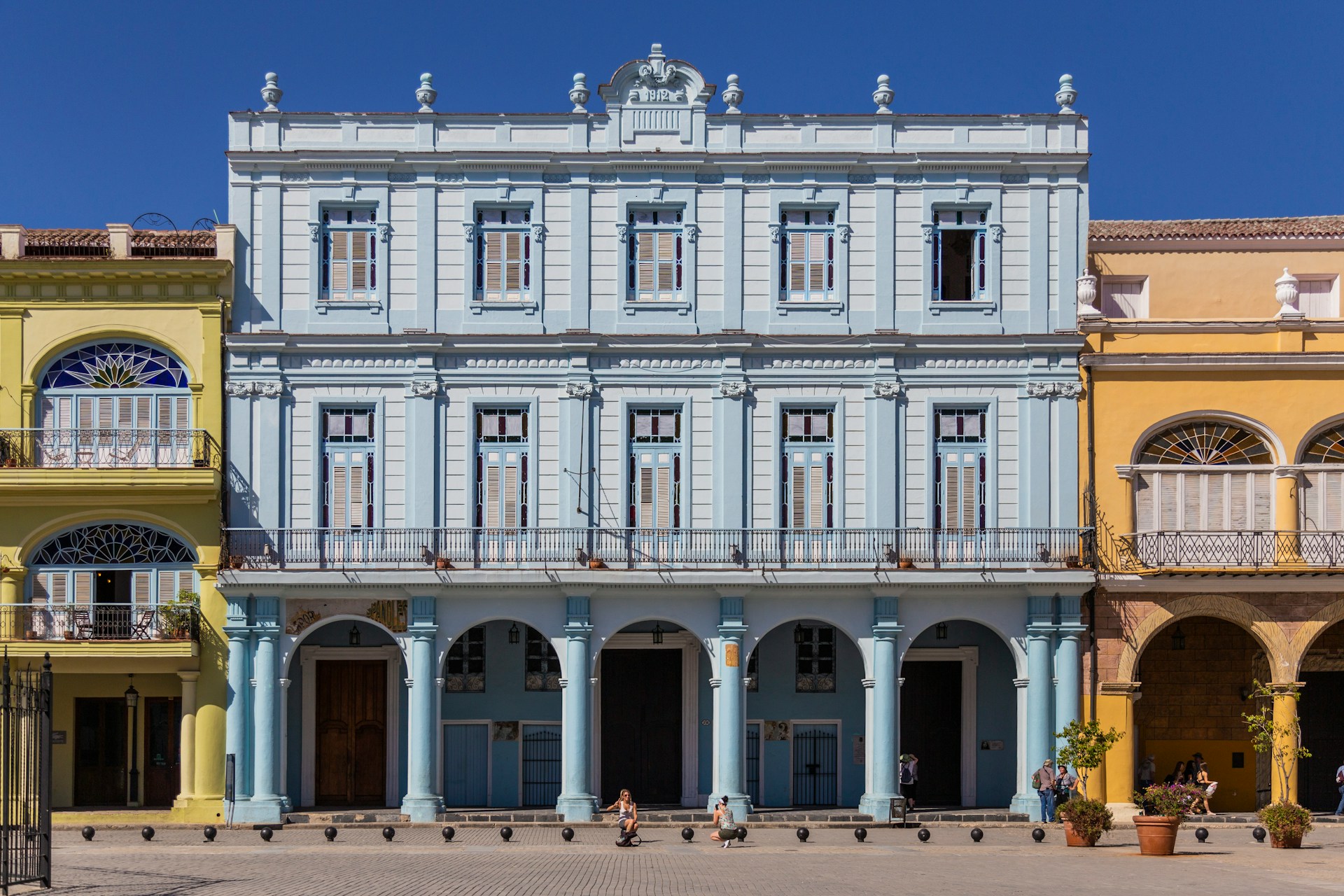
What has changed most significantly in Habana Vieja over the last four decades is the result of one of the most unusual urban conservation models anywhere in the world. The Office of the Historian of the City of Havana (Oficina del Historiador), established under the late historian Eusebio Leal and continuing his mission under current leadership, holds a unique self-financing mandate: revenue generated by tourism within the heritage zone is reinvested directly into the preservation and restoration of the zone itself. The office manages hotels, restaurants, museums, and cultural centers throughout Old Havana, using the profits to fund the structural conservation of the buildings surrounding them. More than $200 million has been invested in preservation projects over the past decade, as documented by offMetro World. This model has produced the carefully restored facades and plazas that travelers see today, while the blocks just beyond the core restoration perimeter reveal Havana's other face: a city of extraordinary beauty still waiting for the resources to save it.
Cuba's electrical grid crisis, which escalated from 2024 onward through a series of cascading thermoelectric plant failures, represents the most severe infrastructure challenge the island has faced since the Special Period of the 1990s, as documented by IEEE Spectrum and Electric Choice's 2026 Cuba electricity analysis. Daily deficits in 2025 averaged approximately 1,600 MW against maximum demand, with some provinces experiencing outages of 20 hours or more, as confirmed by IEEE Spectrum citing data from Cuba's state-owned electrical utility Unión Eléctrica. The good news for visitors to Habana Vieja specifically: Havana is documented as receiving preferential treatment in power distribution due to its political and economic importance, as confirmed by IEEE Spectrum. Tourist hotels within the heritage district operate with backup generator infrastructure. Paladares and casas particulares in the zone have similarly adapted. The honest reality for any traveler in 2026 is to prepare for intermittent connectivity, limited ATM reliability, and the possibility of grid disruptions that will affect daily logistics. These are real challenges. They are also part of understanding Cuba as it actually exists rather than as a promotional image.
For US citizens, Cuba travel requires compliance with the Office of Foreign Assets Control (OFAC) regulations under the Cuban Assets Control Regulations. Pure tourist travel to Cuba remains prohibited for US citizens under current law, as confirmed by Authentic Cuba Travel citing OFAC updates from February 6, 2025 and July 14, 2025, and reinforced by President Trump's National Security Presidential Memorandum signed June 30, 2025. However, 12 categories of authorized travel remain intact, as confirmed by Cuba Unbound, Cubas Best, and Vive Mas Tours citing current OFAC regulations. These include Support for the Cuban People (the most commonly used category), educational activities, professional research, humanitarian projects, religious activities, and family visits. Travel under the Support for the Cuban People license requires that your itinerary primarily supports Cuban private entrepreneurs rather than government-run entities, meaning you stay at casas particulares and eat at paladares rather than at government-owned hotels and restaurants. US travelers must self-certify their category compliance, document their spending, and retain records for 5 years, as confirmed by Cubas Best's 2026 legal travel guide. All US travel requires a Cuban e-Visa (formerly a paper tourist card), which since June 30, 2025 is issued electronically, as documented by Cuba Unbound. Canadian, European, and other non-US travelers face no such restrictions and can visit Cuba freely for tourism purposes, obtaining their Cuban e-Visa through airlines or visa service providers before departure.
International flights to Havana land at José Martí International Airport (HAV), approximately 18 kilometers southwest of Old Havana. Taxis, shared taxis known as colectivos, and classic car transfers connect the airport to Habana Vieja. Once in the historic district, walking is the primary and ideal mode of transport: the five main plazas and the pedestrian corridors connecting them are compact, flat, and densely packed with everything worth seeing. For slightly longer distances across the city, classic American cars from the 1950s serve as informal shared taxis and are one of Havana's most visually distinctive transport options. Cocotaxis, three-wheeled yellow mopeds, are another option for short hops. Cash is essential throughout Cuba: credit and debit cards issued by US banks do not function in Cuba due to the embargo, and ATMs in Havana are unreliable and frequently run out of cash during peak periods, as consistently documented by multiple 2025 and 2026 traveler resources. Bring sufficient currency, ideally in euros, Canadian dollars, or other non-USD currencies, as USD draws a currency exchange penalty in Cuba.
The most meaningful and legally compliant choice for US travelers, and the most authentic choice for all travelers, is a casa particular: a private Cuban home or apartment renting rooms to guests. Casas particulares in Old Havana place visitors directly within the residential fabric of the historic district, typically include home-cooked breakfasts, and provide a direct economic benefit to a Cuban family rather than to a state-owned entity. They are bookable through platforms including Airbnb, cubaaccommodation.com, and cubajunky.com, as documented by TripAdvisor's Havana accommodation forum. For travelers who prefer hotel infrastructure, Hotel Inglaterra, Havana's oldest hotel located on Parque Central and within walking distance of Old Havana's main sites, is a well-documented non-government option. At the luxury end, the Gran Hotel Manzana Kempinski La Habana offers a rooftop pool with panoramic views of El Capitolio and Old Havana, as documented by The Daily Packers' Havana guide. Always verify the US State Department's Cuba Prohibited Accommodations List before booking if you are a US citizen, as confirmed by Cubas Best, as certain government-affiliated hotels are off-limits under OFAC rules.
In Old Havana, eating at a paladar, a privately owned and operated restaurant as distinct from a government-run cafeteria, is simultaneously the legally correct choice for US travelers, the economically conscious choice for all travelers, and simply the better food experience by a wide margin. Paladares compete with each other for customers in ways that government restaurants do not, and the results show on the plate. Cuban cuisine in its authentic form includes ropa vieja (shredded beef with tomatoes and spices), moros y cristianos (rice and black beans), tostones (fried green plantains), and arroz con pollo (chicken with saffron and garlic rice), as documented by multiple Havana travel guides. Old Havana's restaurant scene also reflects the broader Cuban food reality documented by Minimalist Journeys' 2025 Cuba travel analysis: despite the economic crisis, food availability in the tourist district remains strong and the quality at privately run establishments is consistently good. Tip generously. The economic pressure on Cuban families working in tourism is real and every peso matters.
The optimal travel window for Old Havana is November through April during Cuba's dry season, when temperatures are warm but not oppressive, humidity is lower, and the risk of tropical storms is minimal. The peak months of December through February see the most comfortable weather and the highest visitor numbers. Cuba in 2025 celebrated the 505th anniversary of Havana's founding, with cultural programming planned throughout the year, as documented by offMetro World. Three to four days in Havana is the recommended minimum: one day for the five plazas, fortifications, and cathedral walk; one day for the Malecón promenade, the Museum of the Revolution, and the neighborhood of Vedado; one day for the Taller Experimental de Gráfica (the printmaking collective where you can watch artists at work, documented by National Geographic as a must-visit for cultural travelers); and a half day for the cannon firing ceremony at La Cabaña fortress, a nightly tradition maintained since colonial times in which a cannon is fired at 9 PM to signal the symbolic closing of the old city walls, as confirmed by multiple heritage sources.
Traveling to Cuba in 2026 carries an ethical weight that most other destinations do not. The Cuban people are living through conditions of genuine hardship: energy scarcity, food price inflation, and a wave of emigration unprecedented in the island's post-revolution history. Havana's population has declined by more than 12 percent since 2014 as measured by the most recent census data, attributable largely to emigration, as documented by Al Jazeera's December 2025 reporting. Against this backdrop, how you spend your money in Cuba is not a peripheral ethical consideration. It is the central one.
Spend exclusively at privately owned establishments: casas particulares, paladares, independent artisan workshops, and private guide operators. Avoid government-run hotels, government cafeterias, and any establishment on the US State Department's Cuba Restricted List or Prohibited Accommodations List. This is not only legally required for US travelers under OFAC's Support for the Cuban People license; it is the most direct way to ensure your tourism dollars reach Cuban families rather than state coffers. Bring medicine if you can: aspirin, antacids, and basic over-the-counter medications are documented as genuinely scarce in Cuba and are among the most meaningful contributions a visitor can make. Tip generously at every opportunity. Do not photograph individuals without asking. Approach the city with curiosity rather than nostalgia: Old Havana is not a time capsule preserved for the pleasure of foreign visitors. It is a living community navigating an extraordinarily difficult moment with the resilience and dignity that has defined Cuban culture for more than five centuries. Show up accordingly.
Kotor is a double-listed UNESCO World Heritage Site in Montenegro's fjord-like bay. Your fact-checked 2026 guide to the Adriatic's most layered medieval city and the rise of Western Balkans travel.
The Faroe Islands generated 1.4 billion DKK from tourism in 2025 while pioneering Europe's most innovative sustainable tourism model. Your fact-checked 2026 guide to the North Atlantic's most dramatic archipelago.
McMurdo Sound and the Ross Sea welcome only about 1,150 visitors per season. Your fact-checked 2026 guide to the world's most remote expedition and the huts of Scott and Shackleton.