Get consult
Unlock the secrets of the world’s most breathtaking locales with our expert insights — guiding you toward the truly remarkable destinations that define a lifetime of travel.



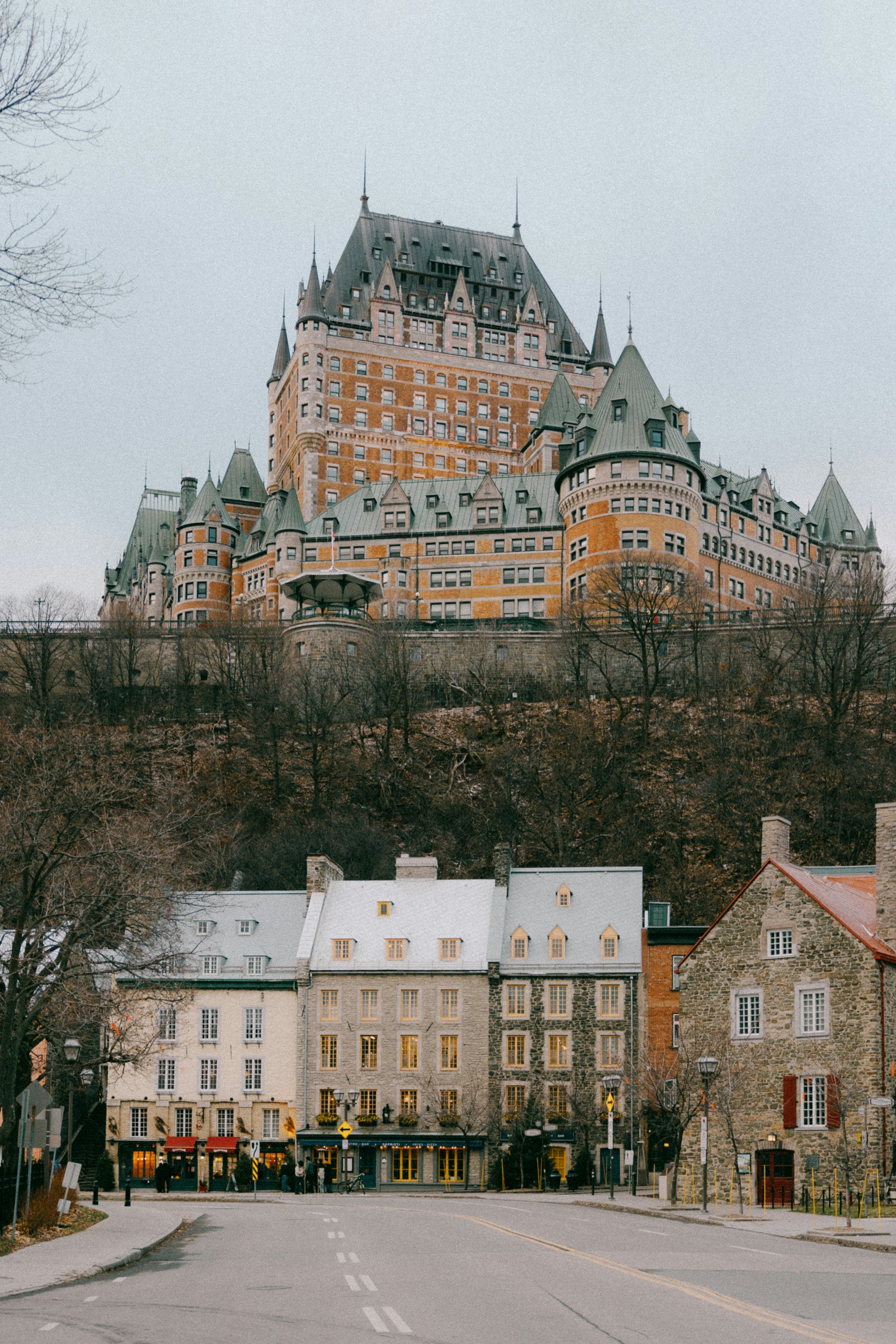
Photo by Deep Doshi on Unsplash
There is a particular kind of travel that happens when people decide to rediscover their own continent. Not the harried checking-off of bucket list items, but a slower, more deliberate kind of looking: at architecture, at language, at the texture of a city built by people who came from somewhere else and made something entirely new. Quebec City has always been that kind of place. In 2026, the rest of North America is finally paying attention.
The forces converging on Quebec City's tourism story in 2026 are both structural and political. Quebec City's Jean Lesage International Airport (YQB) will see a 15 percent increase in overall air capacity in 2026, with a 25 percent surge during the summer months, adding 376,456 seats for a total of 2,965,889 seats, as confirmed by Travel and Tour World citing airport authority data. Five new international destinations have been added including Nantes, Marseille, and Washington, with increased frequency to Paris, Vancouver, and Calgary, positioning Quebec City as a serious international tourism hub for the first time at this scale. National Geographic named Quebec province among the Best of the World 2026 destinations, specifically highlighting the surge of Indigenous-led cultural experiences in the Quebec City region as a defining reason to visit now.
Simultaneously, a macro shift in North American travel behavior is redirecting hundreds of thousands of travelers who would previously have crossed into the United States back toward Canadian destinations. Canadian visits to the United States fell 21 percent in 2025, equivalent to 4.2 million fewer visitors and 4.5 billion USD in lost spending, as documented by The Deep Dive citing US National Travel and Tourism Office (NTTO) data. Statistics Canada data released in March 2026 shows Canadian return trips from the US fell 14.5 percent in February 2026 compared to the same month a year earlier, a trend accelerating rather than reversing. The result is a domestic tourism boom of historic proportions. Domestic tourism spending in Canada reached nearly 104 billion CAD in 2025, an 8.3 percent increase from the previous year, with Quebec among the provinces seeing more than 20 percent growth in domestic bookings, as confirmed by Travel and Tour World citing Statistics Canada data. The trend driving this moment is Reclaim Canada: the rise of the domestic cultural rediscovery trip, in which Canadians who once defaulted to Florida or Vegas for leisure travel are instead spending their vacation dollars in a city that has been right there all along, waiting to be seen properly.
Quebec City is the oldest city in Canada and the only fully walled city north of Mexico. That distinction is not a marketing slogan. It is a physical fact that shapes every walk through the Upper Town and every descent to the Lower Town along the cliffs of Cap Diamant above the St. Lawrence River. The Historic District of Old Quebec covers approximately 135 hectares divided into two distinct sections: the Upper Town, sitting atop the cape and protected by its fortified ramparts and citadel, and the Lower Town, which grew around Place Royale and the harbor below. UNESCO inscribed the Historic District of Old Quebec on December 3, 1985, making it the first city in North America to receive World Heritage status, as confirmed by the UNESCO World Heritage Centre and the City of Quebec's official cultural heritage records. The inscription recognized both the coherence and remarkable degree of preservation of the city's built heritage across French and British colonial periods, and its significance as an exceptional example of a fortified colonial town unique on the continent.
Quebec City was founded in 1608 by Samuel de Champlain, establishing it as the capital of New France. Its natural defensive position on the promontory above the St. Lawrence made it the principal military stronghold in colonial Canada, and an elaborate defense system was developed between 1608 and 1871, as documented by Parks Canada's official Fortifications of Quebec National Historic Site records. The famous Battle of the Plains of Abraham in 1759, in which British forces under General James Wolfe defeated the French under General Montcalm outside the city walls, ended French control of Quebec and the broader conflict that shaped modern Canada's bilingual identity. The 4.6-kilometer ramparts that encircle Old Quebec today are the physical legacy of both French and British military engineering, with the permanent citadel built between 1820 and 1831, as confirmed by Parks Canada.
Three developments have meaningfully shifted Quebec City's cultural tourism landscape since 2022 and are central to why 2026 is the right time to visit.
The first is the explosion of Indigenous-led tourism in the Wendake community, located just 15 minutes by car from the Old City. Wendake is the only recognized Huron-Wendat Nation community in all of Canada, as confirmed by Indigenous Tourism Quebec and the Wendat nation's own cultural records. The Onhwa' Lumina multimedia night walk, a 1.2-kilometer forest trail developed in 2022 in collaboration with Montreal-based multimedia studio Moment Factory and the Huron-Wendat community, has brought more than 88,000 visitors to Wendake as of 2022 data, as confirmed by Indigenous Services Canada. The experience uses light projections, sound, and video to illuminate the myths, values, and history of the Huron-Wendat people. The Musee Huron-Wendat underwent a major transformation with a new exhibit unveiled in June 2024, while the Ekionkiestha' National Longhouse offers fireside storytelling and cultural immersion, as documented by Adventure Awaits and Quebec Cite's official Indigenous experiences guide.
The second is the ongoing major restoration work by Parks Canada on the Fortifications of Quebec National Historic Site. Significant restoration is underway in 2025 and 2026 on the Battery and the Saint-Charles wall on rue des Remparts, as confirmed by the official Parks Canada fortifications site. The work is part of Canada's long-term investment in preserving the only fully fortified city in North America. As part of the Canada Strong Pass program, Parks Canada is offering free admission to national parks, national historic sites, and national marine conservation areas, making the fortifications more accessible than ever.
The third is the growing recognition of Quebec City as a year-round destination beyond its iconic Winter Carnival. The summer Festival d'été de Quebec, one of the largest outdoor music festivals in North America, drew approximately 1.5 million attendees in recent editions, as documented by multiple travel planning guides for 2026. The Chateau Frontenac's Champlain Restaurant has received Michelin recognition, as confirmed by National Geographic's 2026 Quebec feature. And the airport expansion is bringing direct seasonal flights from Paris, making Quebec City a genuinely transatlantic destination for the first time at meaningful scale.
Quebec City's Jean Lesage International Airport (YQB) is the primary gateway, with significantly expanded capacity in 2026. Direct flights connect Quebec City to Paris, Nantes, Marseille, Vancouver, Calgary, and Washington among other destinations, with increased frequencies on key routes, as confirmed by Travel and Tour World's April 2026 airport expansion report. From Montreal, the most popular overland route is by VIA Rail train (approximately 3 hours, scenic St. Lawrence River corridor) or by bus. Driving from Montreal takes approximately 2.5 hours by Autoroute 20 or 40. Once in Quebec City, the Old City is best explored entirely on foot. The Funiculaire du Vieux-Quebec, a funicular railway connecting Upper Town near the Chateau Frontenac to Lower Town's Petit-Champlain, is the most atmospheric way to transition between the two levels. Cash is accepted for single tickets on the funicular, and the ride takes approximately two minutes, as confirmed by Quebec Cite's official FAQ and visitor information.
Old Quebec is organized across two dramatically different elevations, and understanding the geography before you arrive makes the experience far more coherent. Upper Town sits atop Cap Diamant and contains the Chateau Frontenac, the Citadelle, Dufferin Terrace, the Plains of Abraham, the fortified ramparts, Artillery Park, and the main gates of the walled city. Lower Town lies at the base of the cliff along the St. Lawrence, built around Place Royale (the site of Champlain's original 1608 trading post) and the Quartier Petit-Champlain, one of the oldest commercial streets in North America, as confirmed by Quebec Cite's official Old Quebec guide. The recommended approach for most visitors is to begin in Upper Town in the morning when the light is best for the ramparts and Dufferin Terrace, and descend to Lower Town in the afternoon as the afternoon sun warms Petit-Champlain's narrow lanes and the boats on the river. Walking the complete 4.6-kilometer city wall circuit takes approximately 90 to 120 minutes with significant hill sections and stairs, as documented by multiple 2026 travel planning guides.

Wendake is 15 minutes by car or taxi from the Old City and represents one of the most meaningful cultural additions any Quebec City itinerary can include. The Hotel-Musee Premieres Nations, a Huron-Wendat-owned and operated 55-room boutique hotel, is the anchor of the Wendake cultural district. Its architecture is inspired by longhouses, rooms overlook the sacred Akiawenrahk River, and the on-site Restaurant La Traite serves First Nations cuisine using traditional and contemporary techniques, as documented by National Geographic's 2026 Quebec feature and Canadian Geographic. The Musee Huron-Wendat offers guided tours in six languages, interactive exhibits, craft workshops, and access to the Tsawenhohi House, one of the oldest structures in Wendake. The Onhwa' Lumina night walk through the forest is the most visually spectacular of the offerings and runs seasonally: check the official Wendake tourism website for 2026 operating dates before planning your visit, as the experience requires advance booking and operates in specific weather conditions, as confirmed by Adventure Awaits' 2025 Indigenous tourism guide and AFAR's 2025 Canada Indigenous experiences feature. Wendake is the only recognized Huron-Wendat community in Canada and approaching it with genuine curiosity and respect is the right posture. This is a living community, not a cultural performance venue.
Quebec City offers two genuinely world-class seasonal experiences that attract different types of travelers. Winter: January to February is home to the Quebec Winter Carnival (Carnaval de Quebec), one of the largest winter festivals in the world, running in early to mid-February. The city under snow, with its fortress walls lit at night and horse-drawn caleche carriages navigating cobblestone streets turned white, is one of the most visually distinctive urban experiences in North America. Accommodation during Carnaval peak (February 7 to 16 in the 2026 edition) requires booking 5 to 6 months in advance, with mid-range properties reaching 280 to 380 CAD per night during peak days versus 120 to 180 CAD at other winter times, as documented by the 2026 Quebec City seasonal planning guide. Summer: June to September brings warm temperatures (20 to 28 degrees Celsius), outdoor restaurant terraces, the Festival d'été de Quebec in July, and the maximum number of visitors. Peak daily tourist volumes in July and August reach 8,000 to 12,000 people in the 4.6-square-kilometer heritage zone, creating 30 to 45 minute waits at popular restaurants without advance reservations, as documented by the 2026 seasonal planning guide. September consistently ranks as the single best month for most visitors: comfortable temperatures, fall foliage beginning on the surrounding hillsides, significantly fewer crowds than summer, and full attraction operations, as confirmed by the 2026 Quebec City travel tips guide.
Quebec City is a predominantly French-speaking city and most signage, menus, and official communications are in French. English is spoken widely in the tourism district, but making the effort to use basic French greetings and phrases genuinely improves interactions throughout the city, as documented by the 2026 Quebec City practical travel tips guide. Budget approximately 180 to 280 CAD per person per day in 2026, covering accommodation (120 to 180 CAD), meals (50 to 80 CAD), attractions (30 to 50 CAD), and transport (10 to 15 CAD), as confirmed by the 2026 Quebec City travel tips guide. Quebec follows standard Canadian tipping norms: 15 to 18 percent at sit-down restaurants is the baseline, with 20 percent for excellent service. Credit cards are accepted almost universally across the tourism district. Canadian dollars are the currency and US dollars are not accepted at par.
Old Quebec sits on land with a history that begins long before Samuel de Champlain arrived in 1608. The site was originally called Stadacona, a St. Lawrence Iroquoian village where the Wendat people lived when European contact began. The Huron-Wendat community of Wendake today is the direct descendant of that original presence on this land, and the cultural infrastructure they have built in Wendake, from the longhouse to the museum to the Onhwa' Lumina trail, represents centuries of survival, displacement, and determined preservation of identity. Visiting Wendake and spending your money at Huron-Wendat-owned businesses is the single most meaningful act of historical acknowledgment available to a Quebec City visitor. It is also, as it happens, among the most remarkable cultural experiences in all of North America.
Within the Old City, respect the fact that Old Quebec is a living neighborhood, not a historical theme park. Approximately 17,500 people live inside or immediately adjacent to the UNESCO heritage district. The narrow cobblestone streets of Petit-Champlain and the residential blocks beyond the main tourist corridors are home to families, not just restaurants and souvenir shops. Keep noise levels appropriate, particularly in the early morning and evening hours. Support locally owned artisan shops, bakeries, and restaurants over chain establishments. And if you visit the Plains of Abraham, a site where two empires clashed and the course of North American history turned, take a moment to stand on that grass and actually think about what happened there. A great continent was shaped on that hillside. It deserves more than a selfie.
Kotor is a double-listed UNESCO World Heritage Site in Montenegro's fjord-like bay. Your fact-checked 2026 guide to the Adriatic's most layered medieval city and the rise of Western Balkans travel.
The Faroe Islands generated 1.4 billion DKK from tourism in 2025 while pioneering Europe's most innovative sustainable tourism model. Your fact-checked 2026 guide to the North Atlantic's most dramatic archipelago.
McMurdo Sound and the Ross Sea welcome only about 1,150 visitors per season. Your fact-checked 2026 guide to the world's most remote expedition and the huts of Scott and Shackleton.