Get consult
Unlock the secrets of the world’s most breathtaking locales with our expert insights — guiding you toward the truly remarkable destinations that define a lifetime of travel.



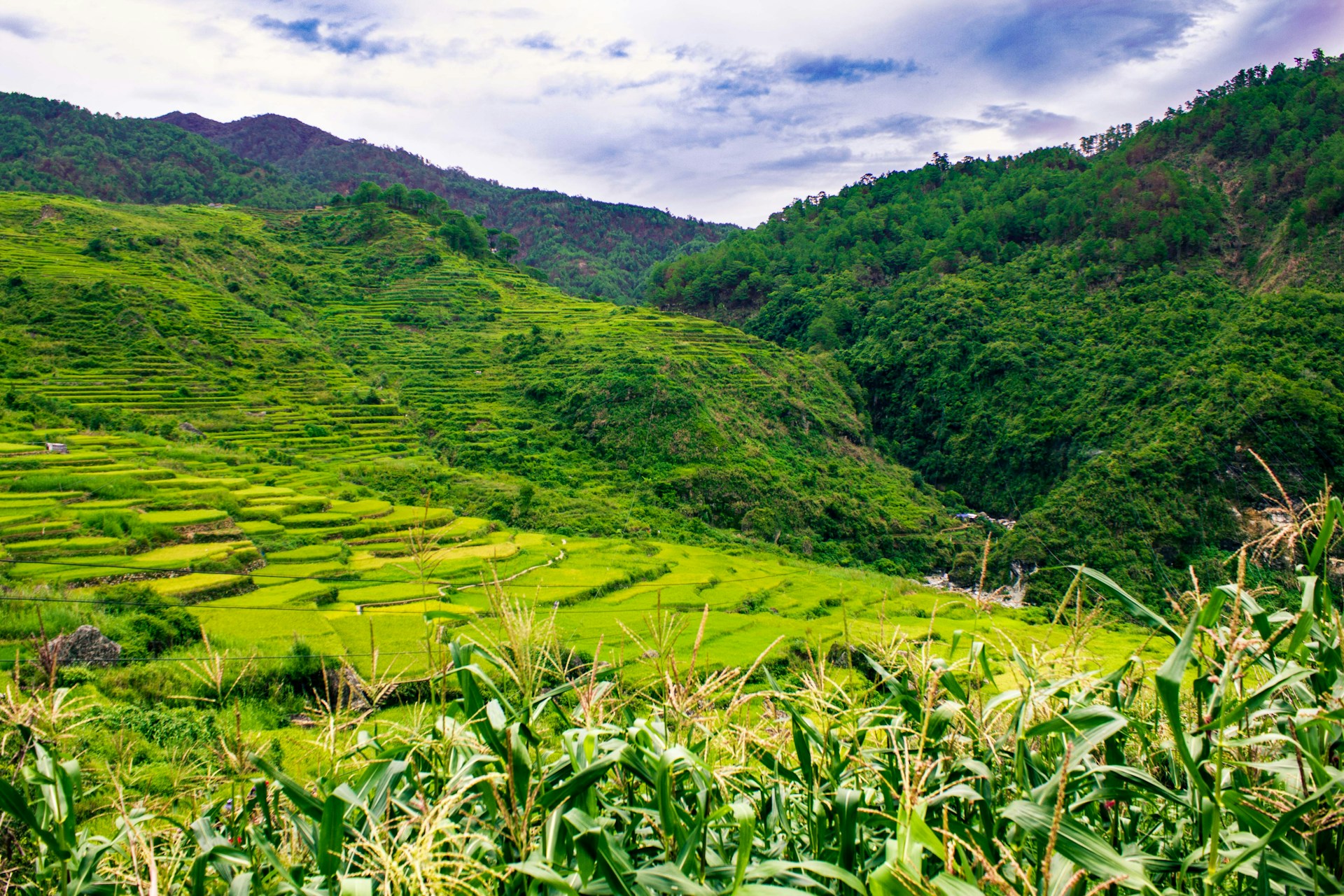
Photo by Aldrin Brosas on Unsplash
When most people picture traveling in the Philippines, the image is beaches: white sand, turquoise water, outrigger boats. Sagada blows that image up entirely. Tucked into the Cordillera mountain range of Mountain Province in Northern Luzon, Sagada is cool where the rest of the Philippines is humid, pine-scented where everything else is salt air, and deliberately unhurried in a country that moves fast everywhere else. It is, as The Broke Backpacker described it in February 2026, the Philippines after a hard reset.
In 2026, Sagada has found its moment in the broader global travel shift toward Intentional Slow Travel, what Hilton's 2026 Travel Trends Report calls the Whycation: trips planned around emotional intention rather than destination status. Sagada is precisely the kind of destination this trend was built for. Getting there requires effort: a long overnight bus from Manila, a winding mountain road, a deliberate commitment to the journey. Arriving feels earned. The town operates on its own schedule, enforces its own rules about visitor conduct, and has maintained its indigenous Igorot identity with extraordinary resilience despite decades of tourism pressure.
The Broker Backpacker's 2026 guide sums it up directly: Sagada is the antidote to beach burnout, with epic cave systems, deep green valleys, and the hanging coffins of Echo Valley grounding everything in real history and culture. Viator and GetYourGuide both document sustained demand for Sagada packages through January to April 2026, and tour operators consistently describe the destination as one that attracts travelers specifically seeking something more substantial than the standard Philippine itinerary.
Sagada's evolution over the past several years has been driven not by infrastructure development but by reputation: word spread, travel content multiplied, and the town that was once known only to hikers and backpackers gradually entered the consciousness of urban Filipinos and international travelers seeking the Philippines beyond the beach.
Sagada is traditionally named Ganduyan, a detail documented by The Queen's Escape. It is home to the Applai-Kankanaey Tribe, a branch of the broader Igorot people of the Cordillera. Because of its remote mountain location, Sagada was one of the few places in the Philippines where Spanish colonists had minimal influence: a Spanish mission was not founded here until 1882, more than 300 years after colonization began elsewhere in the archipelago, as documented by Will Fly for Food. The result is a town where pre-colonial culture has survived largely unchanged. The Igorot people of Sagada speak Kankana-ey as their primary language and observe a combination of their traditional customs alongside Christianity. One of the most striking expressions of this pre-colonial continuity is the Hanging Coffins of Echo Valley: wooden coffins fixed to the limestone cliffs of the valley, placed there by Igorot elders who believed that being elevated after death brings the spirit closer to the heavens. These are not museum exhibits. They are active expressions of a living tradition, and some are still used today.
Sagada operates under a strict visitor management system enforced by the Sagada Tourism Office. All visitors must register on arrival, pay required fees, and book activities through the office, which controls access to caves, sunrise viewpoints, and guided heritage tours. This system, described in detail by The Broke Backpacker in February 2026, has prevented the chaotic overcrowding that has affected other Philippine destinations and has kept the quality of the experience consistently high. It also means that rocking up without planning does not work in Sagada: drop your bag at your homestay and head straight to the Sagada Tourism Office, the guide advises. This is the first move, always.
Multiple travel platforms confirm Sagada is riding the intentional travel wave in 2026. Kate and Mike's Travels' January 2026 guide calls the town one of their top destinations in the Philippines for travelers who specifically want something poles apart from beach tourism. The Broke Backpacker identifies the ideal stay as 3 to 4 days: enough time to hike, cave, and absorb the atmosphere without rushing. The daily budget of approximately 2,000 to 3,000 pesos for accommodation, activities, and food makes it one of the most accessible mountain destinations in Southeast Asia.
Sagada has no airport. The most convenient route from Manila is the Coda Line Corporation overnight bus, which departs from Quezon City directly to Sagada at multiple evening departure times including 8pm, 9pm, 10pm, and 10:30pm. Semi-deluxe (no toilet) tickets cost approximately 760 pesos and super-deluxe tickets approximately 980 pesos, as documented by Kate and Mike's Travels. Alternatively, travelers can take a Victory Liner bus from Manila to Baguio City (approximately 5 to 6 hours), then a GL Trans bus from Baguio's GL Trans Terminal to Sagada (approximately 5 to 6 additional hours, tickets at 330 pesos each, bookable only on the day). The GL Trans last bus from Baguio to Sagada departs at 1pm. Sagada is best combined with visits to Banaue, Batad, and Bontoc for a full Cordillera circuit.
The Hanging Coffins are the most iconic and historically significant attraction in Sagada. A guided hike through Echo Valley (all hikes in Sagada require a registered local guide, bookable at the Tourism Office) leads to the limestone cliff face where generations of Kankanaey elders have been placed in coffins affixed to the rock. The hike also passes through a dense forest that changes character with the morning mist. Photography is permitted in general, but approach the site with respect: it is an active burial site, not a photo opportunity.
Described by The Broke Backpacker as one of Sagada's three essential experiences, Sumaguing Cave is a multi-chamber limestone cave requiring rappelling, rope climbing, and crawling through tight passages. It is physically demanding and extremely slippery throughout: sturdy footwear and physical fitness are genuine requirements, not suggestions. The cave is guided by Tourism Office-registered guides who provide lanterns and safety equipment. The Sagada Adventure guide (April 2025) confirms that guides are essential and that the cave involves sections requiring use of rubber tires as footholds in the underground river sections.
The Kiltepan Sunrise is Sagada's third essential experience. A pre-dawn hike to Kiltepan Viewpoint, timed for clear mornings, reveals a sea of clouds filling the valleys below while the mountaintops emerge like islands above the white. The experience is not guaranteed: cloud formation depends on weather conditions. The Tourism Office can advise on whether conditions are favorable on any given morning. Slots fill quickly during peak season: book your guide the night before arrival.
The best time to visit Sagada is November to February, the cool dry season, with temperatures averaging 15 to 17 degrees Celsius, as confirmed by Will Fly for Food. December is the busiest month. Holy Week (March to April) is extremely crowded and Sagada has historically experienced water shortages during peak periods. The rainy season from July to October brings landslide risk along the mountain approaches: access can be disrupted. The Igorots of Sagada do not permit outsiders to own property or establish businesses on their land, a community protection that has prevented the commercial takeover that has affected other Philippine destinations.
Sagada's Tourism Office management model is one of the most effective community-controlled visitor management systems in the Philippines. Every registration fee, guide fee, and activity fee goes directly to the community that maintains the trails, preserves the caves, and protects the traditions you came to witness. Do not attempt to skip the registration, hire unlicensed guides, or visit restricted sites independently: these rules exist because Sagada has seen what happens to communities that lose control of their own tourism. The Igorots of Sagada have maintained sovereignty over their land and culture for centuries against considerable pressure. The least a visitor can do is respect the systems they built to protect it.
Kotor is a double-listed UNESCO World Heritage Site in Montenegro's fjord-like bay. Your fact-checked 2026 guide to the Adriatic's most layered medieval city and the rise of Western Balkans travel.
The Faroe Islands generated 1.4 billion DKK from tourism in 2025 while pioneering Europe's most innovative sustainable tourism model. Your fact-checked 2026 guide to the North Atlantic's most dramatic archipelago.
McMurdo Sound and the Ross Sea welcome only about 1,150 visitors per season. Your fact-checked 2026 guide to the world's most remote expedition and the huts of Scott and Shackleton.