Get consult
Unlock the secrets of the world’s most breathtaking locales with our expert insights — guiding you toward the truly remarkable destinations that define a lifetime of travel.



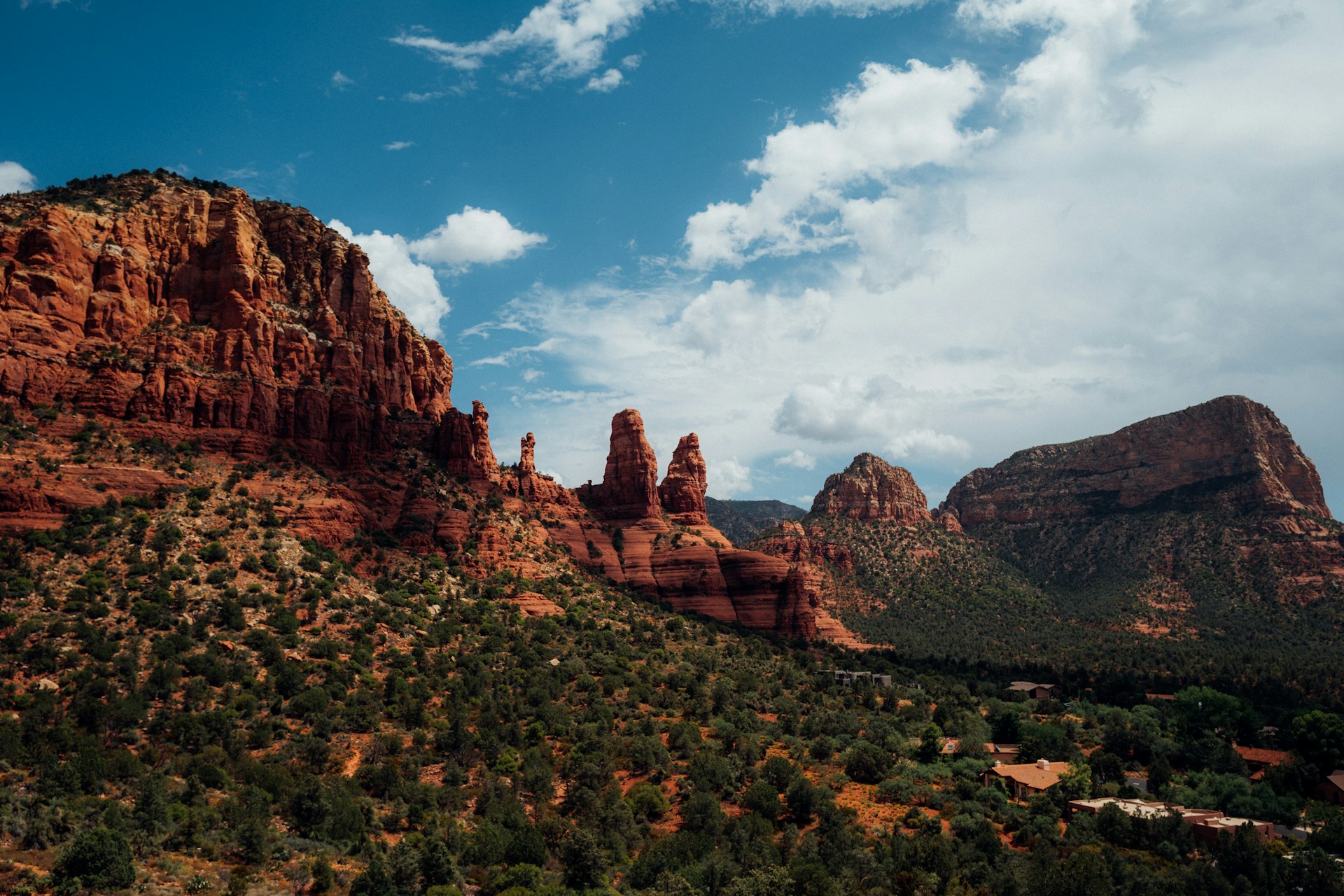
Photo by Brandon Russell on Unsplash
There is a particular quality of light in Sedona, Arizona, that does something to people. The iron oxide in the sandstone catches the late afternoon sun and turns the canyon walls a shade of deep crimson that feels less like geology and more like a living presence. You are standing at 4,500 feet above sea level in the high desert of northern Arizona, surrounded by formations sculpted over 300 million years from rock laid down when this entire region was a shallow inland sea, and the landscape simply does not look real. It looks like a painting of the American Southwest that someone decided to inhabit rather than hang on a wall.
In 2026, Sedona is experiencing a tourism story driven by one of the most durable and expanding trends in North American travel: Regenerative Wellness Tourism. This is not a new category, but the scale and sophistication of what is happening in Sedona makes the city its clearest current expression in the United States. Sedona welcomes 3 to 4 million visitors annually, as documented by GrandCanyon.com citing city tourism data, making it one of the most visited small cities in the American Southwest despite having a permanent population of approximately 10,400 residents, as confirmed by the Sedona Chamber of Commerce. Tourism data from Sedona's April 2025 Tourism Advisory Board meeting revealed a 25 percent increase in high-income visitors, with 25 percent of tourists now coming from households earning over 250,000 USD annually, as reported by Citizen Portal AI summarizing the board's findings. This demographic shift is reshaping the destination's entire economy, pulling investment toward luxury wellness infrastructure, boutique retreat programming, and curated outdoor experiences at the premium end of the market.
Dark Sky Lofts, a boutique six-suite luxury wellness property designed around celestial-inspired architecture and red rock proximity, opened in Fall 2025 on Sedona's western edge, as confirmed by Press Advantage's August 2025 reporting. It joined a growing constellation of wellness retreat centers that have made Sedona arguably the most concentrated spiritual and wellness destination in the continental United States. The trend is structural, not seasonal: people are not coming to Sedona to check it off a list. They are coming to stay longer, spend more, and leave changed.
Sedona's history begins long before any settler arrived. According to archaeologists, the Red Rock country has been inhabited for approximately 10,000 years, with the first cave dwellers occupying the canyon walls in and around what is now modern Sedona, as documented by Sedona Soul Adventures citing archaeological records. The Sinagua people left behind petroglyphs, pit houses, and cliff dwellings throughout the region, and their presence is still visible at sites within Boynton Canyon and along the Soldier Pass Trail. The Yavapai and Apache peoples, who consider this land sacred homeland, have maintained a spiritual relationship with these red rocks for thousands of years: Boynton Canyon specifically holds profound significance for the Yavapai-Apache, who regard it as the birthplace of their First Woman, as confirmed by Sedona Soul Adventures and the Sedona Chamber of Commerce's Indigenous heritage documentation. The land was considered so powerful that, according to tribal oral tradition, the Yavapai-Apache would not enter certain canyon areas without first purifying themselves through fasting or deep meditation, as documented by GoNomad's Sedona heritage guide.
European contact began in 1583 when a Spanish expedition arrived in the region. Modern Sedona, however, traces its founding to 1902, when settler T.C. Schnebly established a homestead and named the settlement after his wife. The town began as a rural ranching community with apple orchards and corn fields, transformed first by the motion picture industry, which discovered the dramatic backdrop of the red rocks for Western films, and then by the arts community. Surrealist painter Max Ernst arrived in Sedona in the mid-1940s, drawing other artists behind him and leading to the establishment of the Sedona Arts Center in 1958, as confirmed by GrandCanyon.com's Sedona destination guide. The geology underlying all of this human history is equally extraordinary: the iconic red rock formations are composed of the Schnebly Hill Formation, a thick layer of red-to-orange iron-oxide-rich sandstone found only in the Sedona area, as documented by Sedona Vortex Adventures' geology guide. The city sits at the base of the Mogollon Rim, the dramatic escarpment marking the southern edge of the Colorado Plateau.
The phenomenon that transformed Sedona from an art colony into a global spiritual destination began in the 1980s, when the concept of energy vortexes started to attract seekers from across the country, as covered by Arizona Highways and reported by KJZZ Public Radio in March 2025. The four principal vortex sites, Cathedral Rock, Bell Rock, Airport Mesa, and Boynton Canyon, each carry reputations for distinct energetic qualities: Cathedral Rock for feminine, nurturing energy; Bell Rock for upward-spiraling energy requiring no scrambling to access; Airport Mesa for 360-degree energizing views with the easiest access of the four; and Boynton Canyon for a balance of masculine and feminine energies and its deep Yavapai-Apache spiritual significance, as documented by GrandCanyon.com's comprehensive 2026 Sedona guide. Whether approached through spiritual or scientific frameworks, these sites offer documentable characteristics: geologists note that Sedona's iron oxide deposits and quartz concentrations create measurable magnetic anomalies at vortex locations, as confirmed by multiple geology and vortex guide sources including the Sedona Vortex Sites Complete Guide.
The wellness infrastructure that has grown around this spiritual reputation is now substantial and continuously expanding. Retreat operators, energy healers, sound bath facilitators, yoga instructors, and guided vortex tour operators number in the hundreds across the city. The Sedona Self-Love Retreats company was named Best Sedona Retreat Company 2025 and Best Sedona Retreat Center for four consecutive years from 2022 to 2025, as confirmed by their official site, reflecting both the depth of the local retreat market and the demand sustaining it. The wellness tourism trend converging on Sedona in 2026 is backed by demographic data, new luxury infrastructure, and the kind of word-of-mouth repeat visitation that no marketing budget can manufacture.
One of the most significant developments in Sedona over the last several years has been its emergence as a national model for destination stewardship. Faced with what the Sedona Chamber of Commerce openly described as a risk of being loved to death, the City of Sedona and the Chamber partnered to develop Arizona's first Sustainable Tourism Plan, approved unanimously by the City Council in 2019 following an 18-month community consultation process involving residents, businesses, and visitors, as confirmed by the Global Sustainable Tourism Council and Keep Sedona Beautiful. The plan is built on four strategic pillars: Environment, Resident Quality of Life, Quality of the Economy, and Visitor Experience. Its implementation includes the free Sedona Shuttle system connecting parking areas to major trailheads, the expansion of the Red Rock Pass parking permit system, the Sedona Cares Pledge for visitors, and ongoing trails maintenance programs, as confirmed by the City of Sedona's official tourism program page and the Sedona Chamber. The plan remains active and is guiding tourism management through 2025 and beyond.
Sedona is located in north-central Arizona, approximately 120 miles north of Phoenix, 30 miles south of Flagstaff, and 275 miles east of Las Vegas, as confirmed by Road Travel America. The most common approaches are by rental car from Phoenix Sky Harbor International Airport or from Flagstaff Pulliam Airport. There is no commercial airport in Sedona itself. A personal or rental vehicle is strongly recommended for visitors planning extensive hiking or flexible exploration, as confirmed by the Sedona Travel Guide 2026. Once in Sedona, parking at most National Forest trailheads requires a Red Rock Pass costing 5 USD daily, 15 USD weekly, or 20 USD annually, as confirmed by multiple verified sources including the City of Sedona's parking guide and Van Life by Design's October 2025 practical guide. The America the Beautiful Pass (80 USD annually for access to all federal recreation lands) substitutes for the Red Rock Pass at Coconino National Forest sites but does not cover concessionaire-managed sites like Crescent Moon Ranch or West Fork, which require a separate Coconino Pass at 50 USD annually, as confirmed by the Sedona Travel Tips 2026 guide. Purchase Red Rock Passes in advance through recreation.gov, at the Sedona Chamber of Commerce Visitor Center in Uptown Sedona, or at trailhead kiosks. Buy before arrival as some trailheads lack cell service, as confirmed by the Sedona Travel Guide 2026.
Sedona operates a free shuttle system to major trailheads including Cathedral Rock, Soldier Pass, Dry Creek Vista, and Little Horse, running Thursday through Sunday year-round with expanded hours during peak spring and fall seasons, as confirmed by the City of Sedona's parking and shuttle information page and sedona.net. When using the shuttle, no Red Rock Pass is required for the trailheads it serves during operating hours. Trailhead parking at popular sites including Devil's Bridge, Cathedral Rock, and Soldier Pass commonly reaches capacity before 7 AM during peak season, as documented by Van Life by Design and the Sedona Travel Tips 2026 guide. The shuttle is Sedona's most effective tool for avoiding the city's most frustrating logistical challenge. For sunrise or sunset hikes outside shuttle hours, arrive before 6:30 AM and have your Red Rock Pass ready.
All four of Sedona's principal vortex sites are accessible to independent hikers with varying difficulty levels. Airport Mesa offers the easiest access via a paved trail to the summit with 360-degree views and is documented as the most energizing vortex for many visitors. Bell Rock, accessed via the Bell Rock Pathway, requires no scrambling and is suitable for all fitness levels. Cathedral Rock requires a moderate scramble to reach the upper saddle but delivers the most visually dramatic setting of the four. Boynton Canyon, considered the most sacred site by the Yavapai-Apache, involves a moderate 3-mile roundtrip hike and carries the deepest Indigenous spiritual significance of any vortex site, as confirmed by GrandCanyon.com's 2026 guide. All four sites require Red Rock Pass parking permits at 5 USD daily unless accessed by shuttle. Visit early morning or late afternoon to minimize crowds and allow time for quiet meditation. Look for juniper trees with twisted, spiraling trunks near vortex centers: local belief attributes this to electromagnetic energy while botanists point to wind patterns, as noted by GrandCanyon.com.

Sedona's non-vortex attractions are substantial. Devil's Bridge, a natural sandstone arch stretching dramatically above the canyon floor, is among the most photographed formations in Arizona and requires a moderate 4.5-mile roundtrip hike with 600 feet of elevation gain, as confirmed by sedona.org's hiking guide. Note that the Devil's Bridge trailhead parking lot is closed Thursday through Sunday and hikers must use the Sedona Shuttle during those days. The Chapel of the Holy Cross, a modernist Catholic chapel built directly into the red rocks above Sedona in 1956, is one of the most architecturally striking religious buildings in the American Southwest and is open to visitors free of charge. Oak Creek Canyon, a spectacular riparian gorge running north from Sedona toward Flagstaff along State Route 89A, is lined with cottonwood and sycamore trees and features Slide Rock State Park, a natural rock waterslide worn smooth by Oak Creek, which charges a separate state park vehicle entry fee of 20 to 30 USD depending on day and season, as documented by the Sedona Travel Guide 2026. The Red Rock Scenic Byway (State Route 179) running south through the Village of Oak Creek past Bell Rock and Courthouse Butte is consistently rated among the most scenic drives in Arizona.

Sedona's two peak seasons are March through May and September through November, when temperatures are ideal for outdoor activity and the landscape is at its most vivid: spring wildflowers in the canyon floors and fall light turning the red rocks a deeper amber. These periods also mandate shuttle service to popular trailheads and see the highest accommodation rates. Summer (June through August) brings temperatures that regularly exceed 35 degrees Celsius but also thinner crowds at popular spots like Airport Mesa and lower accommodation rates, as confirmed by the sustainable tourism guide published by Sedona Cathedral Hideaway. September is widely regarded as the sweet spot: summer crowds have thinned, temperatures are moderating, and the afternoon thunderstorms of monsoon season add dramatic skies to the red rock backdrop. Budget expectations for 2026 range from 95 to 170 USD per person per day for budget travelers up to significantly higher for luxury wellness retreat visitors, as Sedona ranks as Arizona's most expensive tourism destination with hotel and dining costs running 40 to 70 percent above Phoenix, Tucson, or Flagstaff levels, as confirmed by the Sedona Travel Tips 2026 guide.
Sedona's red rock country is not a backdrop. It is a living landscape that the Yavapai-Apache people have called sacred for thousands of years, and it is an ecosystem that is genuinely vulnerable to the weight of millions of visitors per year. The Sedona Chamber of Commerce is direct about this: its Sedona Cares Pledge asks every visitor to commit to the Seven Principles of Leave No Trace before they arrive, as confirmed by the Chamber's official community page. The most important of these for Sedona specifically are: stay on marked trails (off-trail travel directly damages biological soil crust and contributes to erosion), do not build rock cairns (they cause soil erosion, confuse other hikers, and destroy microhabitats for small creatures, as documented by Sedona Cathedral Hideaway's sustainable visitation guide), and carry out all waste.
At vortex sites and any location near Indigenous heritage features including petroglyphs, ancient pit houses, or cliff structures, the foundational principle is simple: observe without touching, photograph without disturbing, and approach with the same respect you would extend to any active place of worship. The Sedona Chamber of Commerce created the Cultural Journey of the Indigenous People of the Verde Valley to educate visitors about the sacred significance of the land and the ongoing presence of the Hopi, Apache, and Yavapai peoples in the region, as confirmed by the Chamber's official Indigenous heritage page. Instagram geotags of off-trail secret locations directly contributed to the overtourism crisis of 2021 that prompted Sedona's sustainable tourism emergency response, as documented by the City of Sedona and the Chamber in their joint statement. Do not share specific coordinates of undisclosed sites online. The red rocks will be here long after any particular photograph has been forgotten. Treat them accordingly.
Kotor is a double-listed UNESCO World Heritage Site in Montenegro's fjord-like bay. Your fact-checked 2026 guide to the Adriatic's most layered medieval city and the rise of Western Balkans travel.
The Faroe Islands generated 1.4 billion DKK from tourism in 2025 while pioneering Europe's most innovative sustainable tourism model. Your fact-checked 2026 guide to the North Atlantic's most dramatic archipelago.
McMurdo Sound and the Ross Sea welcome only about 1,150 visitors per season. Your fact-checked 2026 guide to the world's most remote expedition and the huts of Scott and Shackleton.