Get consult
Unlock the secrets of the world’s most breathtaking locales with our expert insights — guiding you toward the truly remarkable destinations that define a lifetime of travel.



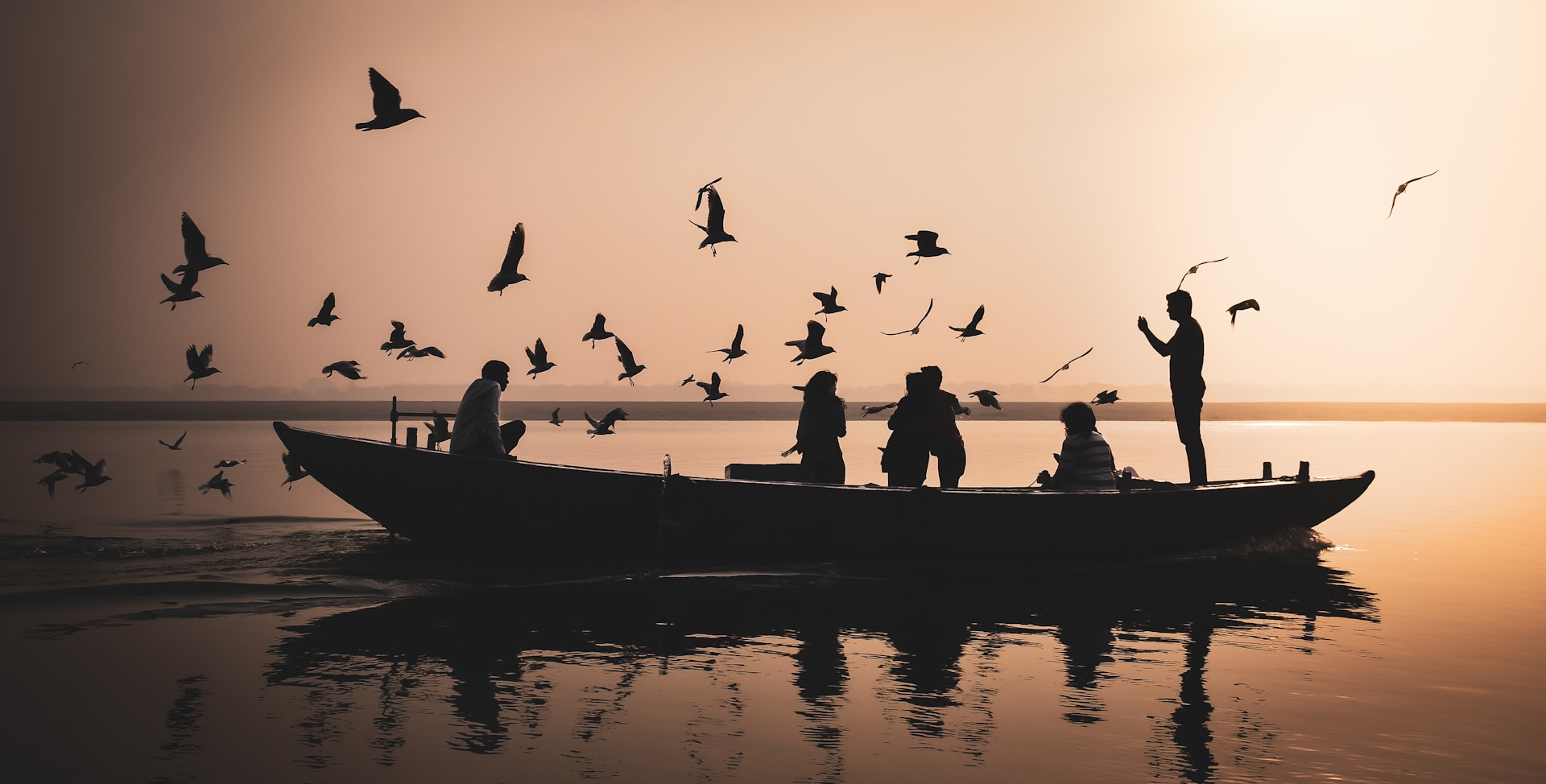
Photo by Sergio Capuzzimati on Unsplash
There is a place on earth where the oldest continuous human civilization still conducts its daily rituals in the same manner they were performed three thousand years ago. Where every morning, before the sun has fully cleared the river, hundreds of pilgrims wade into the sacred waters of the Ganges while temple bells ring across stone ghats that have stood through the rise and fall of empires. Where every evening, seven young Brahmin priests lift enormous flaming brass lamps in perfect synchrony and the crowd watching from the river falls momentarily silent. That place is Varanasi, and in 2026 it is drawing the world's attention with a force it has never exerted before.
The numbers confirm something profound has shifted. The Uttar Pradesh government reported that Varanasi received over 72.6 million visitors in 2025, an unprecedented figure that makes it one of the most visited spiritual destinations anywhere on earth, as confirmed by the Varanasi Tourism authority and Travel and Tour World. At the national level, 19 percent of Indian travelers are expected to take a dedicated spiritual trip in 2026, the highest proportion among nine Asian markets surveyed, according to a faith travel report published by Agoda. Spiritual tourism in India is already valued at an estimated 59 billion USD projected by 2028, with 60 percent of domestic travel linked to religious pilgrimages, according to industry data cited by Accio.com's India Travel Trends 2025 report.
The modern trend driving this surge is Spiritual Tourism Modernization: the deliberate transformation of India's most sacred cities through world-class infrastructure investment, while preserving the unbroken religious traditions that define them. Varanasi, known in ancient texts as Kashi and Banaras, is the clearest and most powerful expression of this trend anywhere in Asia.
Varanasi is believed by Hindus to be the abode of Lord Shiva and the city where dying grants moksha: liberation from the cycle of rebirth. Mark Twain famously wrote that it is older than history, older than tradition, older even than legend. The city's 84 ghats line a dramatic seven-kilometer crescent of the Ganges, each with its own spiritual identity and ritual purpose. These fundamentals have not changed. What has changed in the last two to three years is everything built around them.
The single most consequential infrastructure project in modern Varanasi is the Kashi Vishwanath Corridor, inaugurated in December 2021. The corridor is a 5 lakh square foot (approximately 46,000 square meter) spiritual complex built in red sandstone, Chunar stone, Kota granite, and Makrana marble. It connects the inner sanctum of the Kashi Vishwanath Temple, which houses one of the twelve sacred Jyotirlingas of Lord Shiva, directly to the Ganga at Lalita Ghat through a grand, beautifully carved open pathway. The project involved the renovation of 34 buildings, with 70 percent of the complex dedicated to green cover, as documented by Hindutone's comprehensive temple guide.
Before the corridor, reaching Baba Vishwanath meant navigating dark, cramped, and often muddy medieval alleyways. Today, a pilgrim can take a holy dip in the Ganga, step onto the corridor's stone pathway, and walk directly to the deity in a dignified, organized progression that honors both the sanctity of the experience and the practical needs of the millions who make it. The temple receives an average of 45,000 pilgrims daily, with numbers surging to over a lakh on festival days, as confirmed by Hindutone. The golden spires of the temple against the new sandstone corridor at sunrise have become one of the most photographed architectural images in South Asia.
The iconic ghats of Varanasi have undergone extensive beautification and modernization alongside the corridor project. Redeveloped streets, improved lighting, better crowd management systems, and the expansion of cruise tourism along the riverfront have transformed how visitors experience the seven-kilometer stretch of sacred steps. The Godaulia and Dashashwamedh corridors have been developed to manage pedestrian flow, while the Ganga riverfront has received upgrades specifically designed to improve both accessibility and aesthetic experience without compromising the spiritual atmosphere that draws pilgrims from across the world, as documented by Travel and Tour World.
The cumulative result is staggering. Over 46.34 crore tourists visited Varanasi across a nine-year development period, a figure cited by the Uttar Pradesh government and reported by Travel and Tour World, reflecting what happens when a city of profound spiritual significance is made genuinely accessible without being sanitized.
Varanasi's most visually spectacular festival has quietly become one of the most sought-after travel events in India. Dev Deepawali, the Festival of Lights of the Gods, celebrated on Kartik Purnima (the full moon night of November), sees all 84 ghats illuminated with more than one million earthen lamps (diyas) simultaneously. The reflection of those flames on the dark water of the Ganges, viewed from a boat on the river, is an experience that travelers consistently describe as the most beautiful thing they have ever witnessed. Boat tickets for Dev Deepawali should be booked four to six weeks in advance as demand significantly exceeds supply, as documented by the Varanasi sightseeing guide published by Kashi Taxi.
Varanasi is served by Lal Bahadur Shastri International Airport (VNS), located approximately 25 to 26 kilometers from the Kashi Vishwanath Temple. The airport offers direct flights from major Indian cities including Delhi, Mumbai, and Bengaluru, as well as some international connections. The drive to the temple area takes approximately 40 to 55 minutes depending on traffic, as confirmed by the Kashi Taxi airport guide. For those arriving by train, Varanasi Junction (Varanasi Cantt) is the main rail hub, approximately 20 minutes by taxi from the Kashi Vishwanath Corridor entrance. Use the Ola or Uber apps from the airport for fair fares. From the train station, pre-booked taxis are recommended over the taxi operators immediately outside the station, who are consistently reported by travelers to quote inflated prices.
The Kashi Vishwanath Temple opens daily at 2:30 AM and closes at 11:00 PM, with six daily aarti ceremonies beginning with Mangala Aarti at approximately 5:45 AM, as documented by Hindutone. General darshan (temple visit) is free for all devotees. Special aarti passes for the Mangala, Bhog, and Shayan Aarti can be booked through the official temple website or at authorized counters. On weekday mornings between 5:30 AM and 7:30 AM, waiting time is typically 20 to 40 minutes, making this the optimal window for a calm, unhurried darshan. Weekday afternoons from 2:00 PM onward are also manageable. Avoid visiting on festival days such as Maha Shivratri unless specifically planning for the festival: waiting times can exceed 4 to 8 hours and hotels require booking two months in advance, as documented by the Kashi Vishwanath aarti guide on Kashi Taxi. The corridor is a no-vehicle zone: leave cars and auto-rickshaws approximately 1.5 kilometers from the entrance and walk or take an e-rickshaw to the gate.
The evening Ganga Aarti at Dashashwamedh Ghat is one of the most extraordinary public ceremonies conducted anywhere in the world. Seven priests perform synchronized rituals with massive flaming brass lamps in a ceremony that begins around 6:00 to 7:00 PM depending on the season. The ghat is 500 meters from the Kashi Vishwanath Temple, making it natural to combine both in a single itinerary: temple darshan in the afternoon, corridor walk to the Ganga, then the aarti ceremony at dusk. Many travelers choose to watch the Ganga Aarti from a boat on the river for an unobstructed view. Book boat tickets for the aarti view through accredited operators near the ghat, as confirmed by multiple Varanasi itinerary guides. Arrive at least 30 to 45 minutes before the ceremony begins to secure a good position, whether on the ghat steps or on the water.
Just 10 kilometers from the chaos of the ghats lies Sarnath, one of the most significant sites in Buddhist history. This is where the Buddha delivered his first sermon after attaining enlightenment, setting in motion what Buddhists call the Wheel of Dharma. The Dhamek Stupa, a massive cylindrical stone tower rising from a green lawn, marks the exact site. A ₹72.63 crore World Bank project transformed Sarnath into a world-class tourism destination, as confirmed by Travel and Tour World. A combo entry ticket provides access to both the stupa and the adjacent archaeological museum, which houses the Lion Capital that became India's national emblem, at a modest fee. The 20-minute cab ride from Varanasi makes Sarnath an essential half-day addition to any Varanasi itinerary, combining the spiritual circuits of two of the world's great religious traditions in a single day.
The optimal season for Varanasi is October through March, when temperatures range from approximately 15 to 30 degrees Celsius and conditions are comfortable for the extensive walking that exploring the ghats and old city requires. Within this window, several dates carry exceptional significance. Dev Deepawali in November (exact date varies with the lunar calendar) is the festival of a million lamps across all 84 ghats. Maha Shivratri in late February or early March is the most sacred night of the year for Lord Shiva's devotees and brings extraordinary crowds but equally extraordinary atmosphere. Makar Sankranti in January is a major bathing festival. The ideal stay for first-time visitors is three to four days: one day for the ghats, Kashi Vishwanath, and the evening Ganga Aarti; a second day for Sarnath and the quieter ghats; and additional days for deeper exploration of the old city lanes, silk weaving workshops, and classical music performances that make Varanasi a cultural experience as well as a spiritual one.
Varanasi's 72.6 million annual visitors arrive at a city where every ritual, every ceremony, and every ghat has living religious meaning for the communities that have performed these traditions across generations. The cremation fires at Manikarnika Ghat burn continuously around the clock: families bring their loved ones here believing that cremation in Kashi grants moksha. Photography is strictly prohibited at the burning ghats, not as a rule but as a matter of basic human decency toward families in mourning. The same principle applies throughout the city. At the Kashi Vishwanath Temple inner sanctum, photography restrictions are enforced and must be respected. When watching the Ganga Aarti, maintain respectful silence during the ceremony rather than treating it as a performance staged for tourists. During the morning bathing rituals at the ghats, observe from a respectful distance and never photograph individuals engaged in private religious practice without explicit permission. The most meaningful way to support Varanasi's community is to eat at locally-owned restaurants and chai stalls in the old city's galis rather than at hotel restaurants, to engage licensed government-approved guides (not street touts) for cultural context, and to purchase Banarasi silk and other crafts directly from the weaving workshops in the old city neighborhoods where the artisans actually live and work.
Kotor is a double-listed UNESCO World Heritage Site in Montenegro's fjord-like bay. Your fact-checked 2026 guide to the Adriatic's most layered medieval city and the rise of Western Balkans travel.
The Faroe Islands generated 1.4 billion DKK from tourism in 2025 while pioneering Europe's most innovative sustainable tourism model. Your fact-checked 2026 guide to the North Atlantic's most dramatic archipelago.
McMurdo Sound and the Ross Sea welcome only about 1,150 visitors per season. Your fact-checked 2026 guide to the world's most remote expedition and the huts of Scott and Shackleton.