Get consult
Unlock the secrets of the world’s most breathtaking locales with our expert insights — guiding you toward the truly remarkable destinations that define a lifetime of travel.



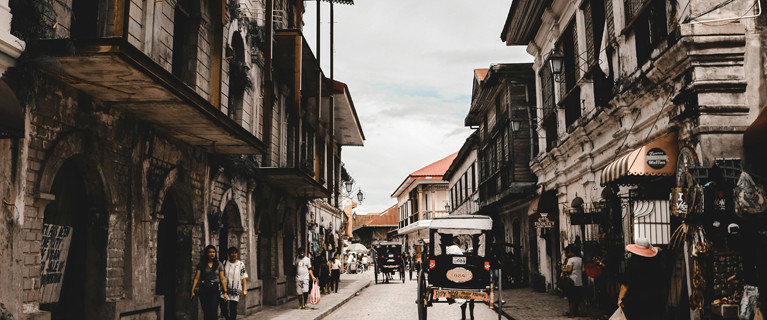
Photo by Assy Gerez on Unsplash
While most of the Philippines has moved relentlessly forward, Vigan City has held its ground. The capital of Ilocos Sur province on the western coast of Luzon, Vigan is the most complete surviving example of a planned Spanish colonial town anywhere in Asia — a distinction that earned it a place on the UNESCO World Heritage List in 1999 and, in 2015, recognition as one of the New7Wonders Cities of the world.
Walking through Vigan is walking through centuries. The cobblestone streets are still laid as they were in the 16th century. The ancestral houses that line them, with their thick stone walls, tiled roofs, capiz-shell windows, and iron-railed balconies, stand much as they did when Spanish colonial administrators, Chinese traders, and Filipino ilustrados built them. And beyond the architecture, Vigan is a living city — one where history is not curated behind glass but embedded in the food, the crafts, the churches, and the daily life of the people who call it home.
A weekend in Vigan is enough to fall in love with it. A lifetime might not be enough to fully understand it.
No visit to Vigan is complete without time on Calle Crisologo, the city's most iconic street and the image that defines it. This cobblestone avenue stretches through the heart of the heritage district, lined on both sides with two-storey ancestral houses featuring wrought-iron balconies, wooden shutters, and centuries of weathering that has only added to their beauty.
The street is closed to motor vehicles, giving it the feel of a living open-air museum. By day, it is a bustling strip of souvenir shops, antique dealers, cafés, and artisan stores — all housed within heritage structures. By night, it transforms into something magical: tungsten streetlamps cast a warm amber glow across the cobblestones, alfresco restaurants fill with the clatter of plates and conversation, and the occasional kalesa (horse-drawn carriage) rolls past, its lanterns swaying in the evening air. This is Vigan at its most romantic, and it is genuinely unforgettable.
No trip to Vigan is complete without a serious eating tour. Ilocano cuisine is one of the most distinctive regional food traditions in the Philippines, defined by bold flavors, preserved meats, and fresh local produce. The must-tries include:
Vigan has long been a center of traditional craftsmanship. The province of Ilocos Sur is famous for Abel Iloko — a tightly woven textile produced on traditional wooden looms, used to make blankets, scarves, and clothing in distinctive geometric patterns. Several weaving studios around the heritage district welcome visitors to watch weavers at work and purchase directly from the makers. Paired with a visit to Pagburnayan for pottery, you'll leave with a genuine understanding of the living craft traditions that define this city.
Vigan is approximately 400 km north of Manila — about 6 to 8 hours by bus. Partas Bus Lines offers the most reliable direct service from Cubao or Pasay in Manila, with multiple daily departures. Alternatively, fly to Laoag International Airport (Ilocos Norte) via Philippine Airlines or Cebu Pacific, then take a 2-hour bus or taxi south to Vigan. Driving from Manila in a private vehicle is also a popular option, especially when combining Vigan with other Ilocos stops like Pagudpud or Paoay.
The heritage district of Vigan is entirely walkable, and most major attractions are within easy reach of Calle Crisologo. For slightly more distant spots like the Bantay Bell Tower, tricycles are readily available and inexpensive. A kalesa ride is the most charming option for covering the heritage zone — negotiate a rate per hour or per route with the kutsero (coachman).
Staying inside the heritage zone puts you in the heart of the Vigan experience. Top picks include:
The main heritage attractions can be seen in a single focused day, but two to three days is ideal to absorb the atmosphere properly, eat your way through the local food scene, explore some of the off-the-beaten-path spots like Santa Catalina Beach, and simply linger on the cobblestones without rushing.
The Philippines has other old towns and heritage districts, but none that have preserved the Spanish colonial era with the completeness and authenticity of Vigan. This is not a reconstructed set or a tourist facsimile — it is a real, living city that has simply refused to erase its past. The streets, the houses, the food, the crafts, the faith — all of it is continuous with a history stretching back more than four centuries.
For travelers who want to understand where the Philippines came from — and to experience one of the most singular townscapes in all of Asia — Vigan is not just worth visiting. It is essential.
Hop on a kalesa. Let the cobblestones carry you back in time.
Kotor is a double-listed UNESCO World Heritage Site in Montenegro's fjord-like bay. Your fact-checked 2026 guide to the Adriatic's most layered medieval city and the rise of Western Balkans travel.
The Faroe Islands generated 1.4 billion DKK from tourism in 2025 while pioneering Europe's most innovative sustainable tourism model. Your fact-checked 2026 guide to the North Atlantic's most dramatic archipelago.
McMurdo Sound and the Ross Sea welcome only about 1,150 visitors per season. Your fact-checked 2026 guide to the world's most remote expedition and the huts of Scott and Shackleton.