

Get consult
Unlock the secrets of the world’s most breathtaking locales with our expert insights — guiding you toward the truly remarkable destinations that define a lifetime of travel.



One hour south of Taipei, the Nanshi River carves a deep green valley through the mountains of New Taipei City. The mist that clings to the peaks in the early morning is the same mist the Atayal people have watched rise from the valley floor for centuries. They named this place Ulay, meaning hot and poisonous, a reference to the steaming thermal waters that bubble from the earth along the riverbank. Over time, the name became Wulai, and the village became one of the most quietly extraordinary destinations in all of Taiwan.
In 2026, Wulai is trending for reasons that go beyond its famous hot springs. Taiwan recorded 4.2 million international visitor arrivals in the first half of 2025 alone, a 10 percent increase from the same period in 2024, according to Taiwan's Tourism Administration (Ministry of Transportation and Communications), confirmed by both Focus Taiwan and the Taipei Times. As traveler motivations shift from passive sightseeing toward deeper cultural immersion, Wulai has emerged as the most accessible case study in Taiwan for a trend now spreading across Asia: Ancestral Tourism. This is travel defined not by Instagram-able landmarks but by the desire to encounter living indigenous cultures, learn traditional skills, taste foods rooted in centuries of tribal practice, and leave feeling genuinely changed by the encounter.
Wulai is the northernmost stronghold of the Atayal, Taiwan's third-largest indigenous group with 16 officially recognized tribes on the island, as documented by the Tourism Administration of the Republic of China. The Atayal of Wulai have maintained their cultural identity through food, weaving, music, and ritual while sitting within easy day-trip distance of one of Asia's most modern capital cities. That tension between ancient and contemporary is exactly what the modern cultural traveler is looking for.
Wulai's modern history is inseparable from two forces: the thermal springs that defined its economy, and the Atayal people who defined its identity. When the Atayal first traveled up the Nanshi River valley and spotted steam hanging in the cold mountain air, they called out ulay: hot spring. They became the first settlers of the region and today still make up roughly a third of the local population, as documented by travel writer Nick Kembel's research on Wulai's Atayal community. The Atayal of Wulai are part of the Squliq dialect group, and the language spoken in the valley is Wulai Atayal, a distinct dialect of Squliq Atayal, as confirmed by KKday's 2025 Wulai travel guide.
The village developed through the Japanese colonial period as a logging and timber economy, and the Wulai Scenic Train, today one of the town's most beloved attractions, began as a utilitarian log cart railway in the 1950s transporting timber down the mountain to the sawmill. When the logging industry declined, the track was repurposed for tourism, and the colorful little trolley now carries visitors 1.5 kilometers through forested hillside to the base of Wulai Waterfall, as confirmed by Taiwanderers' 2025 guide. The train runs from 9 AM to 6 PM in July and August and 9 AM to 5 PM the rest of the year, with a scheduled maintenance closure on the first Tuesday of every month, as documented by Taiwanderers. One-way tickets cost 50 NTD, as confirmed across multiple sources including a 2025 Lemon8 traveler guide and Jared's Detours.
What has changed most visibly in the last two to three years is the quality and intentionality of cultural programming in Wulai. Where the town once risked becoming what Taiwan Today's critical cultural analysis described as a commercialized performance of indigeneity, with mass-produced artifacts and costumes sold to passing visitors, a more grounded revival is now underway. The Wulai Atayal Museum, a four-story institution sponsored by New Taipei City, offers a free-entry deep-dive into Atayal history covering traditional clothing, hunting tools, weaving looms, ceremonial objects, and the now-rare practice of facial tattooing that was once a rite of passage for Atayal women, as documented by Nick Kembel's 2025 research and confirmed by multiple TripAdvisor visitor reviews. The museum includes an AV area and English-language captions on many exhibits, making it accessible to international visitors.
On Wulai Old Street, the cultural revival is expressed through food. The lane is lined with vendors selling distinctly Atayal ingredients: wild boar sausages grilled over open flame, mochi pounded fresh and coated in peanut flour, bamboo-tube rice where sticky glutinous rice is steam-cooked inside sealed bamboo, and ma gao coffee, brewed from a fragrant mountain pepper native to the region that produces a warming, slightly citrus-tinged cup with no parallel in the lowland coffee culture, as documented by multiple traveler accounts including Lemon8 guides. The Life of Taiwan indigenous tour company highlights that genuinely adventurous visitors can also try damamian, a fermented preparation of raw pork, rice, and salt that is an authentic Atayal delicacy found nowhere outside the community's own tables.
Wulai's moment sits within a larger national story. Taiwan's Tourism Administration has signaled a strategic shift from pursuing raw visitor volume toward prioritizing what TVBS World Taiwan documented as "consumption depth and travel experience quality." Indigenous cultural tourism is central to that strategy. Taiwan has 16 officially recognized indigenous tribes whose cultures span Austronesian languages, textile traditions, harvest festivals, oral histories, and ecological knowledge systems rooted in the island's mountains and coastlines. Wulai, positioned just 26 kilometers and one bus ride from central Taipei, functions as the easiest entry point into that world for the growing segment of international travelers who arrive in Asia specifically to encounter living cultures rather than curated spectacles.
The most practical route to Wulai requires no car and costs very little. Take the Taipei MRT green line to Xindian Station (G01), the last stop on the line, which takes approximately 25 minutes from central Taipei stations including Chiang Kai-Shek Memorial Hall, as confirmed by multiple TripAdvisor visitor accounts. From Xindian Station, take Bus 849 directly to Wulai, with the bus stop located just behind the Visitor Information booth at the station exit. The bus journey takes approximately 30 minutes, and the EasyCard transit card is accepted for the fare, as confirmed by KKday's 2025 guide and TripAdvisor visitor reviews. Total journey from central Taipei is approximately one hour. Taxis and Uber are also available for a direct 26-kilometer drive of approximately 27 minutes from the city, as confirmed by KKday.
The Wulai Atayal Museum (烏來泰雅民族博物館) is a four-story institution dedicated to the history, crafts, and spiritual traditions of the Atayal people and admission is completely free, as confirmed by both TripAdvisor visitor reviews and Nick Kembel's Wulai guide. Look for the large sculptural totem adorning the building's exterior, set just a few meters from the entrance to Wulai Old Street on the river side of the road. The museum displays include traditional looms, hunting implements, ceremonial dress, and documentation of the facial tattooing tradition that once marked both cultural identity and coming-of-age among Atayal women. For visitors who want to understand the deeper context of everything they see on Old Street and at the waterfall, the museum should be the first stop, not an afterthought.
Wulai's hot springs are sodium bicarbonate waters, colorless and odorless, said to benefit circulation and skin, as documented by Travel and Tour World's Wulai feature. Options range from affordable public bathhouses to private tatami-style rooms with river views. The Xiaoshanyuan Hot Spring charges an entrance fee of approximately 300 NTD for its gender-separated public baths, based on TripAdvisor visitor reports. The Taiwan Travel Blog documents hot spring bath experiences generally ranging from 300 to 500 NTD across Wulai's various establishments. Tickets for specific hot spring resorts can be booked in advance on KKday or Klook for potential online discounts. Note that the original free riverside hot springs were demolished by New Taipei City in 2017 following Typhoon Soudelor damage and sanitation concerns, as documented by the Taiwan Travel Blog. Some informal makeshift riverbank pools still exist south of Lansheng Bridge but cannot be officially recommended.
At 80 meters, Wulai Waterfall is the highest waterfall in northern Taiwan, as confirmed by Taiwan Travel Blog and multiple other sources. You can reach it either on foot via a gentle 1.5-kilometer paved road from the bus terminal, or by riding the Wulai Scenic Train (50 NTD one way) from the station near the end of Old Street, across Lansheng Bridge. The train follows the old forest logging track through the trees and deposits visitors at the waterfall viewing area, where cliff-side cafes and lookout platforms overlook the cascade. A cable car (gondola) runs from opposite the waterfall to the Yun Hsien Resort above, offering an additional aerial perspective on the valley for visitors who wish to continue upward. Check the official Wulai Scenic Train schedule before visiting as it closes for maintenance on the first Tuesday of every month, as documented by Taiwanderers.
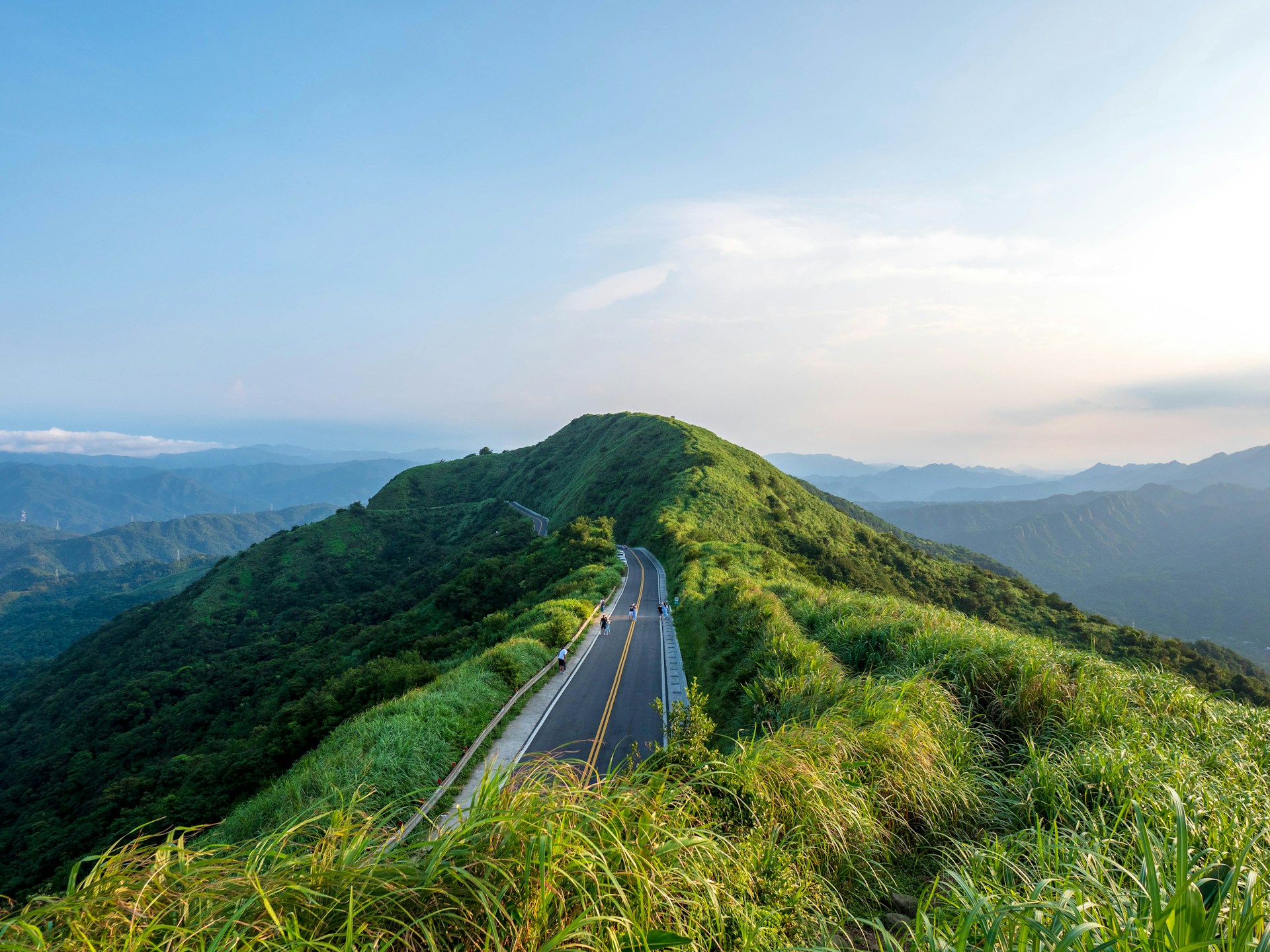
Four kilometers south of Wulai village, the Neidong National Forest Recreation Area (內洞國家森林遊樂區) is a family-friendly hiking destination with a 2.9-kilometer loop trail to Neidong Waterfall and surrounding forest pools. The entrance fee is 80 NTD on holidays and 65 NTD on weekdays, as confirmed by Taiwan Travel Blog. The trail is flat, paved, stroller-accessible, and wheelchair-accessible with bathrooms at both ends. The Xinxian Trail also connects the Wulai village area south to the Neidong Forest, passing Xinxian Waterfall, Wusha Creek Waterfall, and eventually Neidong itself, as documented by Nick Kembel's comprehensive hiking guide. Neidong is consistently less crowded than the main Wulai village area and offers a more genuinely immersive forest experience.
Wulai is a living Atayal community, not a cultural theme park. The village, the museum, and the Old Street food vendors are not staged performances. They are the daily economic and cultural reality of a people whose connection to this valley predates the Republic of China by centuries. When you visit, the most meaningful thing you can do is spend your money directly within the indigenous community: buy weaving and crafts from Atayal artisans rather than mass-produced souvenir shops, eat at family-run warungs on Old Street, and book indigenous-guided tours when available through operators such as Life of Taiwan, which works directly with Atayal community guides.
Taiwan Obsessed's guide to indigenous culture in Taiwan notes an important distinction: most of the hotels in Wulai with hot spring facilities are not actually owned by indigenous people. If staying overnight is important to you and supporting indigenous economic development matters, research accommodation ownership before booking. Taiwan's indigenous communities have navigated centuries of political pressure and cultural assimilation, and their cultural revival is a deliberate, community-driven project. Engaging with it thoughtfully, including learning even a single phrase in Atayal or acknowledging the community's history in conversation, is one of the most respectful things a visitor can do.
Kotor is a double-listed UNESCO World Heritage Site in Montenegro's fjord-like bay. Your fact-checked 2026 guide to the Adriatic's most layered medieval city and the rise of Western Balkans travel.
The Faroe Islands generated 1.4 billion DKK from tourism in 2025 while pioneering Europe's most innovative sustainable tourism model. Your fact-checked 2026 guide to the North Atlantic's most dramatic archipelago.
McMurdo Sound and the Ross Sea welcome only about 1,150 visitors per season. Your fact-checked 2026 guide to the world's most remote expedition and the huts of Scott and Shackleton.