Get consult
Unlock the secrets of the world’s most breathtaking locales with our expert insights — guiding you toward the truly remarkable destinations that define a lifetime of travel.



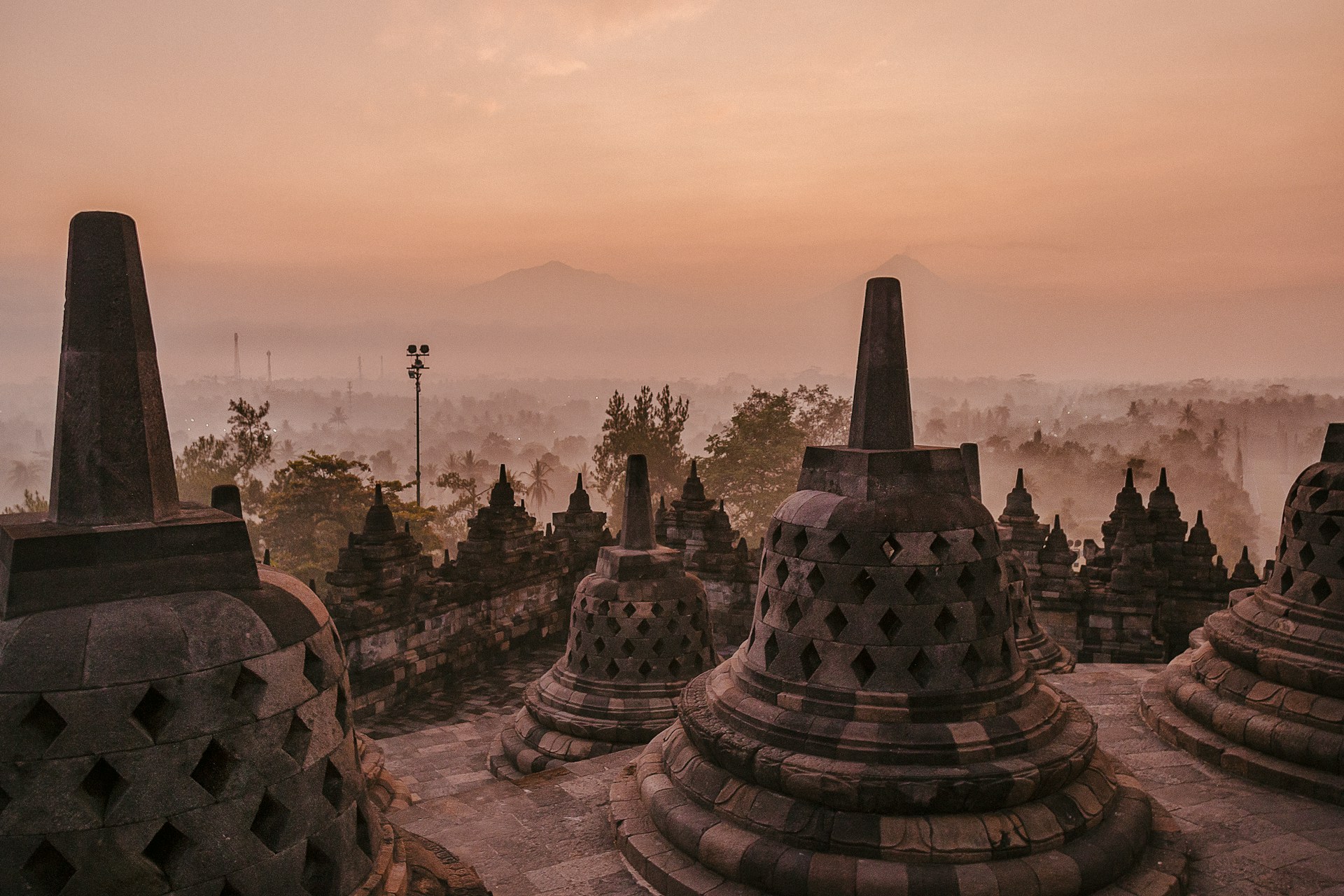
Photo by Steffen Bertram on Unsplash
There is a moment that travelers to Yogyakarta describe in the same language no matter where they are from. It happens at Borobudur Temple before dawn, when the mist still covers the valleys below and the stone stupas emerge from the darkness one tier at a time as the sky lightens behind the Menoreh Hills. The traveler who described it most succinctly compared it to Bagan and Angkor Wat: that rare category of ancient site where the scale and intention of what human hands built across centuries produces a feeling that is almost impossible to prepare for. That feeling is exactly what travelers in 2026 are specifically seeking, and Yogyakarta, the city that sits closest to the greatest concentration of that feeling in Indonesia, is experiencing a transformation to match.
Indonesia has set an ambitious target of attracting between 16 and 17 million foreign tourists in 2026, as confirmed by Travel and Tour World's January 2026 report. The country is positioning this growth around experience-based travel: cultural immersion, heritage exploration, and sustainable practices rather than mass beach tourism. Yogyakarta is explicitly named as a key destination in this strategy. According to the World Travel and Tourism Council (WTTC), Indonesia's tourism sector is projected to reach IDR 1,269.8 trillion in 2025, 21 percent higher than 2019 levels and representing 5.5 percent of GDP, as documented by HVS's July 2025 Indonesia hospitality report.
The modern trend Yogyakarta leads in 2026 is Cultural Pilgrim Tourism: the deliberate choice by a new generation of travelers to journey specifically to places of ancient spiritual significance, not as sightseers but as participants in a living cultural and philosophical tradition. Borobudur is the world's largest Buddhist monument. Prambanan is the largest Hindu temple complex in Indonesia. Together they anchor a destination that offers more concentrated ancient civilization per square kilometer than almost anywhere else in Southeast Asia.
In January 2026, Travel and Tour World reported a landmark development for Yogyakarta's tourism infrastructure. Governor Sri Sultan Hamengku Buwono X, in collaboration with Injourney Destination Management, announced a comprehensive overhaul of tourism events surrounding Borobudur, Prambanan, and Ratu Boko temples. The initiative aims to dismantle what Injourney described as a siloed approach to tourism that has historically kept these three sites operating as isolated attractions rather than as an integrated regional ecosystem. In 2026 and beyond, these temples serve as foundations for a wider network of experiences drawing tourists into surrounding villages, markets, and cultural centers.
Built in the 9th century during the Sailendra Dynasty, Borobudur Temple is the world's largest Buddhist monument and a UNESCO World Heritage Site, confirmed by both HVS's July 2025 Indonesia report and multiple travel guides. Its layered stone structure features five square terraces topped by three circular platforms, all bearing detailed stone reliefs narrating the life of Buddha and Buddhist cosmology across approximately 2,500 relief panels and 504 Buddha statues. The Waisak festival, which honors the birth, enlightenment, and passing of Buddha, draws pilgrims from many countries annually to Borobudur, culminating in a lantern release ceremony where glowing lights float above the temple at night. Bali Indonesia Holiday's January 2026 feature confirmed this ceremony as one of the most photographed cultural events in Southeast Asia, now appearing in global travel media and driving significant bucket list demand.
In terms of practical access, the machupicchu.org 2026 Yogyakarta travel guide documents verified ticket pricing: ground-level viewing costs IDR 400,000 and climbing the structure costs IDR 455,000 for foreign visitors. Exclusive sunrise access is available for IDR 1,000,000, limited to 100 to 200 visitors daily and requiring advance booking through official channels. The 42-kilometer journey from Yogyakarta takes approximately 90 minutes and sunrise tours depart city hotels between 3:30 and 4:00 AM to reach the temple for 4:30 AM entry.
Built in approximately 850 AD by King Rakai Pikatan of the Sanjaya Dynasty, Prambanan Temple is the largest Hindu temple complex in Indonesia, documented by Backindo's January 2026 Yogyakarta guide. Known as the Thousand Temples, Prambanan features three towering main towers dedicated to Shiva, Vishnu, and Brahma, surrounded by hundreds of smaller shrines, with reliefs depicting scenes from the Ramayana. The evening Ramayana Ballet performed in the temple complex, with the illuminated stone towers as backdrop, is one of Indonesia's most celebrated cultural performances. Tripadvisor's 2026 Yogyakarta travel guide recommends visiting Prambanan in the afternoon or evening, potentially ending the visit with the Ramayana Ballet for a complete cultural experience. Prambanan is located approximately 30 minutes east of Yogyakarta city center.
The Injourney collaboration announced in January 2026 adds a year-round events calendar to this temple infrastructure. The Prambanan Jazz Festival and the Borobudur Marathon continue to anchor annual programming, while new performances, workshops, and interactive experiences distribute visitor flow more evenly throughout the year, as documented by Travel and Tour World. Yogyakarta's city center anchors a complementary cultural circuit: the Kraton (Sultan's Palace), the Taman Sari Water Castle, Malioboro Street (Yogyakarta's famous shopping and food boulevard), and the city's batik-making and wayang puppet craft villages provide a full urban cultural layer around the temple experiences.
Yogyakarta is served by Yogyakarta International Airport (YIA), which handles most international connections, and the older Adisutjipto Airport (JOG) for some domestic routes. Flights from Jakarta take approximately 1 hour. Direct international connections include Singapore and Kuala Lumpur. Yogyakarta is also well connected by train from Jakarta (approximately 7 to 9 hours by fast train) and Surabaya, making overland itinerary building practical for travelers exploring Java.
Tickets for ground-level viewing cost IDR 400,000 and for climbing the structure IDR 455,000 (foreign visitor pricing, as of machupicchu.org's 2026 guide; verify at the official Borobudur management site before travel as prices may change). Sunrise access at IDR 1,000,000 is limited to 100 to 200 visitors and must be booked in advance online. Tripadvisor's 2026 guide recommends checking climbing ticket availability online at least one week in advance, as on-site purchase is subject to availability. A private car and driver for the day, covering Borobudur and potentially Prambanan, costs approximately IDR 400,000 to 600,000 for a 12-hour period, as documented by Tripadvisor forum data.
The Trans Jogja bus rapid transit system operates 20 routes across Yogyakarta, connecting major attractions for IDR 2,700 to 3,600 per ride (approximately USD 0.20), running from 5:30 AM to 9:30 PM daily, as confirmed by the machupicchu.org 2026 guide. Grab and Gojek ride-hailing apps are reliable for short distances and are recommended over unlicensed vehicles, particularly for solo travelers. Trans Jogja does not directly serve Borobudur, making private hire or organized tours the practical choice for the temple excursion.
Street food at Yogyakarta's warungs (local food stalls) costs between IDR 10,000 and 35,000 per meal (approximately USD 0.60 to 2.20), as documented by the machupicchu.org 2026 guide. The city's signature dish is gudeg, a sweet jackfruit stew cooked in coconut milk with palm sugar and spices, available at iconic vendors throughout the city for approximately IDR 15,000 to 25,000 per portion. Budget accommodation in the Prawirotaman and Sosrowijayan neighborhoods, both within walking distance of Malioboro, ranges from approximately IDR 40,000 to 100,000 per night for hostel dormitories. Heritage boutique hotels range from approximately IDR 800,000 to 1,500,000.
The machupicchu.org 2026 guide and The Roaming Renegades' March 2026 guide both recommend a minimum of 3 to 4 days in Yogyakarta to cover the major temples, city cultural sites, and one day trip without rushing. A practical 3-day itinerary dedicates Day 1 to Borobudur sunrise and an afternoon Prambanan visit, Day 2 to the Kraton, Taman Sari, Malioboro, and city street food exploration, and Day 3 to craft villages or Mount Merapi's Lava Tour. Yogyakarta's large student population from five major universities creates a progressive and welcoming urban atmosphere that The Roaming Renegades explicitly notes is more accepting of diverse travel styles than conservative rural Java.
Borobudur and Prambanan are managed as national heritage sites with formal ticketing and conservation programs. The most significant contribution a visitor can make beyond the entrance fee is to extend their economic footprint into the surrounding communities that the Injourney collaboration is deliberately trying to activate. Stay in locally-owned guesthouses in the Borobudur or Prambanan districts rather than driving in and out on a day trip. Buy batik and handicrafts directly from the craft village producers in Yogyakarta's artisan districts rather than from souvenir shops in the temple car parks. When observing the Waisak festival or Ramayana Ballet performances, maintain the silence and spatial respect that these ceremonies require: they are living religious and cultural practices, not theatrical productions staged for tourism. The ancient stones of Borobudur have survived more than twelve centuries. They deserve visitors who approach them with proportionate reverence.
Kotor is a double-listed UNESCO World Heritage Site in Montenegro's fjord-like bay. Your fact-checked 2026 guide to the Adriatic's most layered medieval city and the rise of Western Balkans travel.
The Faroe Islands generated 1.4 billion DKK from tourism in 2025 while pioneering Europe's most innovative sustainable tourism model. Your fact-checked 2026 guide to the North Atlantic's most dramatic archipelago.
McMurdo Sound and the Ross Sea welcome only about 1,150 visitors per season. Your fact-checked 2026 guide to the world's most remote expedition and the huts of Scott and Shackleton.