Get consult
Unlock the secrets of the world’s most breathtaking locales with our expert insights — guiding you toward the truly remarkable destinations that define a lifetime of travel.



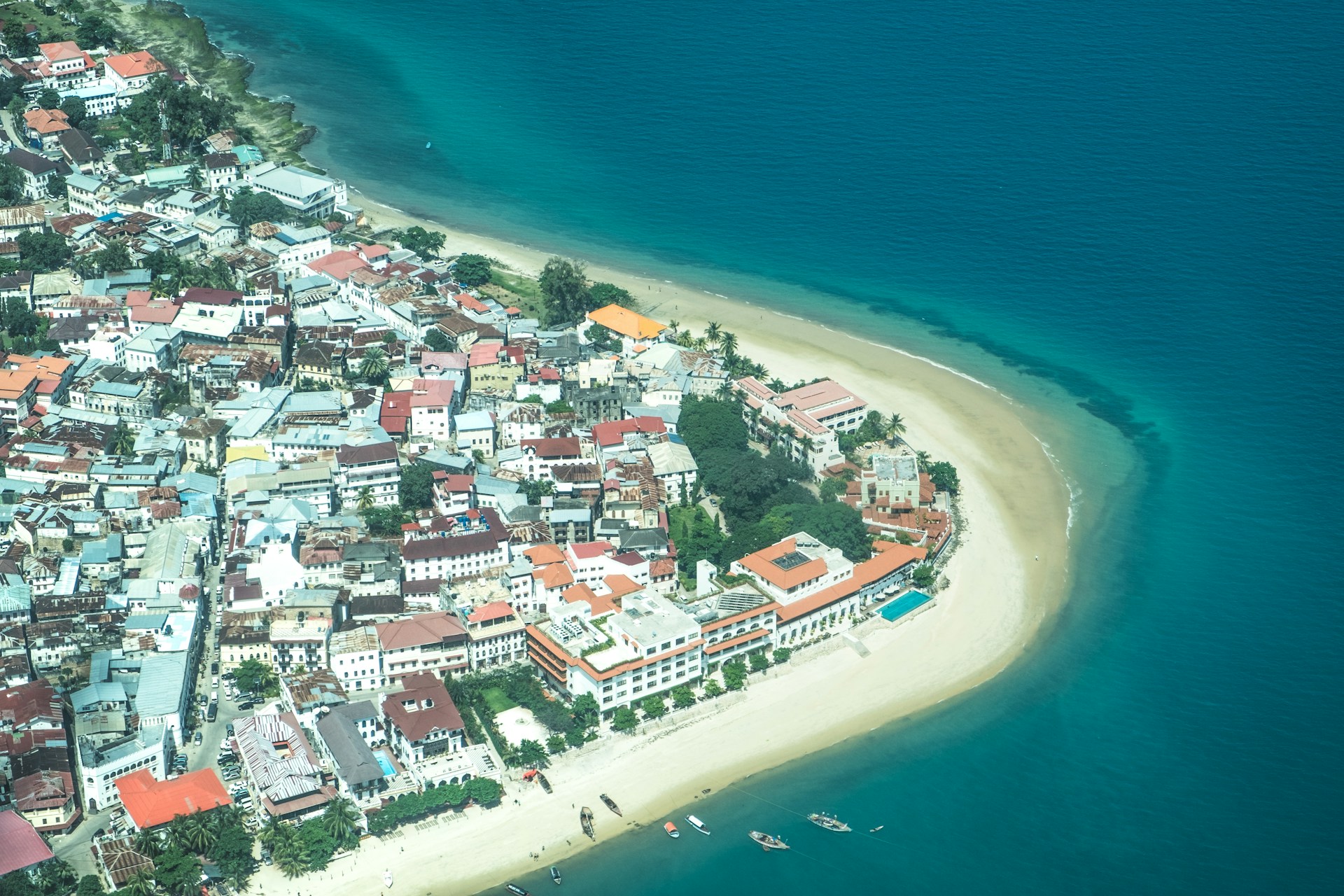
Photo by Javi Lorbada on Unsplash
There is a moment that most Zanzibar visitors describe with some version of the same words: you step off the ferry from Dar es Salaam or walk out of the airport terminal, and the air is different. Salt and clove and something floral underneath. The Indian Ocean humidity settles on your skin. You are on an archipelago that has been the trading crossroads of three continents for more than a thousand years, a place where Arab merchants, Indian traders, Portuguese navigators, Omani sultans, and the Swahili people who were here before all of them left their marks in the same coral stone walls and carved wooden doors that line the alleys of Stone Town. Zanzibar is not one thing. It is many things simultaneously, and that is exactly what makes it the most layered island destination in Africa.
In 2025, Zanzibar broke every visitor record in its history. Zanzibar officially recorded 917,167 international arrivals in 2025, a 7.1 percent growth over the previous year and the highest annual total ever reported, as confirmed by the Office of the Chief Government Statistician and reported by Travel and Tour World citing official Zanzibar tourism data. The milestone was all the more significant because by October 2025 alone, the islands had already surpassed their full-year 2024 total of 736,755, as confirmed by The Citizen Tanzania citing OCGS data. Growth in 2026 is continuing: Zanzibar welcomed 100,216 international tourists in January 2026, a 19.2 percent increase compared to January 2025, and 86,839 in February 2026, a 4.9 percent year-on-year increase, as confirmed by the Tanzania Association of Tour Operators (TATO) and the Africa Tourism Trade Association (ATTA) citing official statistics. European travelers dominate the source market, accounting for 77.4 percent of all arrivals in February 2026, as confirmed by ATTA.
The trend driving Zanzibar's specific appeal in 2026 is Indian Ocean Island Slow Tourism and Swahili Cultural Immersion: a deepening traveler recognition that Zanzibar offers something no other Indian Ocean beach destination can match, a living UNESCO World Heritage historic city at its center, a spice-growing interior whose agricultural legacy shaped global trade routes for centuries, endemic wildlife found nowhere else on earth, and some of the most biodiverse coral reef systems in the western Indian Ocean, all accessible from a single island. The beach holiday and the cultural immersion are not competing options in Zanzibar. They are the same trip.
Zanzibar's recorded history as a trading crossroads begins in the 8th and 9th centuries, when Arab and Persian traders established settlements along the Swahili coast, as documented by the comprehensive Stone Town heritage guide on disfrutazanzibar.com citing UNESCO and archaeological records. The Swahili civilization that developed from this contact, blending Bantu African roots with Arab, Persian, and later Indian cultural influences, created one of the most distinctive urban cultures in the world. The architectural expression of that culture is Stone Town.
Stone Town earned UNESCO World Heritage designation in 2000 as an outstanding example of a Swahili coastal trading center that retained its urban fabric and townscape virtually intact over more than a millennium, as confirmed by the UNESCO World Heritage Centre's official Stone Town listing. The UNESCO Committee specifically cited the town's buildings as exceptional testimony of the cultural contact between Africa, the Arab world, India, and Europe, executed principally in coralline ragstone and mangrove timber set in thick lime mortar, and reflecting a complex fusion of Swahili, Indian, Arab, and European building traditions. Stone Town contains more than 500 intricately carved wooden doors, each one a statement of the occupant's cultural identity and social status: Omani-influenced doors feature rounded arches and brass studs; Indian-influenced doors have flat tops and floral carving, as documented by the Stone Town heritage guide on disfrutazanzibar.com.
The most consequential moment in Zanzibar's modern history arrived in 1840, when Sultan Said bin Sultan of Oman made the extraordinary decision to move the Omani capital from Muscat to Stone Town, transforming the island into the most important commercial center in the Indian Ocean, as confirmed by the Stone Town heritage guide. Under Omani rule, Zanzibar became the world's largest producer of cloves (a position it held for over a century) and, far more darkly, one of the principal hubs of the East African slave trade. The slave market at the site of the current Christ Church Cathedral processed tens of thousands of enslaved Africans before its closure in 1873, the year the Sultan signed the treaty under pressure from British abolitionist David Livingstone. The underground slave chambers beneath the cathedral remain, as documented by Kilpath African Safaris' 2026 Stone Town guide, and a visit to them is one of the most important historical encounters available to any traveler in East Africa.
Three developments have meaningfully reshaped the Zanzibar visitor experience since 2022 and explain why 2026 is an optimal time to visit. The first is infrastructure investment at scale. Over 1,300 projects have been registered in Zanzibar with a combined investment value of 14.3 billion USD, more than half dedicated to the tourism sector, as confirmed by Travel and Tour World reporting on the 4th Z-Summit held in February 2026. Significant improvements to Abeid Amani Karume International Airport and road networks are underway, with Tanzania co-hosting the 2027 Africa Cup of Nations (AFCON) driving accelerated infrastructure delivery across the country. The second is the diversification of tourism offerings beyond beach holidays: the Z-Summit has explicitly positioned Zanzibar as a MICE (Meetings, Incentives, Conferences, and Events) destination and a wellness tourism hub, significantly broadening the type of traveler arriving on the island. The third is the growth of direct air connectivity: Zanzibar International Airport (ZNZ) now offers direct flights from Nairobi (1 hour), Addis Ababa (2.5 hours), and connections from Dubai and other Gulf hubs, as confirmed by Tripbase's Zanzibar guide. The fast ferry from Dar es Salaam remains a viable and scenic option at 1.5 hours, costing approximately 35 to 50 USD tourist class for multiple daily departures.
Stone Town is the cultural core of any Zanzibar itinerary and deserves at minimum two full days. The recommended approach is to arrive first in Stone Town before heading to the beaches: the city's history and architecture reframe everything you will see on the rest of the island. The essential sites are: The Old Fort (Ngome Kongwe), built by Omani Arabs between 1698 and 1701 on the site of a Portuguese chapel, is Stone Town's oldest standing structure and now hosts cultural events, craft shops, and occasional live music, as confirmed by Kilpath African Safaris' 2026 guide. The House of Wonders (Beit al-Ajaib), the former ceremonial palace of the Zanzibar Sultanate and the first building in East Africa to have electricity and an elevator (hence its name), houses the Museum of History and Culture of Zanzibar and the Swahili Coast: note that the building underwent extensive restoration following partial structural collapse in 2020, with reopening scheduled for completion by late 2026, as documented by machupicchu.org's Stone Town guide. Christ Church Cathedral and the Old Slave Market: the Anglican cathedral built in 1873 on the site of the former slave market contains underground slave chambers accessible on guided tours and a moving memorial. This is not optional. Forodhani Gardens, the seafront park that transforms each evening into an open-air food market with grilled seafood, coconut curries, Zanzibar pizza (a local street food specialty), and Taarab music, is the best single evening in Stone Town. The Zanzibar Doors: simply walk the alleys of the historic district and look up at the carved wooden doors on every street, each one a different story of cultural contact and exchange. Hire a local guide for at least one half-day walking tour: the context they provide transforms the architectural experience entirely.
Zanzibar earned the name Spice Island because it was once the world's leading producer of cloves, vanilla, nutmeg, cinnamon, and black pepper, as confirmed by the Zanzibar travel guide on gotripzi.com. The interior of the main island (Unguja) is still dotted with working spice farms, most located 30 to 45 minutes from Stone Town. A half-day spice farm tour costs approximately 20 to 35 USD per person including transport and lunch, as confirmed by Pongwe Beach Hotel's 2026 itinerary guide. The experience involves a guided walk through active plantations where you can smell, taste, and handle raw spices in their growing form. The economic importance of spices to Zanzibar's agricultural identity and its historical role in shaping global trade routes gives this half-day a cultural weight that goes well beyond the sensory pleasure. Book through a locally owned operator rather than a hotel package: the quality of the guide makes an enormous difference and the economic benefit goes directly to the farming families.
Jozani Chwaka Bay National Park, located 35 kilometers southeast of Stone Town in the island's forest interior, protects Zanzibar's last significant indigenous forest and provides the only reliable location on earth to observe the Zanzibar red colobus monkey (Piliocolobus kirkii), a critically endangered primate endemic to Zanzibar Island with an estimated population of approximately 5,000 individuals, as confirmed by machupicchu.org's 2026 Zanzibar travel guide. The park also features a mangrove boardwalk trail through one of East Africa's most intact coastal mangrove ecosystems. Entry costs approximately 10 USD plus guide fees, with round-trip taxi from Stone Town at approximately 40 to 50 USD, as confirmed by machupicchu.org's cost breakdown. Combine Jozani with a spice farm tour on the same day for the most efficient use of an island interior day. Morning is the best time for monkey sightings before the heat of the afternoon disperses them deeper into the forest canopy.
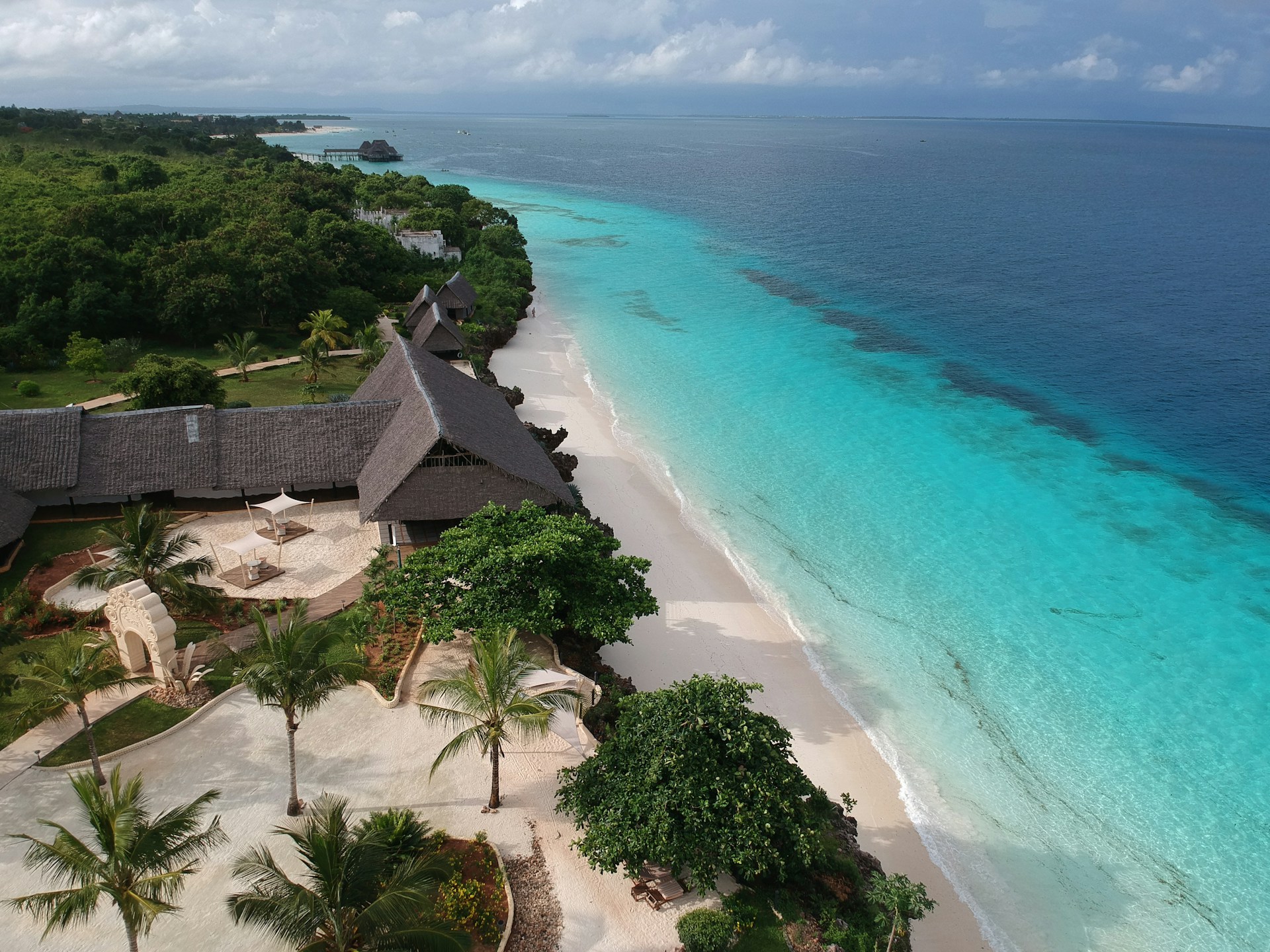
Zanzibar's beaches are divided into distinctly different characters by geography. Nungwi and Kendwa on the northern tip offer the best year-round swimming conditions due to deep water immediately offshore (the tide-dependent tidal flats that limit swimming on the east coast do not apply here), spectacular sunset beach parties, and traditional dhow sailing excursions. These are the busiest and most resort-heavy beaches on the island. Paje and Jambiani on the east coast are the kitesurfing capital of East Africa, with consistent southeast trade winds and shallow turquoise lagoons attracting riders from around the world. They also offer a more laid-back, less resort-dominated atmosphere for independent travelers. Matemwe and Pongwe on the northeast coast offer the quietest and most scenic beaches on the island, within easy reach of Mnemba Atoll: one of the finest snorkeling and diving sites in the western Indian Ocean, with coral gardens, green sea turtles, dolphins, and seasonal whale sharks, as confirmed by machupicchu.org's beach guide. The best swimming months are June through October (dry season) when Indian Ocean currents bring the clearest water conditions. Marine visibility at Mnemba Atoll exceeds 30 meters from July through October, as confirmed by machupicchu.org's 2026 Zanzibar travel guide.
The two dry seasons are the optimal travel windows: June through October (the long dry season, cooler and drier, peak clarity for marine activities) and December through February (the short dry season, warmer). Avoid March through May (the long rains) when heavy rainfall affects travel, and November (the short rains). The best overall months for most travelers are July through September for beach and marine conditions, and December through January for the festive peak season with the warmest temperatures, as confirmed by machupicchu.org's 2026 Zanzibar guide. Getting there: Zanzibar International Airport (ZNZ) receives direct international flights from Nairobi (1 hour), Addis Ababa (2.5 hours), Dubai, and other hubs, plus domestic connections from Dar es Salaam (25 minutes). The high-speed ferry from Dar es Salaam takes approximately 1.5 hours and costs 35 to 50 USD tourist class with multiple daily departures, as confirmed by Tripbase's Zanzibar destination guide. Budget ranges for 2026: budget travelers 50 to 100 USD per day (guesthouses, street food, self-guided), mid-range 150 to 300 USD per day (boutique hotels, guided tours, select excursions), luxury 400 USD or more per day (beach resorts, private tours, premium marine experiences), as confirmed by African Trek Travel's 2026 to 2027 budget guide and Simbye's Tanzania Travel Costs 2026 guide. Currency is the Tanzanian Shilling (TZS). Carry cash for markets, small operators, and rural areas as card acceptance remains limited outside major hotels and tourist establishments.
Zanzibar is an autonomous region within Tanzania with its own government, laws, and cultural identity. It is a majority Muslim archipelago with deeply held religious and social customs that every visitor is obligated to respect. Dress modestly outside beach areas: women should cover their shoulders and knees when walking through Stone Town, villages, or any non-beach context, and men should avoid wearing only swimwear away from the waterfront. This is not a request, it is a basic standard of respect for the community you are visiting.
The slave trade history embedded in Stone Town is not a tourist attraction. It is a wound in the history of East Africa and the Indian Ocean world that deserves to be encountered with genuine gravity. The underground slave chambers at Christ Church Cathedral and the memorial sculptures outside it were created so that visitors would understand what happened in this place. Stand in that chamber and actually think about it. The Swahili coast was one of the primary export routes for enslaved Africans for four centuries. Zanzibar was at the center of that trade. Understanding that history is the minimum condition for understanding the city you are walking through.
The Zanzibar red colobus monkey is critically endangered, endemic to this island and nowhere else on earth. Jozani Forest exists in part because of conservation efforts that required sustained community and government commitment. When visiting the park, stay on marked trails, do not feed the monkeys (human food is harmful to them), and maintain the 10-meter minimum distance from the animals, as required by the park's conservation regulations. The 14.3 billion USD investment pipeline described at the 2026 Z-Summit represents both an opportunity and a risk: tourism infrastructure development and preservation of Zanzibar's irreplaceable UNESCO heritage require careful management. Support tourism operators who explicitly invest in local employment, cultural preservation, and environmental stewardship.
Kotor is a double-listed UNESCO World Heritage Site in Montenegro's fjord-like bay. Your fact-checked 2026 guide to the Adriatic's most layered medieval city and the rise of Western Balkans travel.
The Faroe Islands generated 1.4 billion DKK from tourism in 2025 while pioneering Europe's most innovative sustainable tourism model. Your fact-checked 2026 guide to the North Atlantic's most dramatic archipelago.
McMurdo Sound and the Ross Sea welcome only about 1,150 visitors per season. Your fact-checked 2026 guide to the world's most remote expedition and the huts of Scott and Shackleton.